

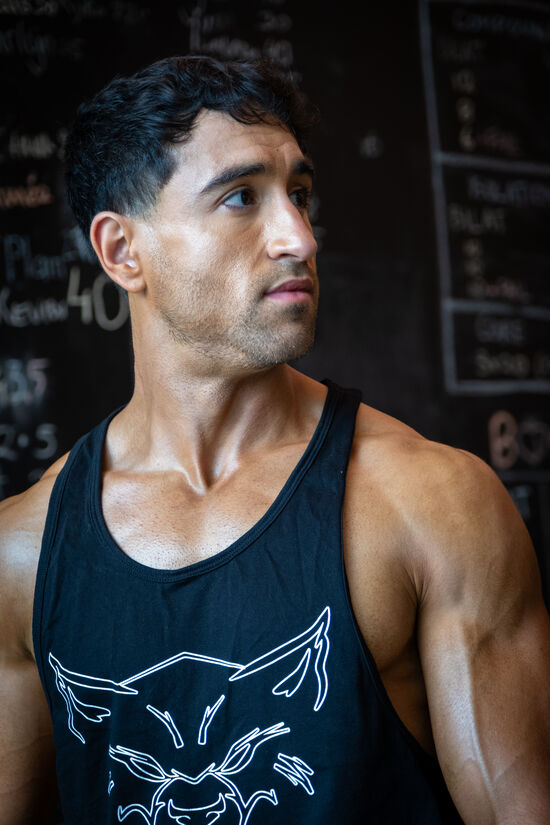

Starting at the gym is like learning to play an instrument or speak a new language, nobody expects you to perform perfectly on day one.
Between the ages of 14 and 17, your body is in a great stage to build coordination, strength, and overall health*. But the key to sticking with it, and avoiding injuries, is starting with a clear structure and a simple plan.
Forget about how much weight other people are lifting. Your first month at the gym should focus on one thing only: learning proper technique and gaining control over your body. In this article, I’ll show you how to do both.
The Basic Movement Patterns of Training
Instead of focusing on isolated muscles like your biceps, sports science experts recommend focusing on “movement patterns”*.
These are the exercises that will give you the biggest benefits:
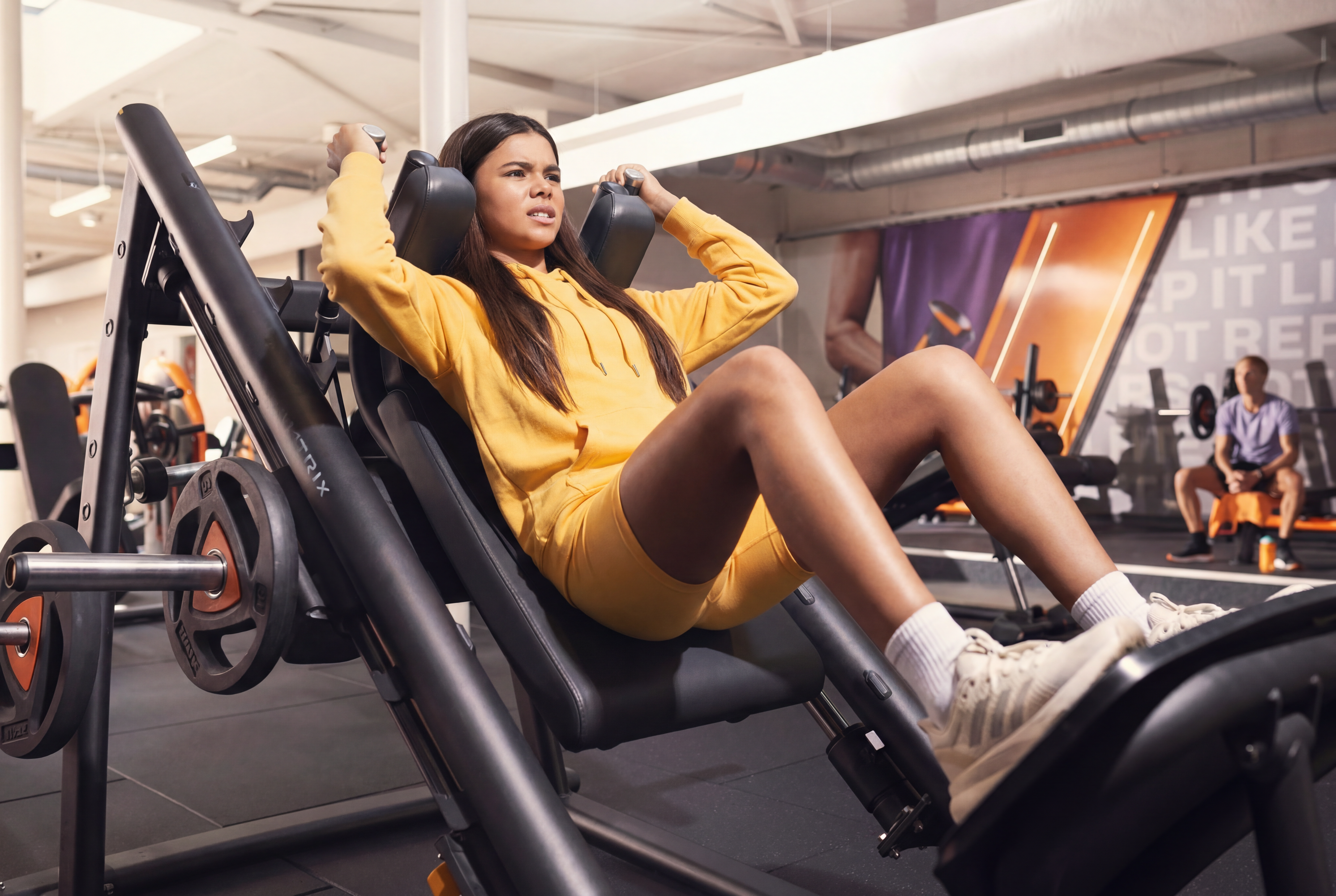
- Leg press (legs): A pushing movement for your lower body. It strengthens your legs and back without putting too much strain on your spine.
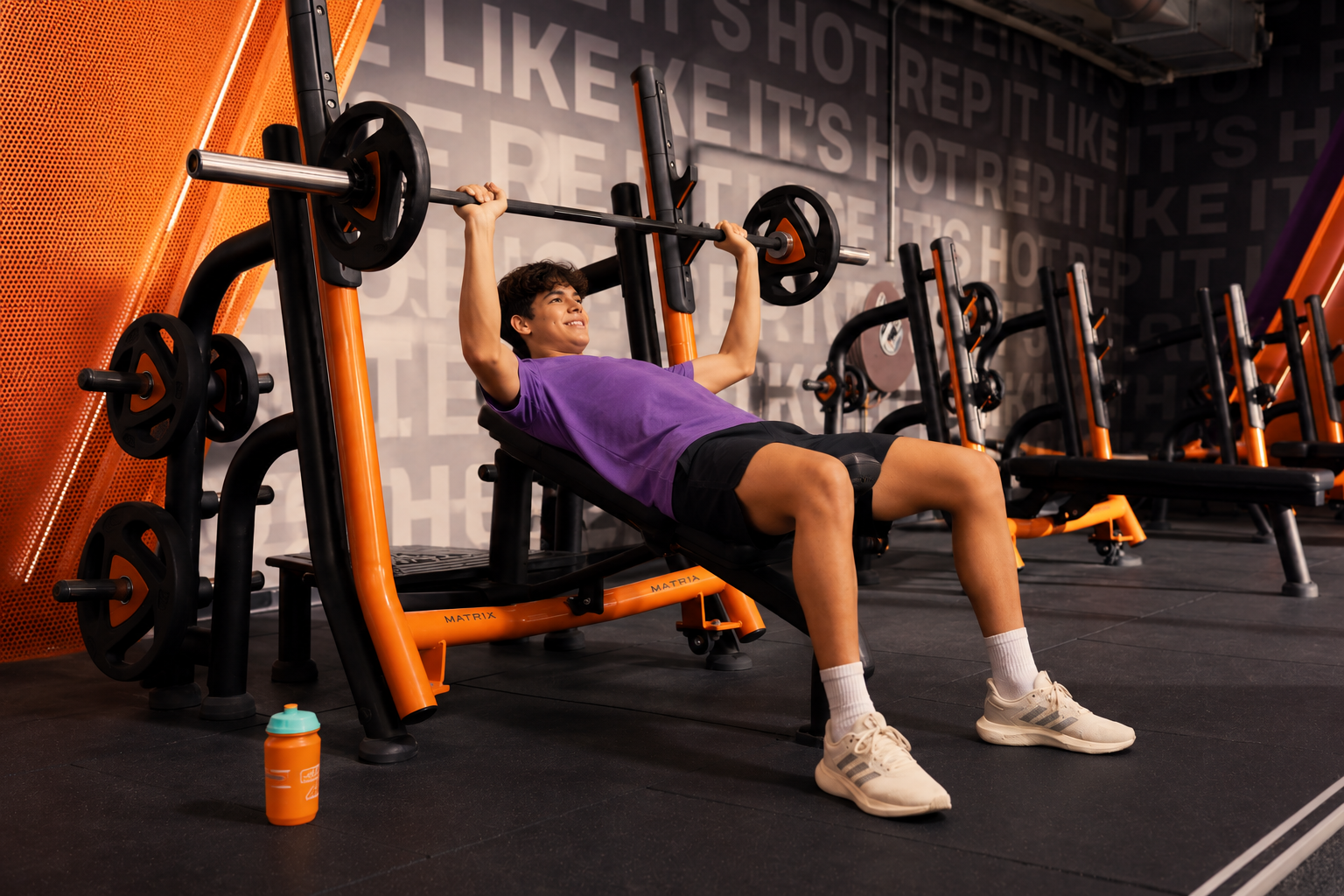
- Push movements (chest and shoulders): Pushing a weight away from your body, like push-ups or chest press exercises.
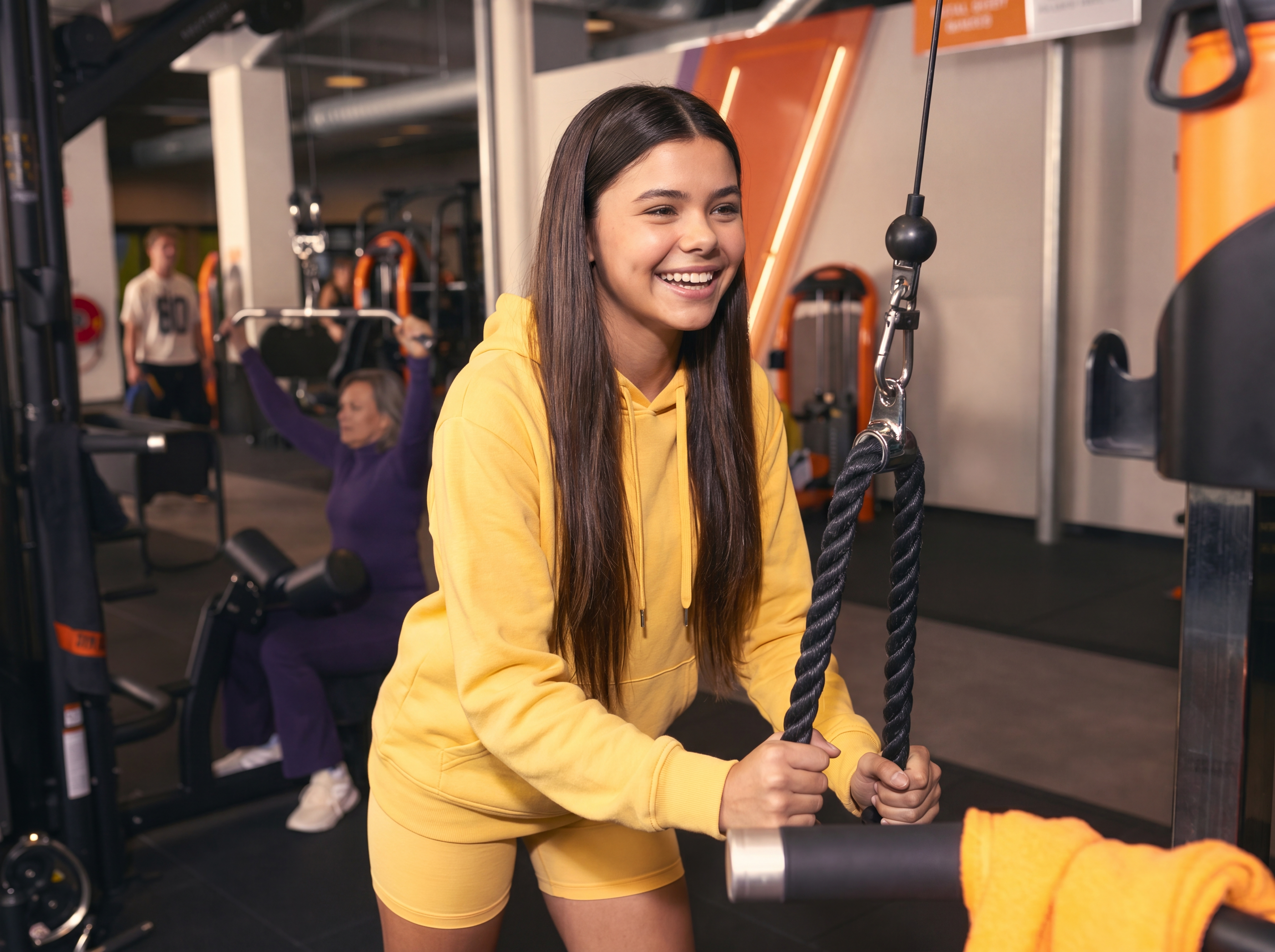
- Pull movements (back): Pulling a weight toward your body, like machine rows or pull-ups.
- Core control (abs): Keeping your body stable, like during planks.
How Much and How Should Youth Train?
For youth, consistency matters more than intensity*. You don’t need to train every day, in fact, you shouldn’t when you’re just starting out.
- Frequency: Training two or three times a week is the sweet spot. It gives your muscles and tendons enough time to recover and get stronger between sessions.
- Reps: Aim for 12 to 15 reps per set. This encourages you to use a weight you can fully control, prioritizing movement quality over heavy loads.
- Rest: Take 60 to 90 seconds of rest between exercises.
Coach’s Tip: In the Basic-Fit app, you’ll find beginner-friendly workout programs that guide you step by step through machines and basic exercises, so you never feel lost when you walk into the gym.
Remember, the gym offers benefits that go far beyond appearance, like more energy and a better mood. Use the Basic-Fit app to train with confidence and enjoy the process from day one.
Example Beginner Routine (Full Body)
This routine trains your entire body in a balanced way and is ideal for your first four to six weeks:
| Exercise | Sets & Reps | Main Focus |
|---|---|---|
| Bodyweight Squats | 3 × 15 | Keep your back straight and heels firmly on the floor. |
| Seated Row Machine | 3 × 12 | Squeeze your shoulder blades together as you pull. |
| Chest Press Machine | 3 × 12 | Use a controlled movement, without bouncing the weight. |
| Lunges | 3 × 10 per leg | Focus on balance and stability. |
Watch-outs
Most gym-related problems don’t come from the weights themselves, but from impulsive decisions:
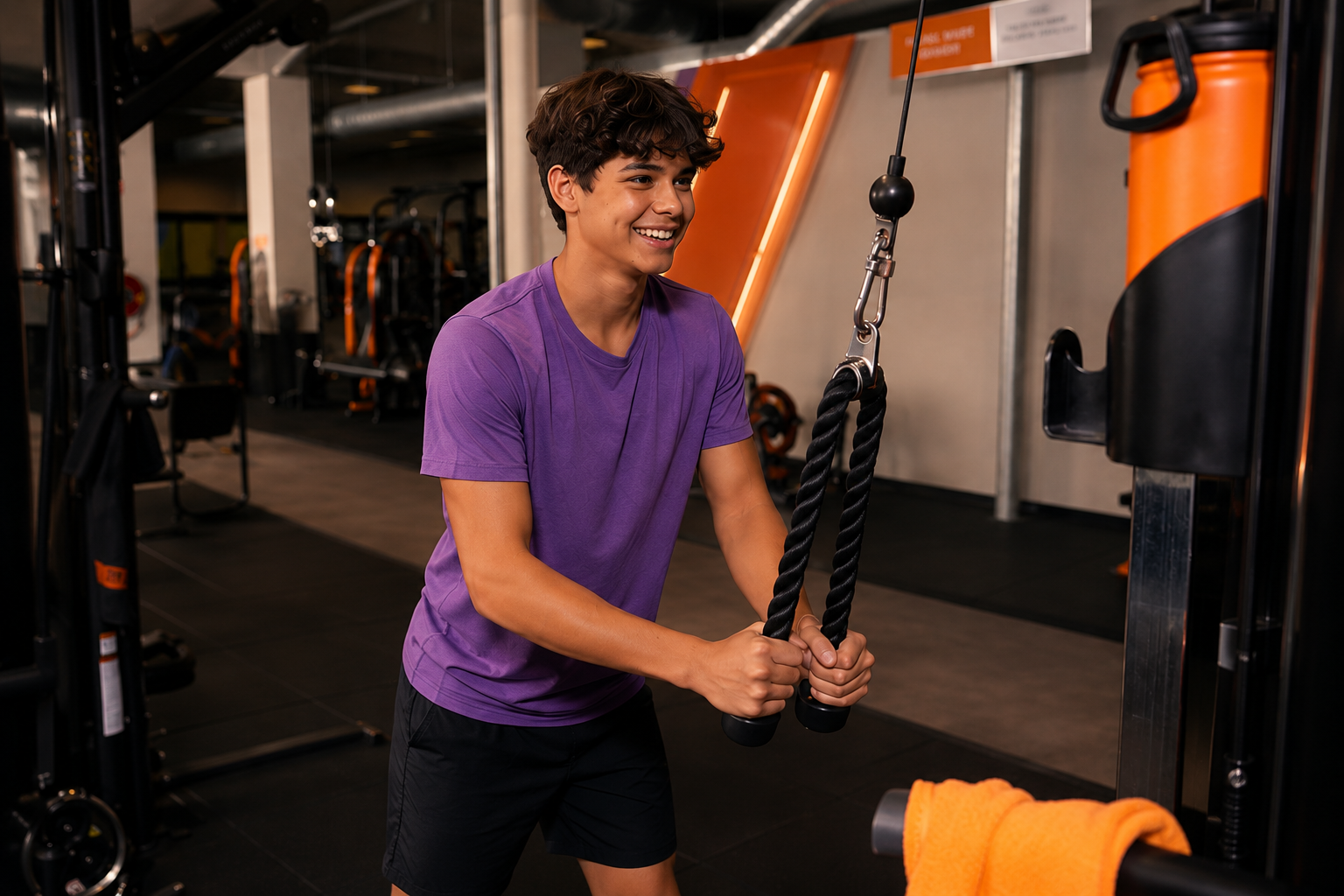
- Ego lifting: Trying to lift heavy weights to impress other people. It’s the number one cause of injuries. Weight is a tool, not the goal itself.
- Skipping your warm-up: Five to ten minutes of light cardio or mobility work helps prepare your joints and muscles.
- Copying workouts from social media: Many exercises you see on Social Media are designed for advanced athletes, or just to grab attention. Stick to the basics.
How to Progress Over Time
Once you’ve mastered the basics, usually after four to six weeks, you can start applying proper progression*:
- Improve your technique: Perform the same exercises with more control and better form.
- Increase reps: If 12 reps feel easy, try reaching 15 with the same weight.
- Increase the weight: Add a small amount of weight, around 2 to 5%, only when your previous reps feel solid and controlled.
A strong start makes all the difference. Having a clear guide helps you avoid feeling discouraged or quitting after two weeks because you don’t see results or feel unsure about what to do. Training smart keeps you motivated and helps protect you from injuries.
This article is for informational purposes only and does not replace professional advice. Individual needs may vary depending on your health and experience level. If you have specific questions or concerns, consult a professional.
Sources and References
- Faigenbaum, A. D., et al. (2009). Youth resistance training: Updated position statement paper from the National Strength and Conditioning Association.
- Lesinski, M., Prieske, O., & Granacher, U. (2016). Effects and dose-response relationships of resistance training on physical performance in youth athletes. British Journal of Sports Medicine.
- Behm, D. G., et al. (2017). Canadian Society for Exercise Physiology position paper on resistance training in youth. Applied Physiology, Nutrition, and Metabolism.


