

Strong legs make everyday movement easier. Your leg muscles support you when you stand, walk, climb stairs, or train in the gym. Building leg strength improves stability, balance, and coordination, helping you move with more control in daily life and during workouts.
Because your legs contain large muscle groups, working them helps you move better, feel stronger, and lower your risk of injury.Whether you exercise at home or in the club, leg workouts are essential for a balanced and healthy body.
In this guide, you’ll find a list of the most effective exercises for legs. Each one targets a key muscle group and includes clear instructions, form tips, and ways to adapt the move to your level.
Your leg muscles explained
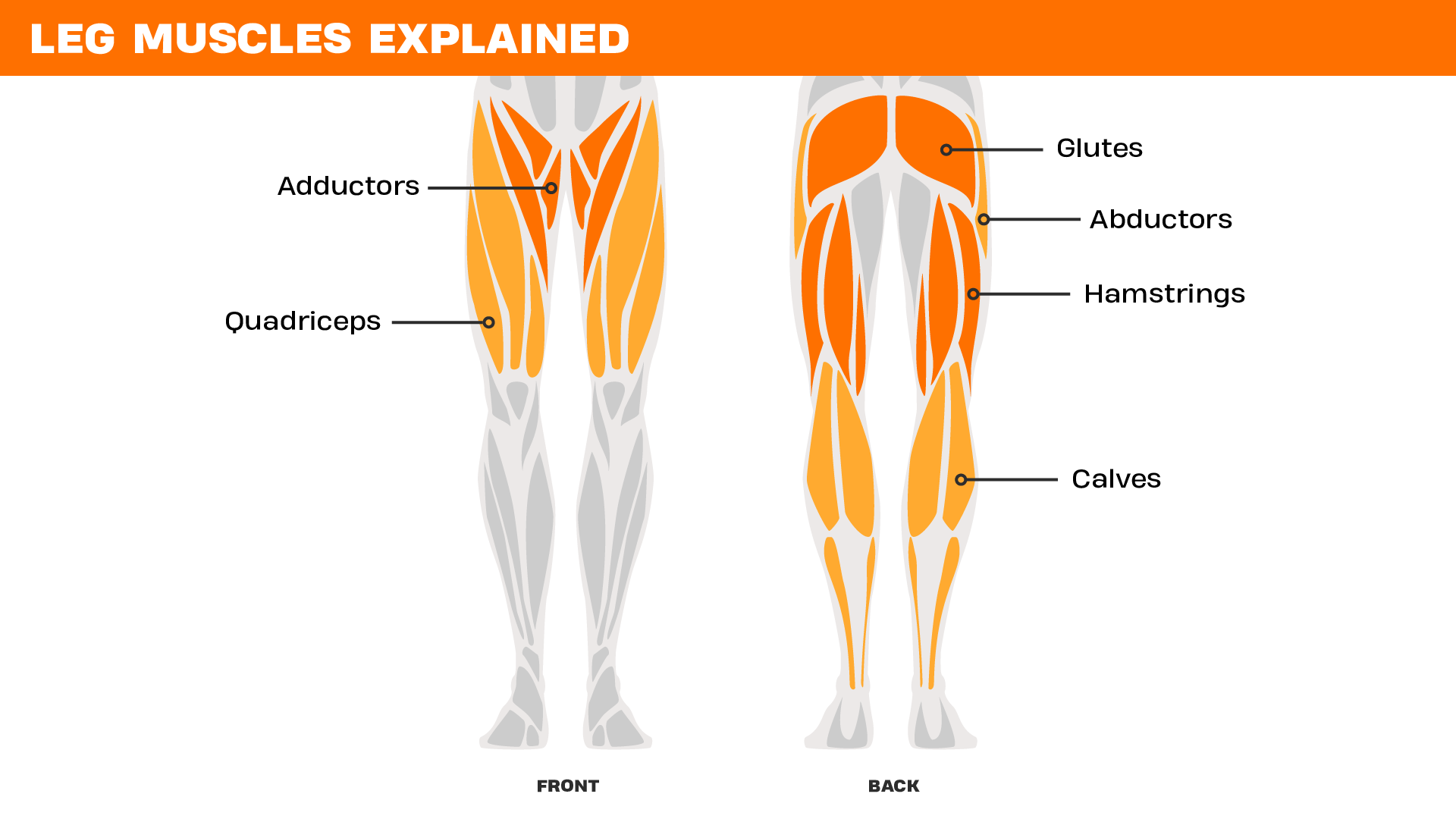
Your legs include several major muscle groups that work together to keep you strong and stable with every move you make. Understanding what each one does helps you train more effectively.
Legs are made up of five main muscle groups:
- Quadriceps (quads)
The quads are at the front of your thighs and are responsible for straightening your knees. They come into play when you stand up, climb stairs, or squat. Strong quads make it easier to lift weight, control movement, and maintain good form in almost every lower body exercise. They also help protect your knees by absorbing impact when you land or change direction.
- Hamstrings
These muscles run along the back of your thighs and work opposite the quads. They bend your knees and extend your hips, creating power for running, jumping, and lifting. Strong hamstrings reduce the risk of injury by supporting your knees and hips during explosive or fast movements. They also help you stay balanced when you move or change speed.
- Glutes
The glute muscles, located in your hips and buttocks, are your main source of lower body power. They stabilise your pelvis, protect your lower back, and support posture. You use them every time you stand up, climb stairs, or push through a squat or deadlift. Well-developed glutes help you move more efficiently and with greater strength in all directions.
- Adductors and abductors (inner and outer thighs)
These muscles sit along the inside and outside of your thighs. They keep your hips and knees stable and control side-to-side movement. Training these muscles improves coordination, balance, and injury prevention - especially for activities that involve turning, running, or jumping.
- Calves
The calves are at the back of your lower legs and are active every time you take a step. They lift your heels and help you push off the ground, which keeps your stride smooth and powerful. Strong calves improve ankle stability and balance and can help prevent common lower leg injuries.
The best leg exercises to build strength and balance
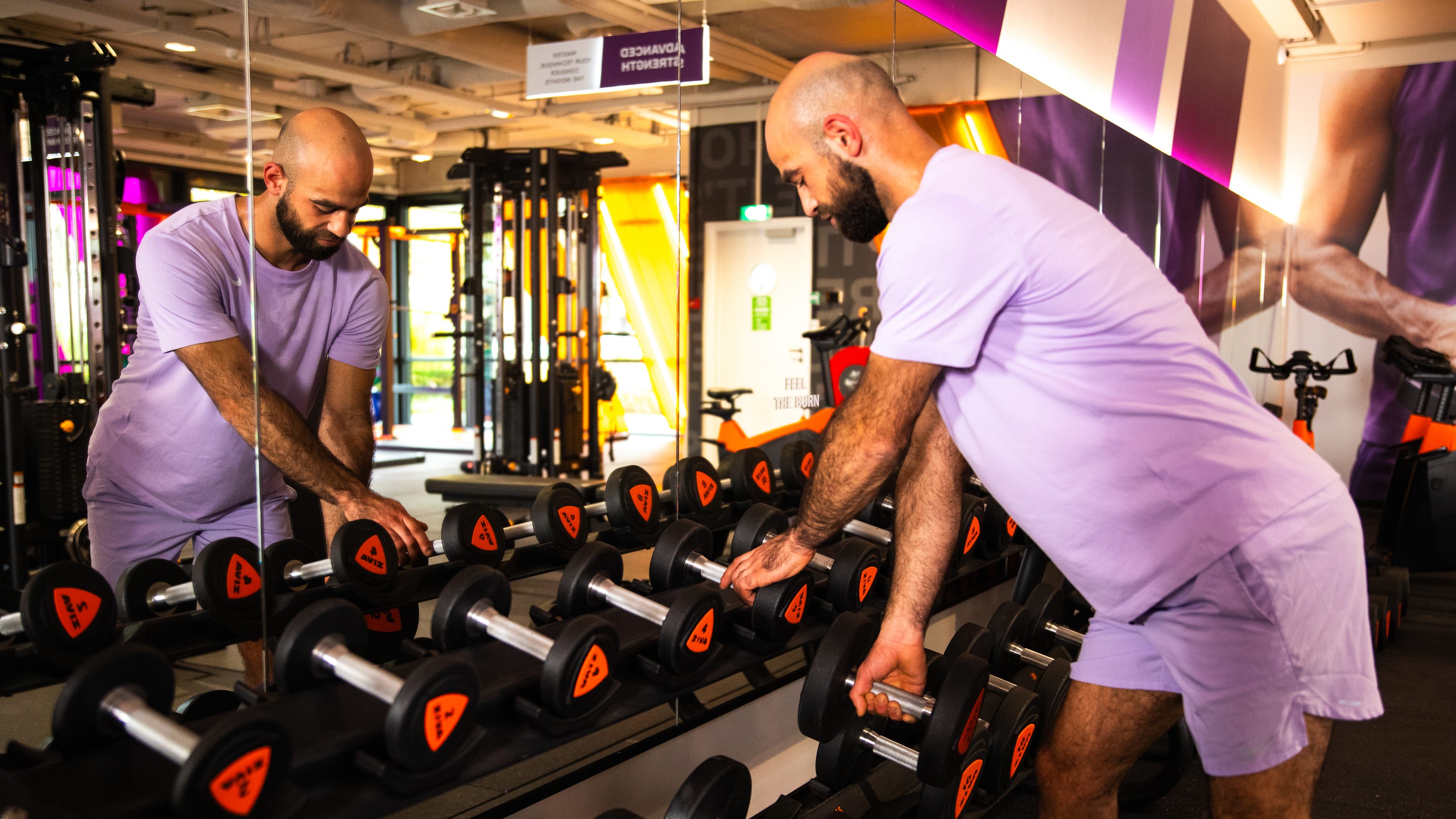
There are countless ways to train your legs. From machines and free weights to bodyweight moves and resistance bands, each exercise and variation targets the muscles in a slightly different way. The key is to focus on the movements that give you the most value for your effort.
The following exercises are considered essentials because they work multiple muscle groups at once, improve balance and coordination, and can be adapted to any fitness level. Start with these core moves to build strength safely and create a solid base for every other leg workout.
1. Squat
Targets: Quads, glutes, and hamstrings.
Stand with your feet shoulder-width apart. Lower your hips as if sitting into a chair, keeping your weight in your heels. Push back up to standing and squeeze your glutes at the top.
- Trainer tip: Keep your chest lifted, your back straight, and your core engaged to protect your spine and stay stable.
2. Lunge
Targets: Quads, glutes, and inner thighs.
Step forward with one foot and bend both knees until they form 90-degree angles. Keep your upper body upright and your front knee aligned with your ankle. Push through your front heel to return to standing.
- Trainer tip: Step slightly wider to stay balanced and focus on slow, controlled movement.
3. Deadlift
Targets: Hamstrings, glutes, and lower back.
Hold a barbell or two dumbbells in front of your thighs. Hinge at your hips and lower the weights toward your shins while keeping your back straight. Push your hips forward and stand tall, squeezing your glutes at the top.
Trainer tip: Move slowly and keep your core engaged to protect your back.
4. Step-up
Targets: Quads, glutes, and calves.
How to do it: Step onto a bench or sturdy platform with one foot. Press through your heel to lift your body up, then step back down under control. Switch legs after each set.
- Trainer tip: Hold a pair of dumbbells for extra resistance and keep your chest upright to stay balanced.
5. Glute bridge or hip thrust
Targets: Glutes and hamstrings.
How to do it: Lie on your back with your knees bent and feet flat on the floor. Push through your heels to lift your hips until your body forms a straight line from shoulders to knees. Lower slowly without letting your hips touch the ground.
- Trainer tip: Squeeze your glutes at the top for one or two seconds before lowering to increase activation.
6. Calf raise
Targets: Calves
Stand tall with your feet hip-width apart. Lift your heels until you are on your tiptoes, pause for a moment, then lower them back down under control.
- Trainer tip: Do the movement on a step or raised surface to increase your range of motion.
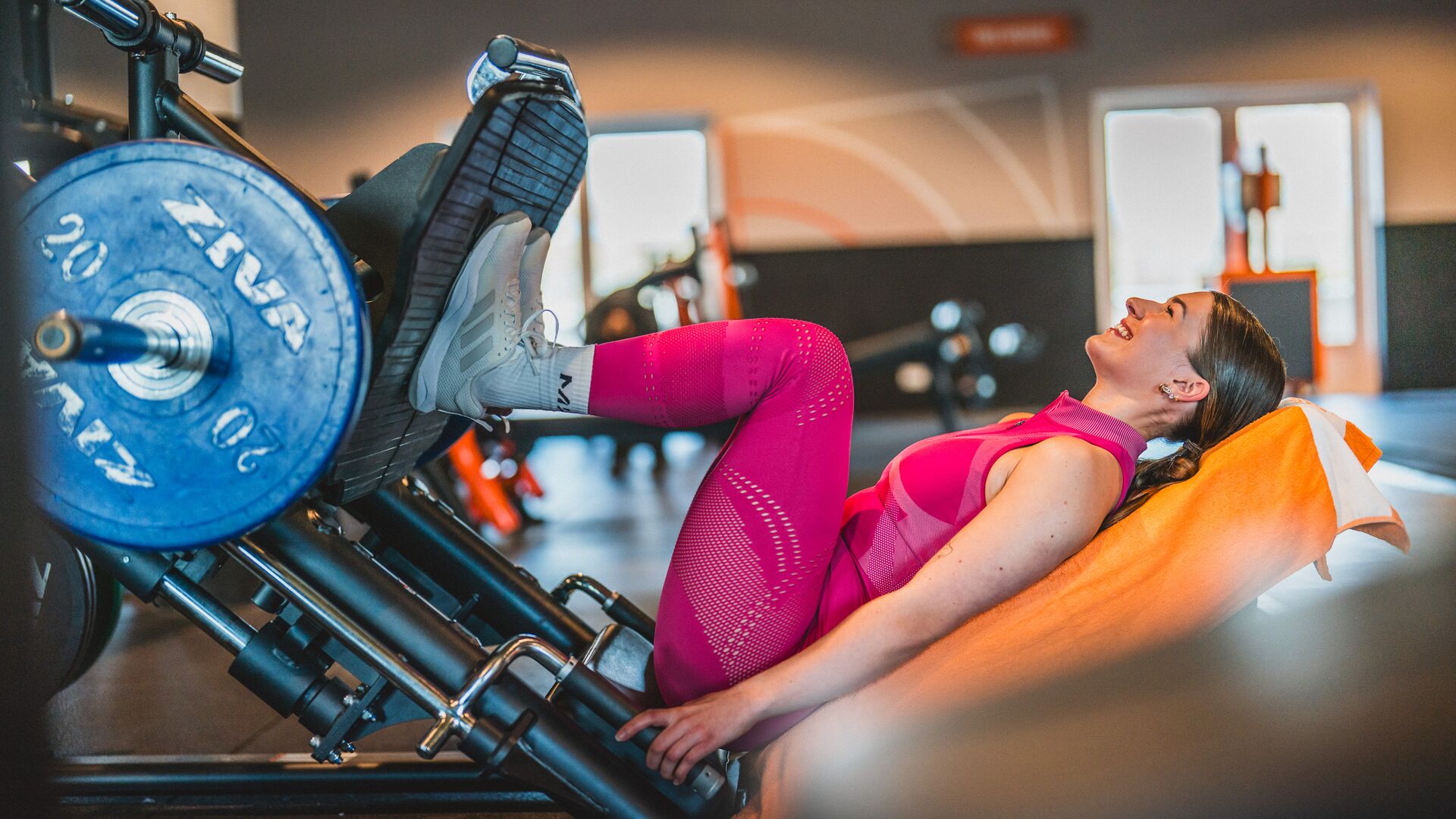
7. Leg press (for gym users)
Targets: Quads, glutes, and hamstrings.
Sit on the leg press machine and place your feet shoulder-width apart on the platform. Push the weight away by extending your legs, then slowly return to the starting position without locking your knees.
- Trainer tip: Adjust your foot placement to shift the focus — higher on the platform for glutes and hamstrings, lower for quads.
How to build a simple leg workout
Now that you know the key movements, here’s how to put them together into one balanced leg session. This simple leg training routine targets all major leg muscles evenly and works well on its own or as part of a full-body plan.
Lower body workout routine
| Exercise | Sets | Reps | Focus Area |
|---|---|---|---|
| Squat | 3 | 10–12 | Quads, glutes, hamstrings |
| Lunge | 3 | 10 each leg | Quads, glutes, inner thighs |
| Deadlift | 3 | 8–10 | Hamstrings, glutes, lower back |
| Step-up | 3 | 10 each leg | Quads, glutes, calves |
| Glute bridge | 3 | 12–15 | Glutes, hamstrings |
| Calf raise | 3 | 15–20 | Calves |
You can find leg-specific workouts, home-based routines, and guided training plans in the Basic-Fit app. You can choose your goal and level, follow step-by-step video demonstrations, and track your progress as you go.
Recovery: where progress begins
Every time you train your legs, you create small tears in your muscle fibers. Recovery is when those fibers repair and grow back stronger. That’s why progress doesn’t happen during your workout but after it. Ignoring recovery slows strength gains and increases the risk of injury.
How to properly recover your leg muscles after workouts:
- Rest 48 hours before training legs again so the muscles can rebuild fully.
- Add active recovery on off days, such as light cycling, mobility drills, or stretching, to keep your legs loose and your blood flowing.
- Use a foam roller or massage ball to release tight spots and support muscle repair.
- Focus on sleep and good nutrition, since both play a major role in recovery and overall performance.
When your muscles recover well, you move better, feel stronger, and can keep progressing week after week.
Consistency: your key to long-term progress
Consistency is what turns effort into results. Every session teaches your body to move better, build strength, and recover faster. Training regularly also helps you stay motivated, as progress is easier to see when you track it over time.
However, you don’t have to do it alone. At Basic-Fit, you can find several tools that help you stay on track:
- Log your workouts in the Basic-Fit app to track your performance, monitor progress, and celebrate milestones.
- Follow guided programs and leg workouts designed for every level, whether you train in the club or at home.
- Book a Personal Trainer session for expert feedback and a plan that fits your goals.
- Join a group class to train with others, learn new exercises, and keep your motivation high.
Progress takes time, and structure helps you stay on track. Plan your workouts, follow your routine, and make small adjustments as you build strength. Consistency means training with purpose and showing up regularly so your results keep improving.


