


Building muscle mass starts with a simple idea: give your muscles the right challenge, fuel your body, and recover well. When you repeat those pieces consistently, your strength and muscle grow week after week.
This guide shows you how to increase muscle mass in a clear, practical way. You’ll learn how to structure your workouts, how often to train, how to apply progressive overload, and how food, sleep, stress and supplements fit into the process.

The foundations of muscle growth
Your muscles grow when you push them harder than they’re used to. Strength training creates that challenge, and your body adapts between sessions by rebuilding the muscle stronger and fuller.
There are a few basics that make this process work:
You need resistance.
This can be bodyweight, dumbbells, machines, barbells, or bands. Anything that pushes the muscle beyond everyday effort can stimulate growth.
You need enough work each week.
One light set here and there won’t change much. Research suggests most people grow well with around 10–20 challenging sets per muscle group per week, ideally spread over 2–3 sessions.*
You need recovery.
Your muscles grow between workouts. Sleep, rest days and eating enough all influence how well you adapt and feel in your next session.

Strength training: the fastest way to build muscle mass
Strength training gives you the biggest return on your effort when your goal is to build muscle. Cardio supports your health, but resistance work is where your muscles get the stimulus to grow.
Focus on compound exercises
Compound exercises train multiple muscles in one go. That means you can move heavier weight, challenge your body more, and get more out of every set.
The main movement patterns include:
Squat: squats, leg press, goblet squat
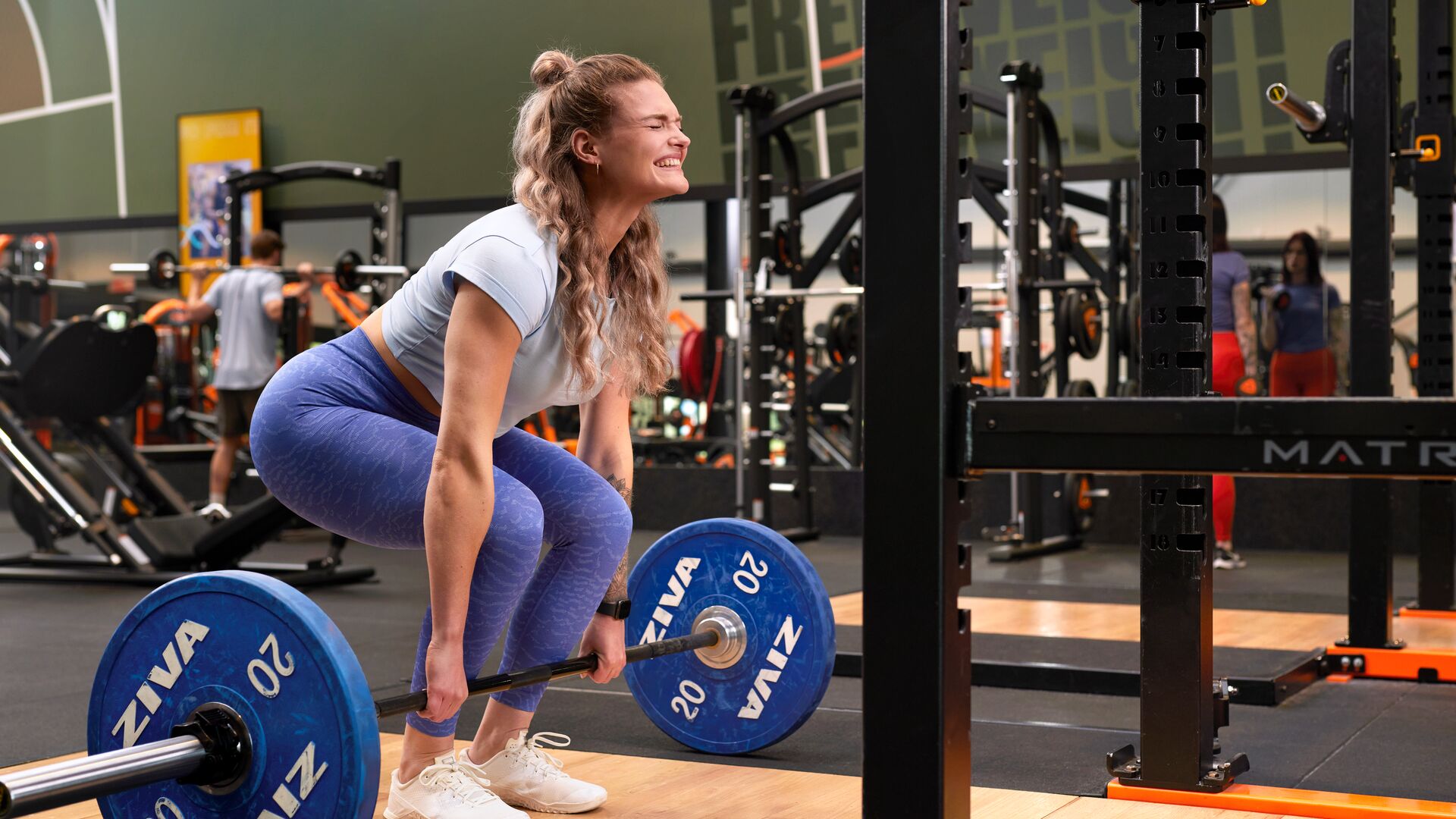
Hinge: deadlifts, Romanian deadlifts, hip thrusts
Push: bench press, shoulder press, push-ups
Pull: rows, pulldowns, pull-ups
You don’t need a long list of exercises. Pick one or two movements from each pattern, practice them often, and get gradually stronger at them. Consistency beats variety.

Train each muscle group 2–3 times per week
Muscles respond well to regular training. Working a muscle two or three times a week gives it enough stimulus to grow, while still allowing time to recover. Research shows this frequency often leads to better results than hitting a muscle only once a week.*
There are a few simple ways to set this up:
Three full-body sessions spaced out through the week
An upper/lower split done twice per week (four days total)
The structure is flexible. What matters most is that you train each major muscle group more than once a week and include enough challenging sets.
Choose weights you can control
Pick a weight that feels tough near the end of the set, while still allowing good technique. Muscle can grow in a wide rep range (roughly 5 to 30 reps) as long as the last few reps feel demanding.*
A helpful way to judge this is by how the final reps feel:
The last 2–3 reps should be hard, but still controlled
If you could continue for many extra reps, the weight is too light.
If your form falls apart after only a couple of reps, it’s too heavy.
Aim to finish most working sets with 1–3 reps left in the tank. You could grind out a couple more if needed, but they’d feel uncomfortable. This level of effort builds muscle without overwhelming your recovery.

Progressive overload: your key to growth
Your body adapts to the training you give it. To keep building strength and size, increase the challenge gradually over time. This constant increase in difficulty is called progressive overload.
There are a few simple ways to create that increase:
Add a bit more weight
Do one or two extra reps with the same weight
Add an extra set when you feel ready
Slow the movement down to create more tension
Progressive overload works best when you change just one variable at a time. Tracking your workouts makes this easier. Log your weights, reps and sets in the Basic-Fit app so you can see your strength build over time.

Eat to support your muscle growth
Building muscle requires enough fuel. Your body needs energy to repair training, add new tissue, and recover well between sessions. For most people, a small calorie surplus works well*: eating a little more than you burn so your body has what it needs to grow.
A simple way to check if you’re eating enough:
If your weight hasn’t changed for a few weeks, add a snack or slightly larger portions.
Focus on the trend over time, not day-to-day changes.
A slow gain of 0.25–0.5% of bodyweight per week often supports steady muscle growth.*

Include protein regularly
Protein helps repair and build muscle. Research suggests around 1.6–2.2 g per kilogram of bodyweight per day* works well for people who train.
You don’t need to obsess over numbers. Just include a good protein source at most meals.
Good options include eggs, yogurt, tofu, beans, chicken, fish, lean meat, and high-protein dairy.
It also helps to spread your protein across 3–5 meals or snacks throughout the day.*

Carbs for training, fats for overall health
Carbs are your main training fuel. They help you maintain energy and perform well in your sessions. Examples include:
Whole grains
Potatoes
Rice
Pasta
Fruit
Healthy fats support hormones and general health. Include foods like:
Nuts and seeds
Olive oil
Avocado
Fatty fish
Supplements for muscle growth
Supplements can support your training, but they don’t replace the habits that drive muscle growth. The real progress comes from consistent strength training, enough weekly sets, good food and proper recovery.
Common supplements for muscle growth include:
Creatine
Creatine monohydrate is one of the most researched supplements for strength training. Many people feel stronger in their lifts and recover better between sets when they use it alongside consistent training.* A common dose is 3–5 g per day with any meal.
Protein powder
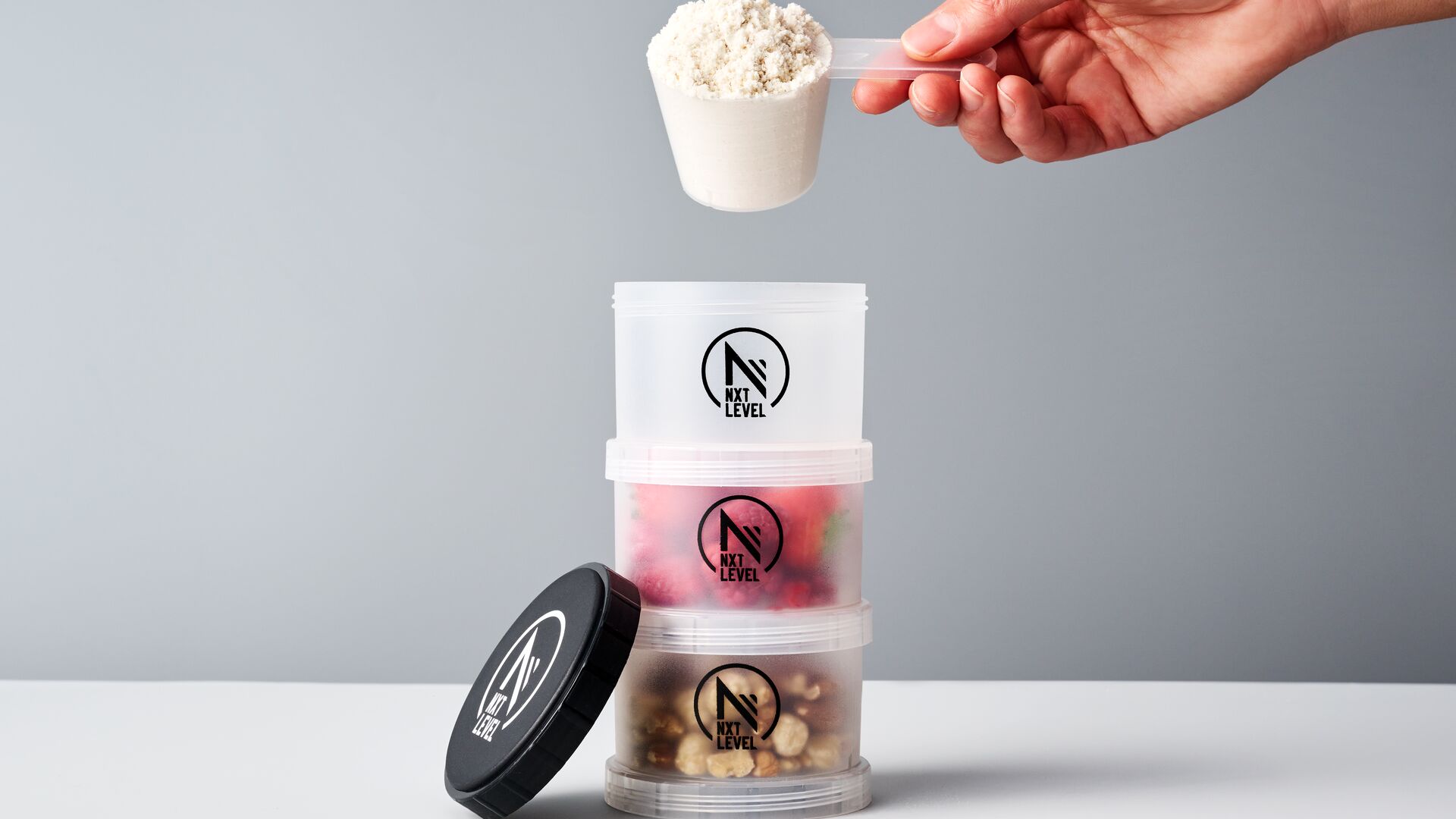
Protein powder can make it easier to reach your daily protein goal, especially on busy days. Whey protein, casein, and plant-based proteins like pea or soy are common options.
Caffeine
Caffeine can help some people feel more focused and alert during training,* especially on days when energy feels low. If you use it, start small and avoid it late in the day so it doesn’t affect your sleep.

Recovery: where your body builds muscle
Training provides the stimulus. Recovery is where your body builds the results. Rest days allow your muscles to repair and prepare for your next session. Most people progress well with 1–2 rest days per week, plus lighter movement on non-lifting days.
Sleep strongly influences training performance and recovery. Short or inconsistent sleep can make sessions feel heavier and slow your progress. Aiming for 7–9 hours supports strength training and recovery.
Stress affects training as well. Busy or demanding weeks can make recovery feel harder. Simple habits helps: a short walk, unwinding before bed, or a quiet moment during the day.

What affects how fast you gain muscle?
Muscle grows at different speeds for everyone. Training experience, sleep, stress, nutrition, and weekly routine all influence how quickly your body adapts.
The principles for building muscles are the same for men and women (lift regularly, progress your exercises, eat enough, recover well) though men often see visual changes faster because they typically start with more muscle mass.
Most people see clearer progress after 8–12 weeks. Look for:
Steady strength increases
Smoother technique
Slight increases in bodyweight
Muscles feeling fuller or firmer
If progress slows, consider small adjustments: eating more consistently, improving sleep, or increasing your effort during working sets. Change one variable at a time and give it a few weeks to take effect.

Take the next step
Progress comes from consistent training, enough fuel, and proper recovery. When you repeat those pieces week after week, your strength and muscle will grow.
Hundreds of strength workouts and programs in the Basic-Fit app
Exercise videos and technique tips to help you move with confidence
Certified personal trainers you can book for guidance and technique support
Group classes that mix strength and conditioning for a full-body challenge
Track changes in your muscle mass with the Body Analyzer in your club
Pick a routine you can repeat, start with weights you can control, and build from there.
Sources
Schoenfeld, B. J., Ogborn, D., & Krieger, J. W. (2017). Resistance Training Volume Enhances Muscle Hypertrophy: A Systematic Review and Meta-Analysis. Journal of Strength and Conditioning Researc
Schoenfeld, B. J., et al. (2016). Effects of Resistance Training Frequency on Measures of Muscle Hypertrophy: A Systematic Review and Meta-Analysis. Sports Medicine.
Grgic, J., Schoenfeld, B. J., & Latella, C. (2022). Resistance Training to Failure vs. Non-Failure for Muscle Hypertrophy: A Systematic Review and Meta-Analysis. Sports Medicine.
Iraki, J., Fitschen, P., Espinar, S., & Helms, E. (2019). Nutrition Recommendations for Bodybuilders in the Off-Season: A Narrative Review. Journal of the International Society of Sports Nutrition.
Morton, R. W., et al. (2018). A Systematic Review, Meta-Analysis, and Meta-Regression of the Effect of Protein Supplementation on Resistance Training–Induced Gains in Muscle Mass and Strength. British Journal of Sports Medicine.
Schoenfeld, B. J., & Aragon, A. A. (2018). How Much Protein Can the Body Use in a Single Meal for Muscle-Building? Implications for Daily Protein Distribution. Journal of the International Society of Sports Nutrition


