



If you've ever searched for an interval workout, you've probably encountered the terms HIIT and Tabata. They're often used interchangeably in workout videos and articles, which makes it easy to assume they're exactly the same thing.
Although they're closely related, they aren't exactly the same. Understanding the difference can help you choose workouts that match your fitness level, your goals and the amount of time you have available.
In this article, I'll explain what HIIT and Tabata actually are, how they differ, and how to decide which one is right for you.
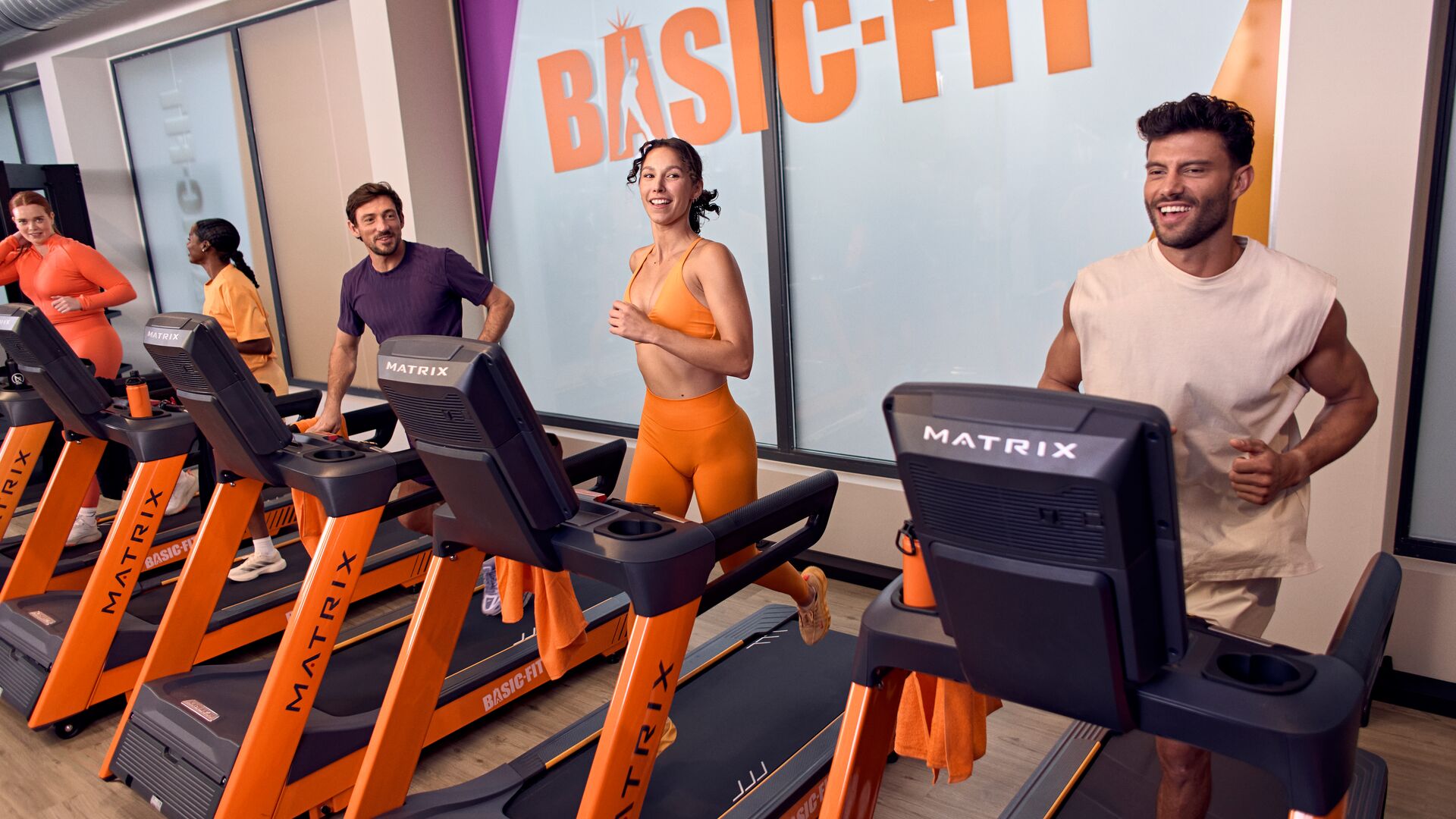
What is HIIT?
HIIT stands for High-Intensity Interval Training.
Instead of exercising at one steady pace, HIIT alternates between short bursts of hard work and periods of recovery. The recovery can be complete rest or lower-intensity movement, depending on the workout.
A typical HIIT workout might look something like this:
- 30 seconds of fast cycling followed by 60 seconds of easy cycling
- 40 seconds of bodyweight squats followed by 20 seconds of rest
- 45 seconds of rowing followed by 45 seconds of recovery
One of the biggest reasons HIIT has become so popular is its flexibility. That's also why you'll find a wide range of HIIT workouts in the Basic-Fit app. Whether you have 10 minutes or 30, you can choose a session that matches your fitness level and the time you have available.
You can perform HIIT with bodyweight exercises, machines and free weights. Work intervals, recovery periods and total workout time can all be adjusted depending on your fitness level.
As a trainer, I love how this flexibility makes HIIT suitable for all levels. I've worked with people who were nervous about interval training because they thought every session had to leave them exhausted. Once they realised HIIT can be adapted to their own level, they felt much more confident giving it a try.
What is Tabata?
Tabata is a specific type of HIIT. It was developed by Japanese researcher Dr. Izumi Tabata and follows a very specific format:
- 20 seconds of maximum effort
- 10 seconds of rest
- Repeat for 8 rounds
That means one full Tabata lasts just 4 minutes.
Although the workout is short, it's designed to be extremely intense. In the original research, participants worked at close to their maximum effort during every work interval.
That's an important distinction because many workouts labelled "Tabata" don't actually follow the original protocol. They're often inspired by Tabata rather than being true Tabata sessions.
For most beginners, that's perfectly fine. The structure can still be useful even if you reduce the intensity to match your current fitness level.
Tabata vs HIIT: the key differences
The easiest way to think about it is this: All Tabata workouts are HIIT, but not all HIIT workouts are Tabata.
Here are the main differences.
| HIIT | Tabata | |
|---|---|---|
| Structure | Flexible | Fixed |
| Work interval | Varies | 20 seconds |
| Rest interval | Varies | 10 seconds |
| Total duration | Usually 10–30 minutes | 4 minutes per Tabata |
| Intensity | High | Very high |
Because HIIT is flexible, it can be adapted for almost anyone. Tabata, on the other hand, follows one specific structure that leaves very little room for longer recovery periods.
Many people experience Tabata as more demanding because of the short recovery periods, which is why I tend to focus more on other HIIT workouts with my beginner clients and introduce Tabata occasionally for those who are more advanced.
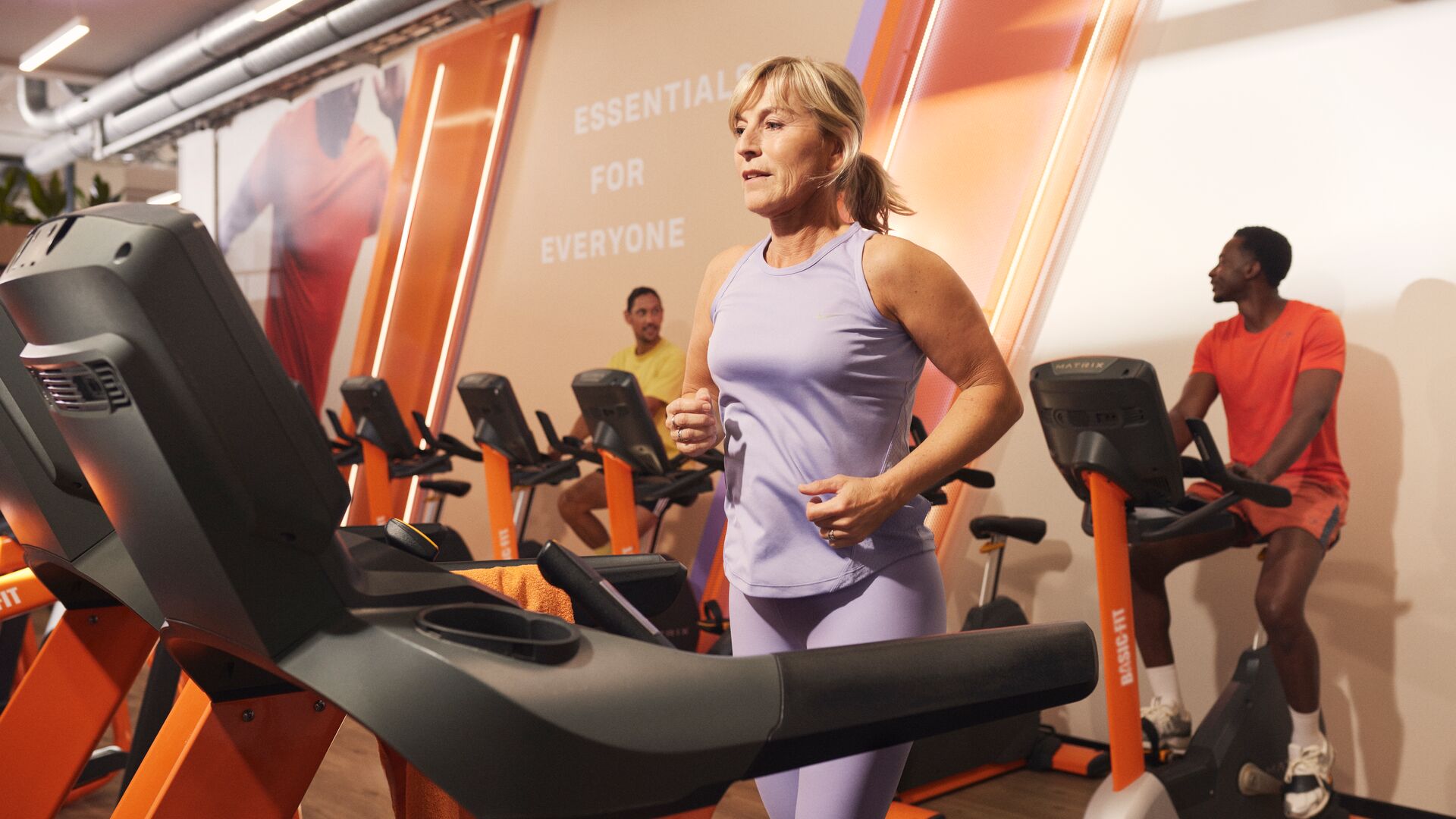
What does a Tabata workout look like?
Imagine you're performing bodyweight squats.
You would:
- Work as hard as you can for 20 seconds.
- Rest for 10 seconds.
- Repeat that cycle 8 times.
After four minutes, you'll have completed one Tabata.
You can perform one exercise for all eight rounds or combine two exercises by alternating between them.
For example:
- Squats
- Mountain climbers
Or:
- Burpees
- High knees
Even though the workout is short, it can feel surprisingly challenging. Most people notice their heart rate climbs quickly and the final few rounds become increasingly difficult, but the benefit is that you can get an intense workout in a very short period of time.
However, you can always adapt exercises to match your current fitness level.
If you'd rather follow a guided workout, the Basic-Fit app also includes Tabata sessions, making it easy to experience the format without having to watch the clock yourself.
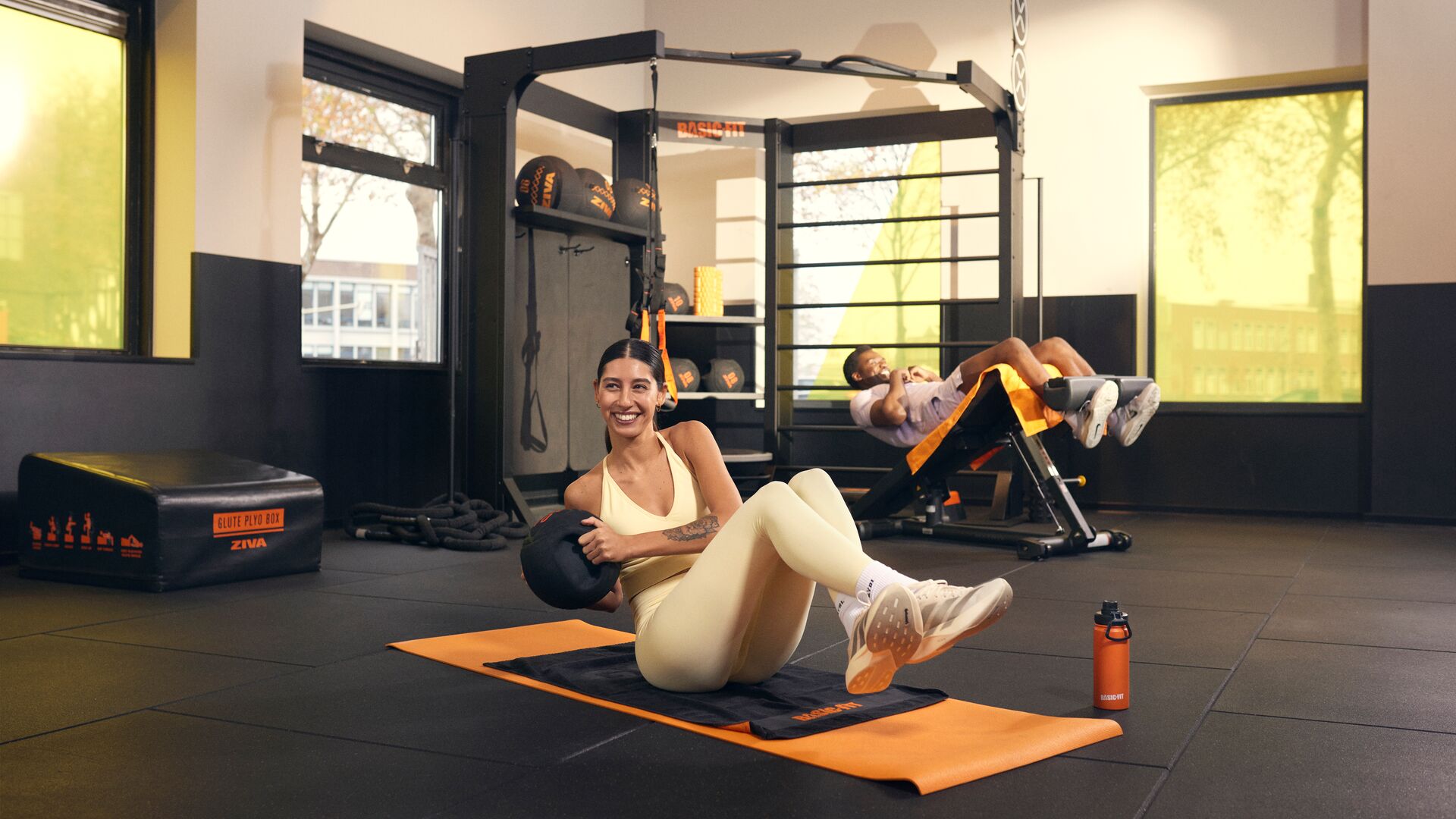
What does a HIIT workout look like?
HIIT gives you more freedom. For example, a beginner HIIT session could look like this:
- 30 seconds of brisk rowing
- 60 seconds of easy rowing
- Repeat for 15 minutes
Or:
- 40 seconds of bodyweight squats
- 20 seconds rest
- 40 seconds push-ups (or incline push-ups)
- 20 seconds rest
- Repeat for 4 rounds
Because you can adjust both the work and recovery periods, HIIT is often easier to tailor to your current fitness level.
I've seen plenty of beginners start with 20 seconds of work and a full minute of recovery. As their fitness improved, they naturally felt ready to shorten the recovery or work a little longer.
That's one of the advantages of HIIT: you can gradually make it more challenging as your fitness improves.
If you enjoy training with others, HIIT is also available in many Basic-Fit clubs through cardio group classes. Working out with an instructor and a group can help you stay motivated while still letting you train at your own pace.
Which is best for your goals?
Both HIIT and Tabata can improve fitness, but they suit different needs.
General fitness: HIIT is more flexible and easier to adjust, making it a good starting point.
Endurance and conditioning: Both help, but Tabata is more intense, while HIIT allows longer sessions.
Short on time: Tabata is very efficient, with workouts lasting just four minutes.
New to interval training: HIIT is more beginner-friendly due to adjustable intensity and rest.
Recovery: Tabata is more demanding and may require longer recovery. Alongside good sleep and nutrition, you can support your recovery by making use of the massage chairs available in all Basic-Fit clubs.
Is one better than the other?
Neither method is automatically better. The best choice depends on what you're trying to achieve and what you'll actually enjoy doing consistently.
If you're just getting started, HIIT is usually the easier place to begin because you can adjust the intensity and recovery to suit your fitness level.
If you've built a solid fitness base and want a bigger challenge, Tabata can be a great option.
At the end of the day, the workout that fits your routine is often the one you're most likely to stick with.
Final thoughts
Although they're often used interchangeably, Tabata and HIIT aren't exactly the same.
Tabata is one specific type of HIIT with a fixed structure of 20 seconds of work followed by 10 seconds of rest. HIIT is much broader and allows you to adjust the work intervals, recovery periods and total workout length to match your goals and experience.
Both approaches can improve your fitness, endurance and conditioning.
If you're new to interval training, start with a beginner-friendly HIIT workout and focus on building good technique and consistency. As your fitness improves, you can always experiment with Tabata if you're looking for a new challenge.
From my experience, you're much more likely to keep training if you choose a workout you genuinely enjoy. That's what makes the biggest difference over time. If you're ready to get started, pick a simple HIIT or Tabata workout today and give it a try. You might be surprised how quickly you build confidence and fitness.
This article is for general information only. Individual needs can vary depending on health status, training experience, and personal goals. If you have a medical condition or specific health concerns, consider seeking advice from a qualified healthcare professional.


