

Creatine is one of those supplements that seems to come with a lot of opinions. Some people swear by it. Others avoid it because they’ve heard it causes weight gain, water retention, or kidney problems. That can make it hard to know whether this supplement is something you should even consider.
The truth is much simpler. Creatine is one of the most researched supplements in sport and fitness*. When you train regularly, it can support strength and performance. It’s not a shortcut, but a practical option that works best when it fits your routine and training goals.
In this article, you’ll learn what creatine is, what it does for your training, which common claims are true or false, how to use it safely, and how to decide whether it fits your routine.
What is creatine?
Creatine is a compound made from three amino acids: arginine, glycine, and methionine. Your body produces creatine naturally, and you also get it from foods like meat and fish.
Most of the creatine in your body is stored in your muscles. There, it plays a role in producing quick energy during short and intense efforts like heavy lifts, sprints, or powerful movements that last just a few seconds.
If you eat little or no animal products, your baseline creatine levels are often lower. That’s one reason vegetarians and vegans sometimes notice clearer effects when supplementing.
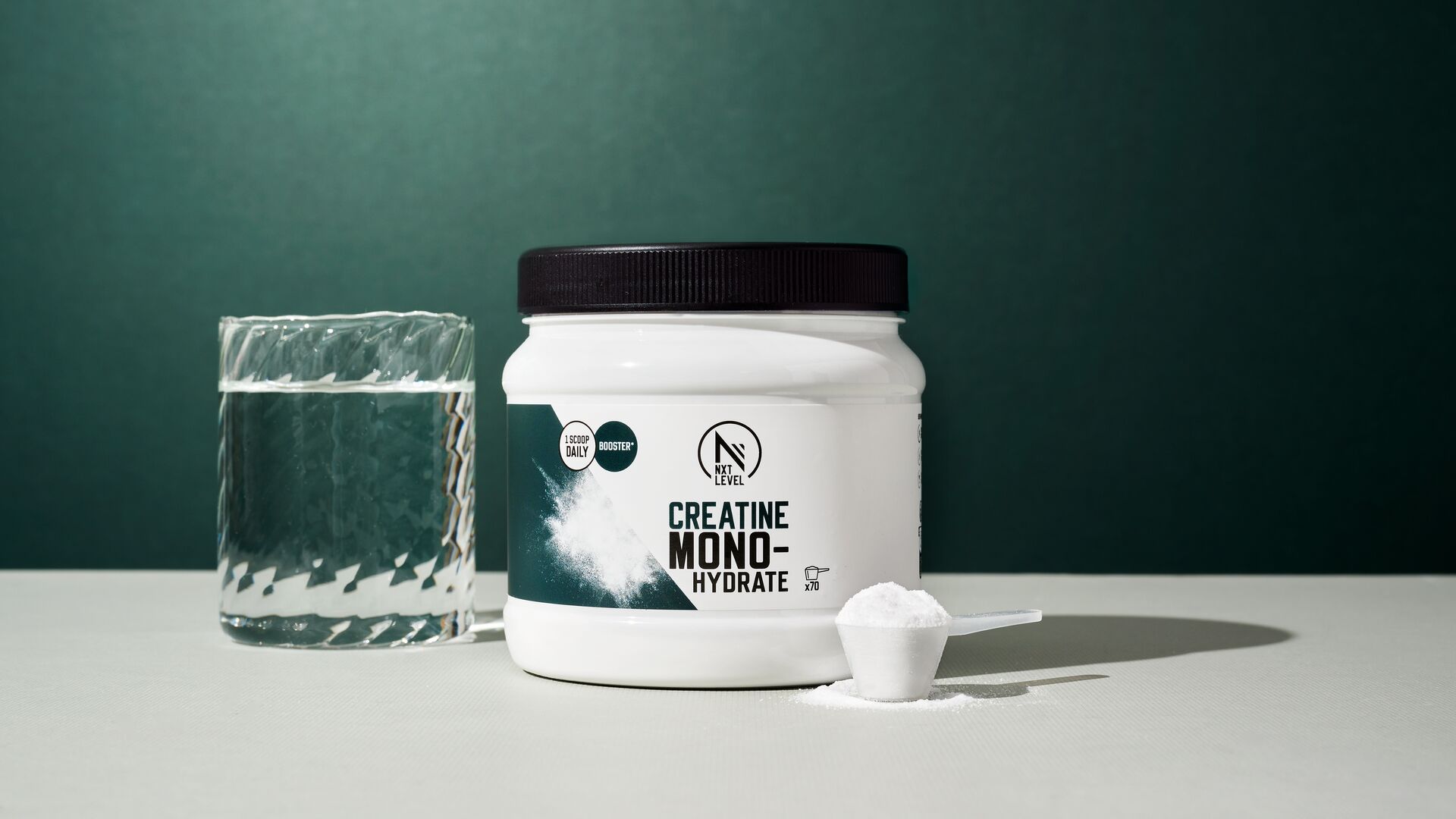
Creatine supplements are usually vegan and synthetically produced. The most common and well-researched form is creatine monohydrate.

What creatine does for your training
Creatine supports performance during short, high-intensity efforts*. It helps your muscles regenerate energy faster, which can make a difference when you train hard.
In practice, this can mean:
- Doing one or two extra reps before fatigue
- Maintaining power during repeated sets or sprints
- Progressing faster in compound lifts like squats or presses
Over time, those small improvements add up. When you can train with a bit more volume or intensity, your body has a stronger signal to adapt. That’s why creatine is often linked to increases in strength and lean mass when combined with resistance training.*
Creatine does not build muscle on its own. The benefit comes from using it alongside consistent training. Without that training stimulus, creatine does very little.
Creatine is most useful for:
- Strength training
- Interval and sprint-based workouts
- Team sports with repeated high-intensity actions
Myths vs facts about creatine
There are a lot of persistent myths around creatine. Let’s clear up the most common ones.
- Myth 1: Creatine is an anabolic steroid
Creatine is not a hormone and not a steroid. It is a naturally occurring compound that your body already produces every day.
- Myth 2: Creatine is only for bodybuilders or professional athletes
Creatine can support anyone who trains with intensity, including beginners, recreational gym-goers, and older adults who want to maintain strength.
- Myth 3: Creatine causes fat gain
Creatine does not increase body fat. Some people notice a small weight increase at first, usually from extra water stored in the muscles.
- Myth 4: Creatine causes cramps or dehydration
Large studies in athletes do not show higher rates of cramps or dehydration in creatine users. Staying hydrated still matters, with or without supplements.

Benefits of creatine beyond strength
Creatine is best known for supporting strength and high-intensity training. That’s where it delivers the clearest results. For some people, it also supports other parts of an active lifestyle.
When creatine is combined with regular training, research* suggests it may help with:
- Maintaining muscle and strength as you get older, especially when resistance training is part of your routine
- Supporting energy use in the brain, which some people notice as better focus during busy or demanding periods
- Staying consistent during heavy training weeks, when fatigue would otherwise cut sessions short
Creatine has also been studied in areas like mood, blood sugar regulation, and bone health. Results vary, but one pattern is clear: creatine works best alongside regular exercise. It supports the work you put in, but it doesn’t replace it.
Creatine for women
Creatine is often associated with men and muscle gain, but women can benefit from it too. For women who train regularly, it supports strength and the ability to repeat high-intensity efforts in workouts.
When women use creatine alongside regular training, they typically experience:*
- Improved strength and training performance
- Better ability to maintain power across repeated sets or intervals
- Subtle changes in muscle size, with effects showing up more in performance than appearance
Because muscle growth tends to be slower in women, creatine usually supports training quality and consistency, rather than visible changes in body shape. It helps you get more out of the sessions you already do.

How to take creatine correctly
Creatine doesn’t work like a pre-workout that you feel straight away. It builds up in your muscles over time. That’s why how you use it is less relevant than being consistent and keeping things simple.
Here’s what usually works best for most people:
- Choose creatine monohydrate
Most research on creatine is done using creatine monohydrate*. It has been shown to support strength and performance effectively, without added benefits from more expensive or modified forms.
- Stick to three to five grams per day
A daily dose of three to five grams is enough for most people to build and maintain creatine levels in the muscles.
- Take it at a time you’ll remember
Timing matters less than consistency. Many people take creatine after training or with a meal, simply because it’s easy to remember.
- Stay hydrated
Drink enough water, as you normally would when training regularly.

The role of creatine in your training
Creatine is one of the most researched supplements in fitness and can support strength, power, and steady training progress when you train regularly. Your results still come from what you do week after week: training, recovery, and a routine you can maintain.
If you want to get more out of your workouts, focus on showing up and training smart. Creatine can support that effort, and the Basic-Fit app can help you stay on track with workouts that match your level.
This article is for general information only. If you have a medical condition, take medication, or are pregnant or breastfeeding, talk to a healthcare professional before using supplements like creatine.
Sources
- Kreider RB et al. International Society of Sports Nutrition position stand: safety and efficacy of creatine supplementation. Journal of the International Society of Sports Nutrition.
- Kazeminasab F et al. Effects of creatine supplementation on strength and power: a systematic review and meta-analysis. Nutrients, 2025.
- Forbes SC et al. Creatine supplementation and aging muscle: a meta-analysis. Nutrients, 2021.
- Xu C et al. Effects of creatine monohydrate on cognitive function: systematic review and meta-analysis. Frontiers in Nutrition, 2024.
- Balestrino M, Adriano E. Creatine and brain energy metabolism. Amino Acids.
- Longobardi I et al. Is it time for a requiem for creatine supplementation–induced kidney failure? Nutrients, 2023.
- BMC Nephrology. Creatine supplementation and kidney function: systematic review and meta-analysis, 2025.


