


Walking into the gym for the first time can be both exciting and intimidating. It's completely normal to stand in the strength area, look at the cable machines or dumbbells, and feel a little overwhelmed.
The people who now move confidently around the gym started exactly the same way, wandering around without knowing where to begin or glancing at everyone else. Don't worry, that feeling fades quickly once you have some practical guidance.
Gym machines are ideal for beginners because they guide your movement and help reduce the risk of technical mistakes*. In this guide, you'll learn how to use them step by step so you can train with more confidence and leave the uncertainty of your first gym visits behind.
Five tips to get off to a great start
Before you sit down at any machine, keep these simple tips in mind to avoid common beginner mistakes at the gym:
1. Adjust the machine to fit your body
Use the adjustment handles (usually yellow) to adjust the height of the seat or backrest before you start training. The equipment should fit your body. When properly adjusted, you’ll be able to perform the full movement comfortably while maintaining good posture.
2. Read the instructions on the machine
Every machine includes an instruction panel with illustrations showing how to sit, the movement path, and the muscles it targets. Don't hesitate to look at it, everyone does.
3. Always start with a light weight
The key to starting at the gym without feeling overwhelmed is choosing a light load. Pick a weight that allows you to complete between 8 and 12 controlled repetitions*. Focus on learning the correct movement first.
4. Technique before speed
Perform every repetition in a smooth, controlled manner. Avoid jerking the weight or letting the weight plates slam together as you lower them.
5. Ask the gym staff for help
If you're struggling with an adjustment lever, the gym staff will be happy to help. You can also find video tutorials for every machine in the Basic-Fit app, so you can review the technique whenever you like.
You can also book a session with one of our personal trainers if you'd like more advice tailored to you and your needs.
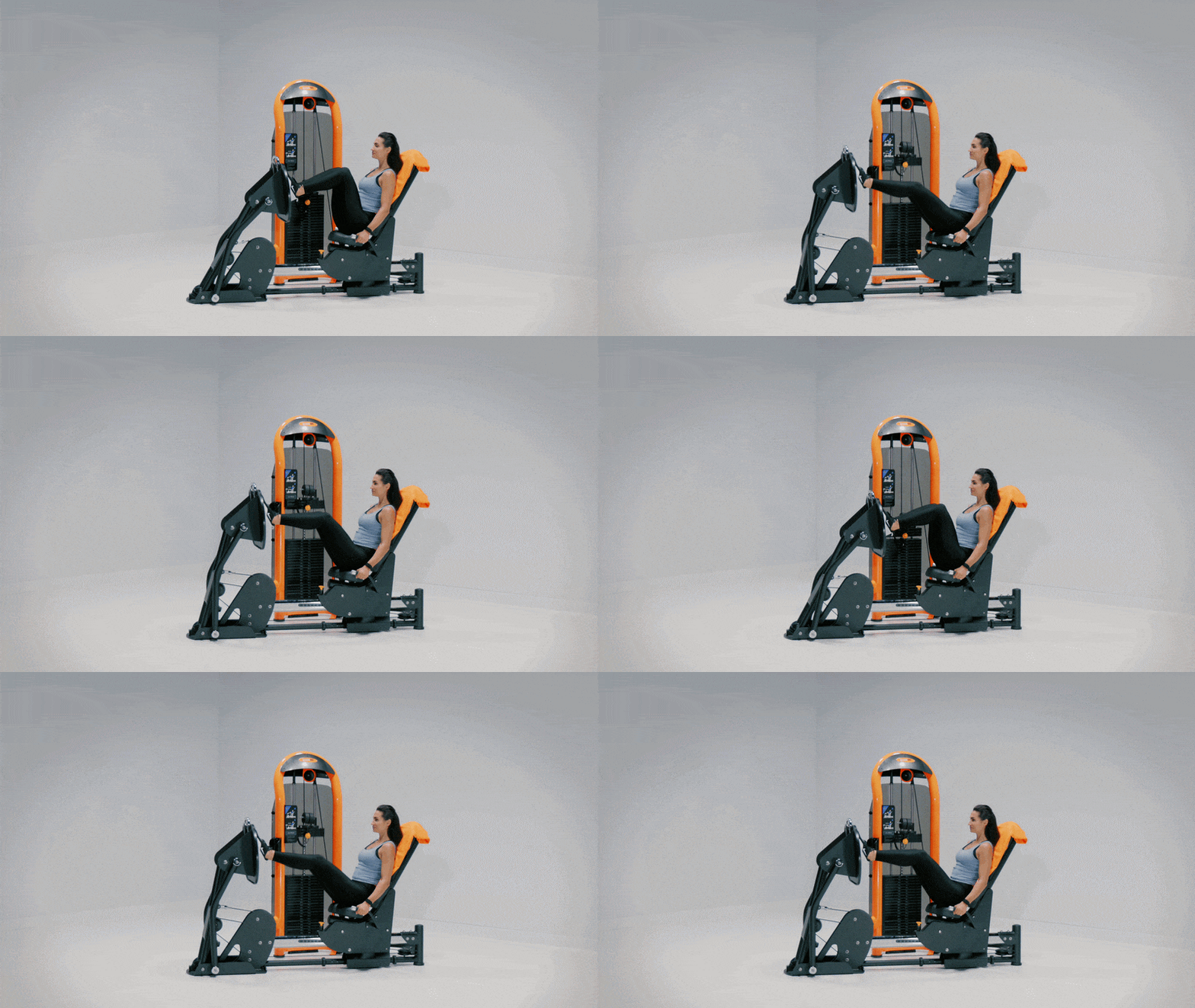
1. Seated leg press
What it's for: A staple in any beginner gym routine. It allows you to push a moving platform with your legs while keeping your back fully supported and protected, reducing the load compared with free-weight squats*.
Muscles worked: Primarily targets the quadriceps and glutes, while the hamstrings and calves work as supporting muscles.
How to use it step by step:
- Sit down with your back and lower back fully supported against the backrest.
- Place your feet on the platform about shoulder-width apart.
- Push the platform slightly to release the safety catches using your hands.
- Bend your knees in a controlled motion until they reach roughly a 90-degree angle.
- Push through your heels to return to the starting position without locking your knees.
Common mistakes: Snapping your legs fully straight or lifting your heels as you lower the weight.
Trainer's tip: Keep your feet flat on the platform. If your hips lift off the seat as you lower the weight, reduce the range of motion slightly.
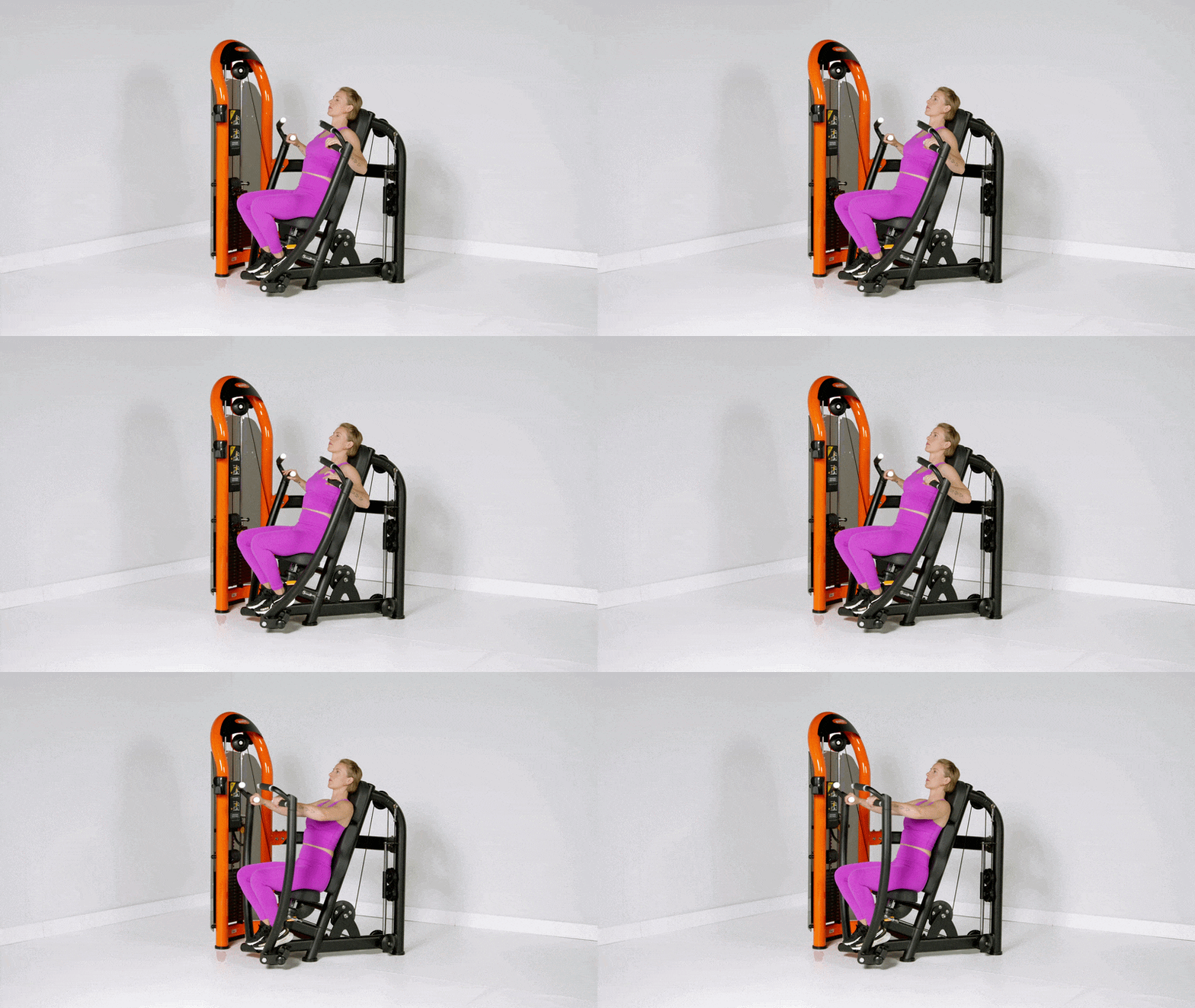
2. Seated chest press
What it's for: This machine allows you to press a weight forward from a stable seated position. It's a great alternative to the barbell bench press because it safely isolates the effort in your upper body*.
Muscles worked: Primarily targets the chest muscles (pectorals). It also works the front of the shoulders and the triceps.
How to use it step by step:
- Adjust the seat so the handles line up with the middle of your chest.
- Keep your back and head against the backrest with your feet firmly on the floor.
- Grip the handles while keeping your wrists straight.
- Press forward in a smooth, controlled motion as you exhale, without locking your elbows.
- Return slowly to the starting position without letting the weight plates slam together.
Common mistakes: Lifting your back off the backrest to generate momentum or shrugging your shoulders up towards your ears.
Trainer's tip: Imagine you're pushing the seat backwards with your back as you press the handles forward. You'll feel much more stable straight away.
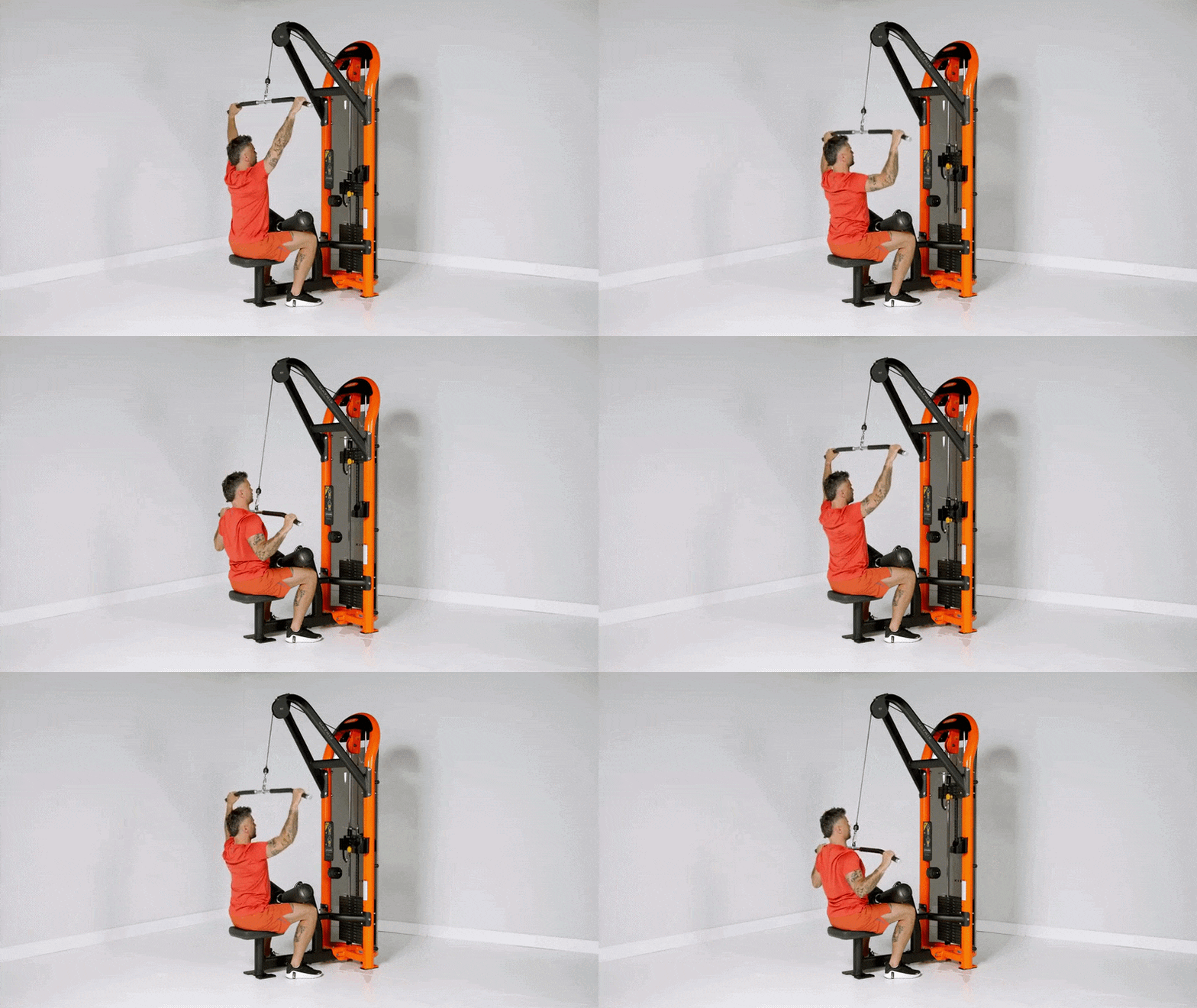
3. Lat pulldown
What it's for: This machine lets you perform a guided vertical pulling movement. You pull a bar down towards your chest, simulating a pull-up while allowing you to adjust the weight to suit your current fitness level*. It teaches you how to engage your back muscles without relying too much on your arms.
Muscles worked: Primarily targets the latissimus dorsi (the large muscles in the middle of your back). It also engages your upper back and biceps.
How to use it step by step:
- Adjust the padded thigh support so your thighs are held firmly underneath it.
- Grip the bar with your hands slightly wider than shoulder-width apart.
- Sit down, lean your torso back slightly and look straight ahead.
- Pull the bar down towards the top of your chest, driving your elbows down.
- Slowly control the movement back up until your arms are fully extended again.
Common mistakes: Swinging your torso to create momentum or pulling the bar behind your neck, which can put unnecessary strain on your shoulders.
Trainer's tip: Don't think about pulling with your hands. Imagine your hands are just hooks and the movement starts from your elbows. Drive them down towards your hips.
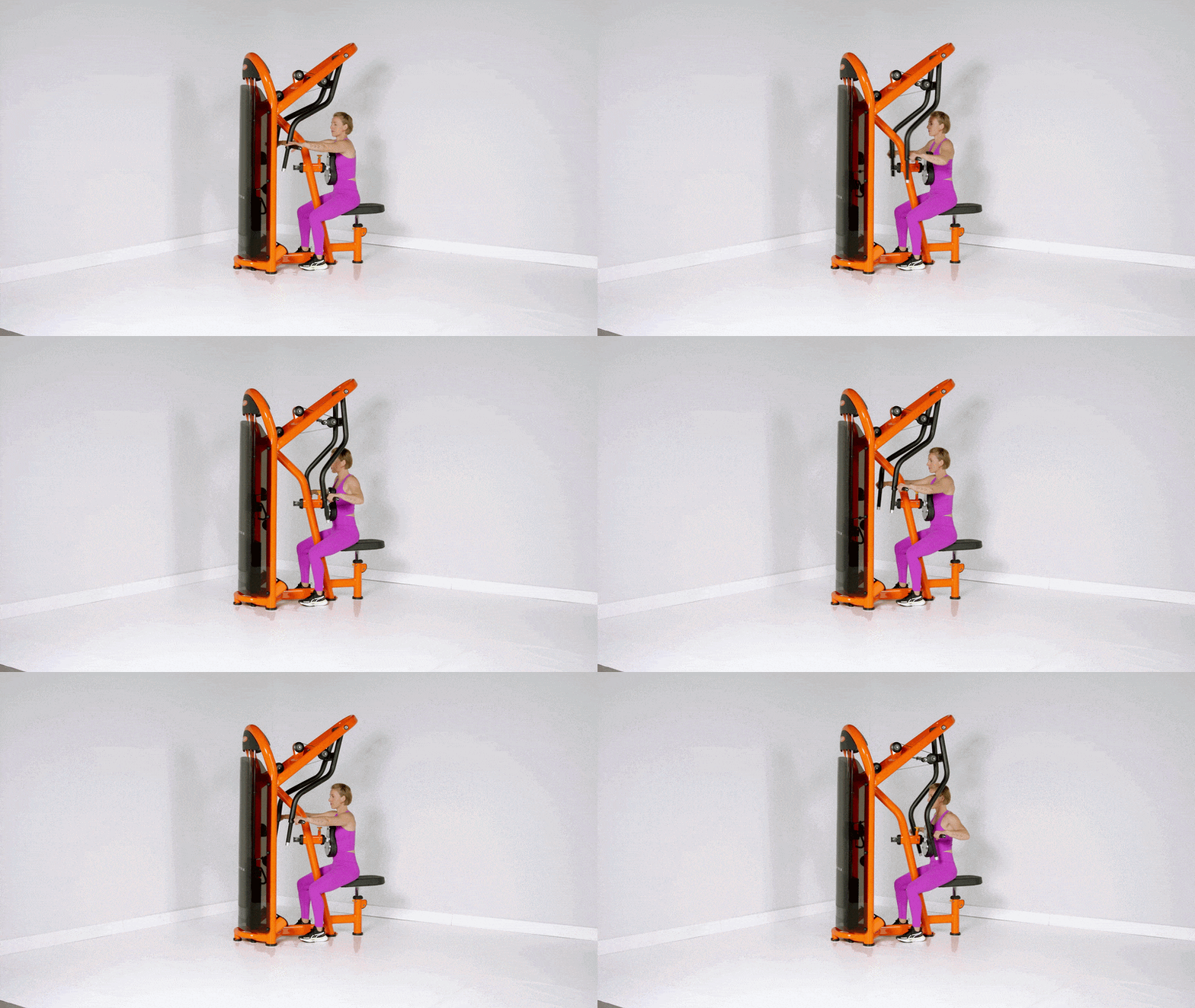
4. Seated row
What it's for: This machine provides an effective horizontal pulling movement. It strengthens the muscles that pull your shoulders back, making it especially useful if you spend long hours sitting*.
Muscles worked: Primarily targets the middle and upper back (rhomboids, trapezius and latissimus dorsi), while also working the biceps.
How to use it step by step:
- Adjust the seat so the handles are level with the lower part of your chest.
- Rest your chest against the support pad while keeping your back straight.
- Place your feet on the footrests and grip the handles with your arms fully extended.
- Pull the handles towards your abdomen, keeping your elbows close to your body and squeezing your shoulder blades together.
- Return to the starting position in a controlled manner, resisting the weight throughout the movement.
Common mistakes: Rounding your back as you extend your arms or flaring your elbows out to the sides, putting unnecessary strain on your neck.
Trainer's tip: Lift your chest and lower your shoulders before you start. As you pull, imagine you're trying to squeeze a pen between your shoulder blades.
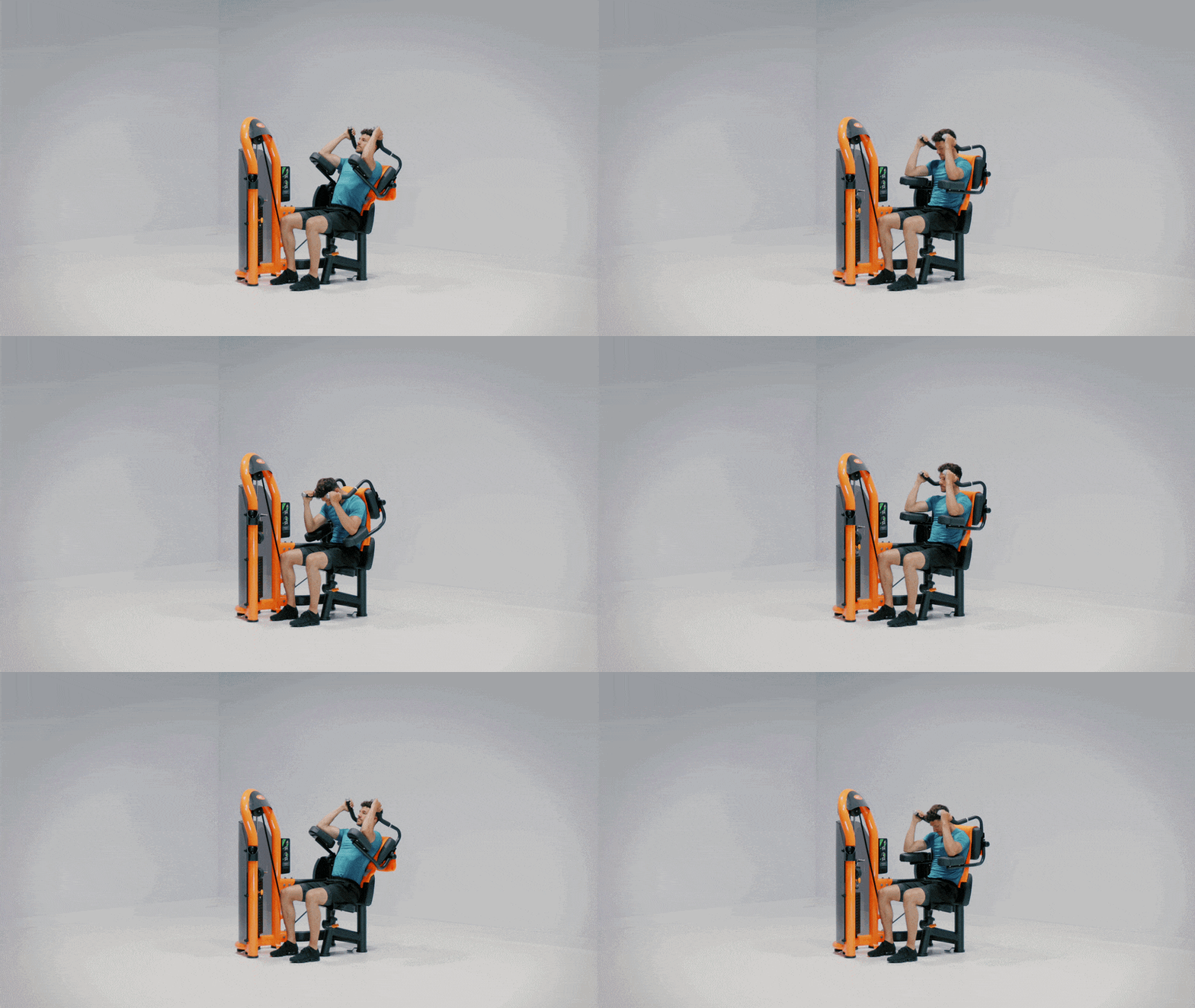
5. Abdominal crunch machine
What it's for: This machine helps you train your core through a guided crunching movement. It reduces the temptation to pull on your neck or strain your cervical spine, which is common when doing crunches on the floor*.
Muscles worked: Primarily targets the rectus abdominis (the front abdominal muscles, essential for stability), while the obliques work as secondary muscles.
How to use it step by step:
- Sit down and adjust the height so the machine's pivot point lines up with your abdomen.
- Hold the upper handles or rest your arms on the pads.
- Contract your abdominal muscles to curl your torso forwards as you exhale slowly.
- Return to the starting position in a controlled manner while keeping your core engaged.
Common mistakes: Pulling with your arms instead of engaging your abs, or using momentum to move the weight.
Trainer's tip: Your hands are only there for support. Focus on bringing your chest closer to your belly button with each repetition.
Still not sure?
It's completely normal to stand in front of a machine and still be unsure how to adjust it, even after reading these tips. Feeling uncertain is part of the process and shouldn't hold you back. Everyone goes through it.
If you're unsure while you're on the gym floor, there are a few simple ways to find the answer:
- Check the instruction panels
Every machine includes a visual guide showing the starting position, movement path and basic adjustments.
- Look for the coloured adjustment knobs
The moving parts used to adjust the seat or backrest have yellow or orange knobs that are easy to spot.
- Use the Basic-Fit app
The Basic-Fit app includes a complete library of beginner-friendly machine exercises. Every exercise comes with a short video tutorial so you can check your technique discreetly whenever you need to.
Now it's your turn to take the first step
Learning how to use gym machines takes practice. You don't need to master every machine during your first few visits. It's much better to choose four or five simple exercises and repeat them during your first sessions so you can build confidence at your own pace.
Research shows that machine-based strength training delivers improvements in strength and bone health comparable to free weights, while providing a safe environment for beginners*. The most important thing is building the habit of going to the gym regularly*.
Your best training partner is the Basic-Fit app. In the Workouts section, you'll find training plans designed specifically for beginners, including full-body workouts. When you start a workout, each exercise includes a step-by-step video tutorial that guides you through the movement in real time.
Open the app, choose a beginner workout plan and start training with confidence today.
This article is for informational purposes only. Individual needs may vary depending on your health, training experience and personal goals. If you have a medical condition or any concerns about your health, consult a qualified healthcare professional.
Sources
- American College of Sports Medicine. (2018). ACSM's Guidelines for Exercise Testing and Prescription (10th ed.). Wolters Kluwer.
- Clark, M. A., Lucett, S. C., & Sutton, B. G. (Eds.). (2014). NASM Essentials of Personal Fitness Training (4th ed.). Lippincott Williams & Wilkins.
- Escamilla, R. F. (2001). Knee biomechanics of the squat and leg press exercises. Medicine & Science in Sports & Exercise, 33(1), 127-141.
- Schwanbeck, S. R., Cornish, S. M., Barss, T., & Chilibeck, P. D. (2020). Effects of training with free weights versus machines on muscle mass, strength, and functional ability in muscularly untrained individuals. Journal of Strength and Conditioning Research, 34(7), 1851-1859.
- Valenzuela, P. L., Baladia, E., Torrontegui, E., & Castillo-García, A. (2023). Muscle growth and strength adaptations in machine-based versus free-weight resistance training: A systematic review and meta-analysis. Journal of Bodywork and Movement Therapies, 31, 55-64.


