



Stress doesn’t always show up as a major crisis.
Sometimes it’s realising your shoulders have been tense for the past hour. Reading the same email three times because you can’t concentrate. Getting home and still thinking about work. Or climbing into bed exhausted while your mind is still racing.
And that’s the problem: if you only try to relax once you’re already completely overwhelmed, you’re a little late.
Feeling calm is something you can practise before you need it
Movement, meditation, breathing and good recovery can help you manage stress more effectively and change how you respond when it comes up again.* The goal isn’t to make sure nothing ever stresses you out. It’s about having more tools to deal with it when it does.
These six habits can become part of your day without completely changing your routine.
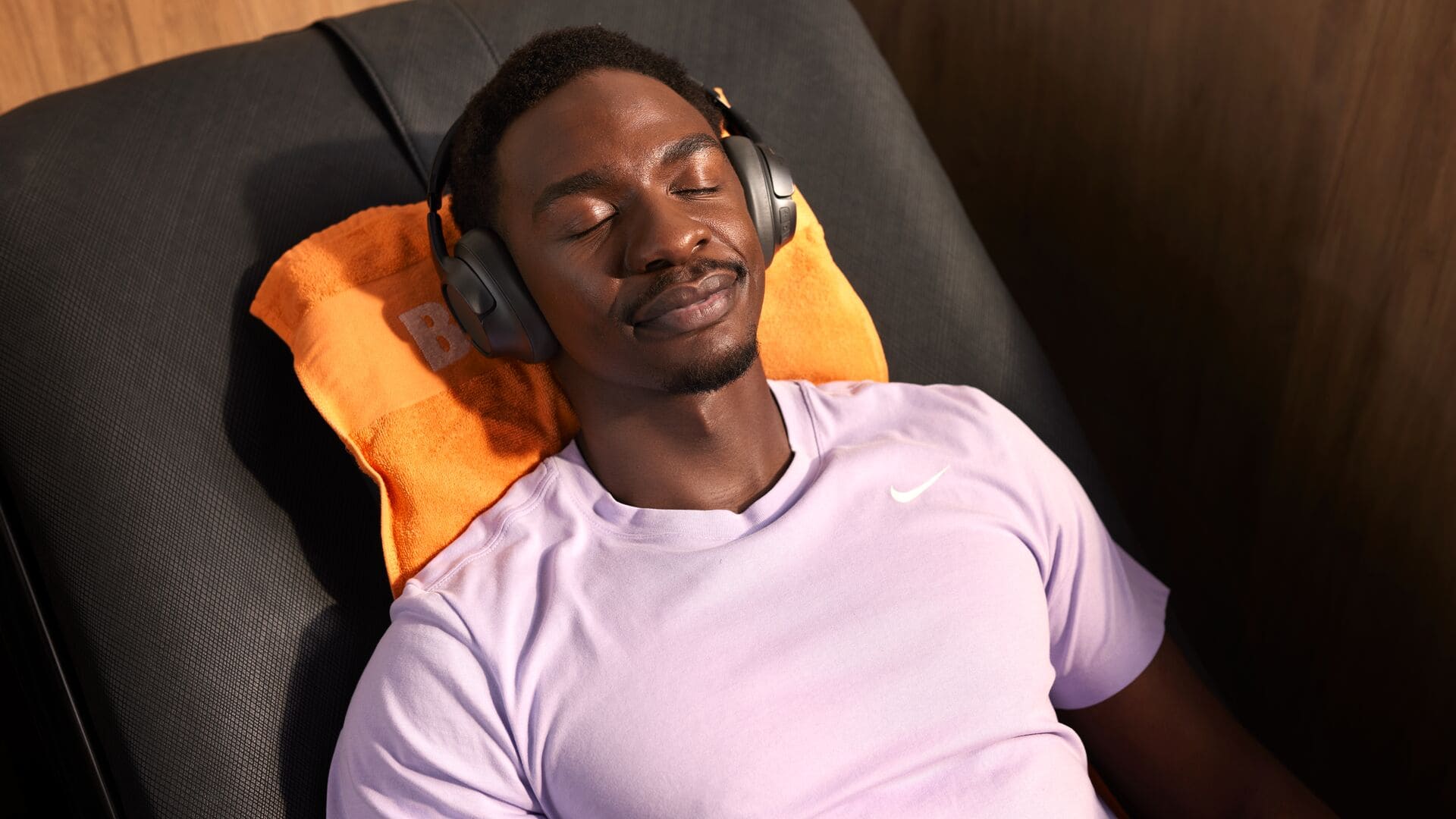
1. Make movement part of your routine
After a difficult day, working out can feel like one more thing on your to-do list. But it can also be the exact opposite: a moment that separates everything that happened during the day from whatever comes next.
Physical activity affects how the body responds to stress, and research has found changes in physiological markers after exercise.*
There’s no single type of workout you need to do.
- Feeling full of pent-up energy? A strength session, run or bike ride can give you a physical outlet.
- Mentally drained after a long day? A walk might be what you need.
- Physically tired? Gentler movement, such as mobility exercises, stretching or yoga, might make more sense.
A good way to turn movement into a habit is to create a transition moment. Finish work, change your clothes and move for 20 or 30 minutes before moving on to the next part of your day.
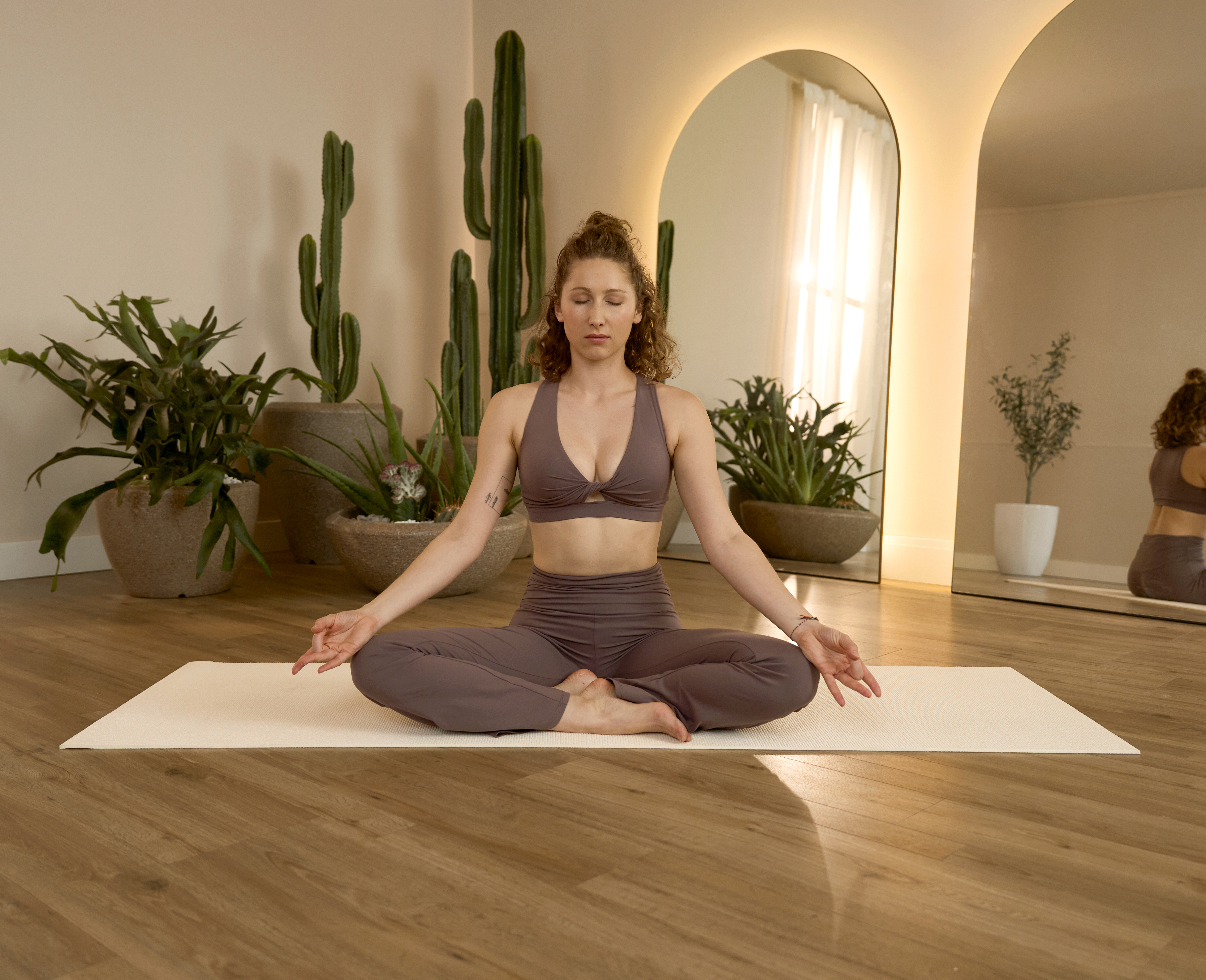
2. Practise meditation without trying to clear your mind
One of the most common mistakes when you start meditating is thinking that doing it properly means having no thoughts at all.
Then 30 seconds pass, you start thinking about dinner, a meeting or something you said yesterday, and you decide that meditation “isn’t working”.
But the goal isn’t to get rid of your thoughts.
The practice is noticing when your attention has wandered and bringing it back to the present.
Mindfulness meditation programmes have shown benefits across different measures related to stress and anxiety.* More recent research also supports the use of mindfulness-based interventions to reduce perceived stress in adults.*
Keep it simple to start with.
- Set a timer for five minutes.
- Sit comfortably and focus on your breathing.
- When your mind wanders, because it will, notice it and bring your attention back to your breath.
That’s it.
You don’t need to finish every meditation feeling completely relaxed. The habit is practising that small pause between noticing what’s happening and automatically reacting to it.
You can also practise with a guided meditation in the Basic-Fit app. Choose one, press play and follow along from start to finish.
3. Use your breathing when you feel stress building
Meditation is a practice you can build over time.
Breathing has another advantage: you can use it the moment you notice tension starting to build.
Before a presentation. In the middle of a difficult day. After a tough conversation. Or whenever you feel worked up and find it hard to concentrate.
Controlled breathing techniques can reduce physiological arousal, and studies of short breathing practices have found improvements in mood and reductions in breathing rate.* A review of research into meditation, breathing and yoga also found positive results across many studies looking at the acute stress response.*
Try it for two minutes
- Breathe in through your nose for around four seconds.
- Breathe out a little more slowly, for around six seconds.
- Repeat.
As you breathe, try to make your only task following each breath in and each breath out.
If you feel dizzy or uncomfortable, go back to breathing normally.
Two minutes won’t make the problem that’s stressing you disappear. But they can give you something very useful before you respond to it: a little space.
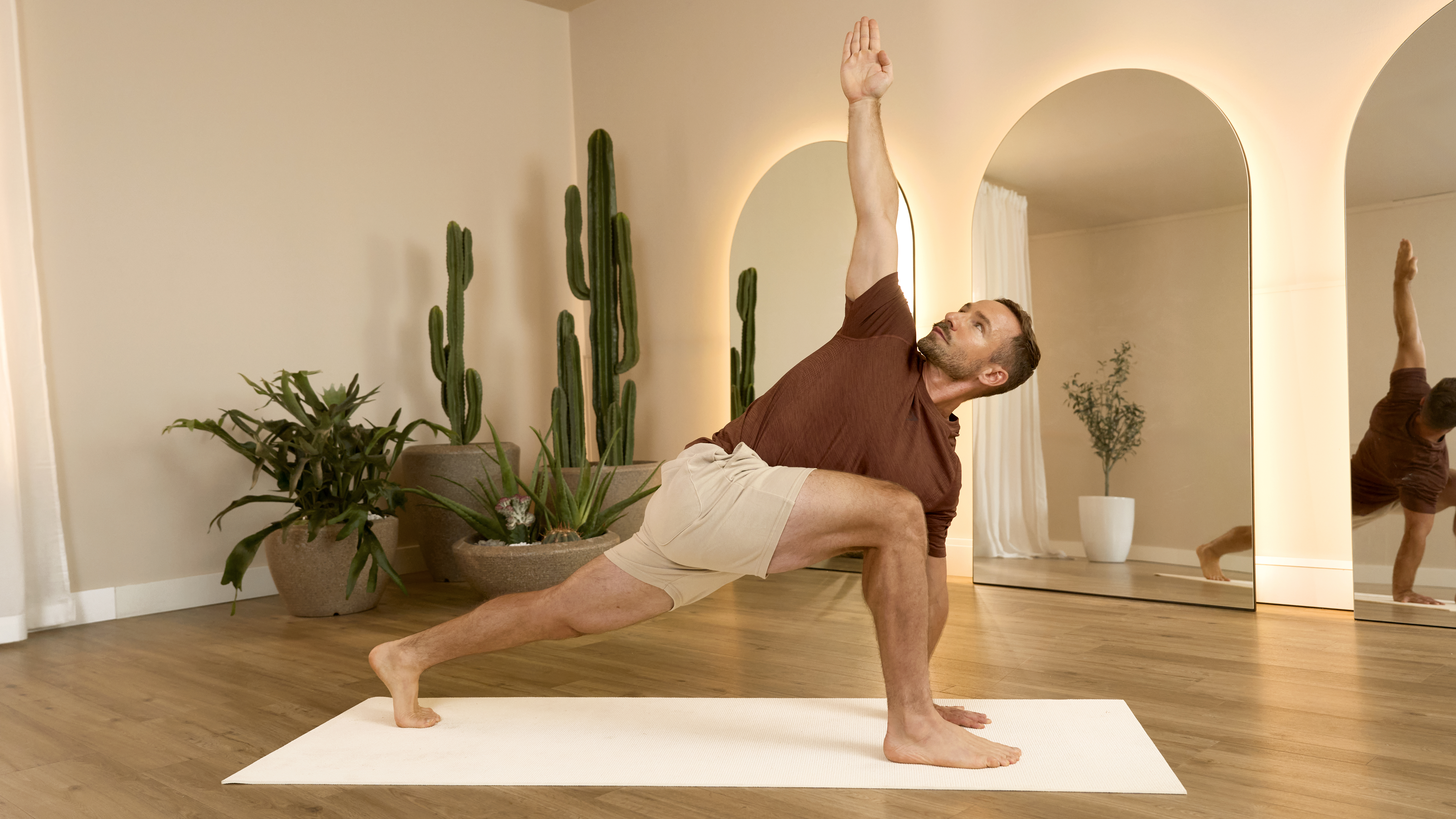
4. Slow down with stretching or mindful movement
Not every type of movement has to get your heart rate up.
Yoga and other forms of mind-body exercise combine movement, breathing and awareness of your body. Reviews have found positive effects on perceived stress, although the quality of the evidence varies between studies.*
You can use this kind of movement after a workout, when you get home or before bed. Try 10 minutes of slow movement and pay attention to what you notice:
- Where are you holding tension?
- Are you breathing or holding your breath?
- Can you relax your shoulders or jaw?
Here, it doesn’t matter how many reps you do. What matters is paying attention while you do them.
5. When your mind jumps ahead, come back to what’s in front of you
Stress has a habit of sending your mind everywhere except where you actually are.
- What if it goes wrong?
- What do I need to do tomorrow?
- How am I going to get everything done?
Thinking ahead is necessary. The problem starts when you can no longer pay attention to what’s happening right now.
In those moments, you don’t need to convince yourself to “stop thinking”.
Give your attention something specific to focus on.
Try a one-minute reset
Look around and identify:
- 5 things you can see.
- 4 things you can physically feel.
- 3 sounds you can hear.
- 2 things you can smell.
- 1 thing you want to focus on right now.
This exercise helps shift your attention away from what might happen and bring it back to what’s happening right now.
You can also do this while walking without looking at your phone. Pay attention to your steps, your breathing or what you see around you.

6. Protect your recovery
You can meditate, work out and practise breathing exercises, but if every day ends with your laptop open late into the night and only five hours of sleep, managing stress becomes a lot harder.
Sleep and emotional regulation are closely connected.* Sleep loss has been linked to more negative emotions, increased anxiety and changes in how we respond emotionally to situations.*
That’s why recovery shouldn’t only start when you turn off the lights. Find a simple cue that tells you the day is coming to an end.
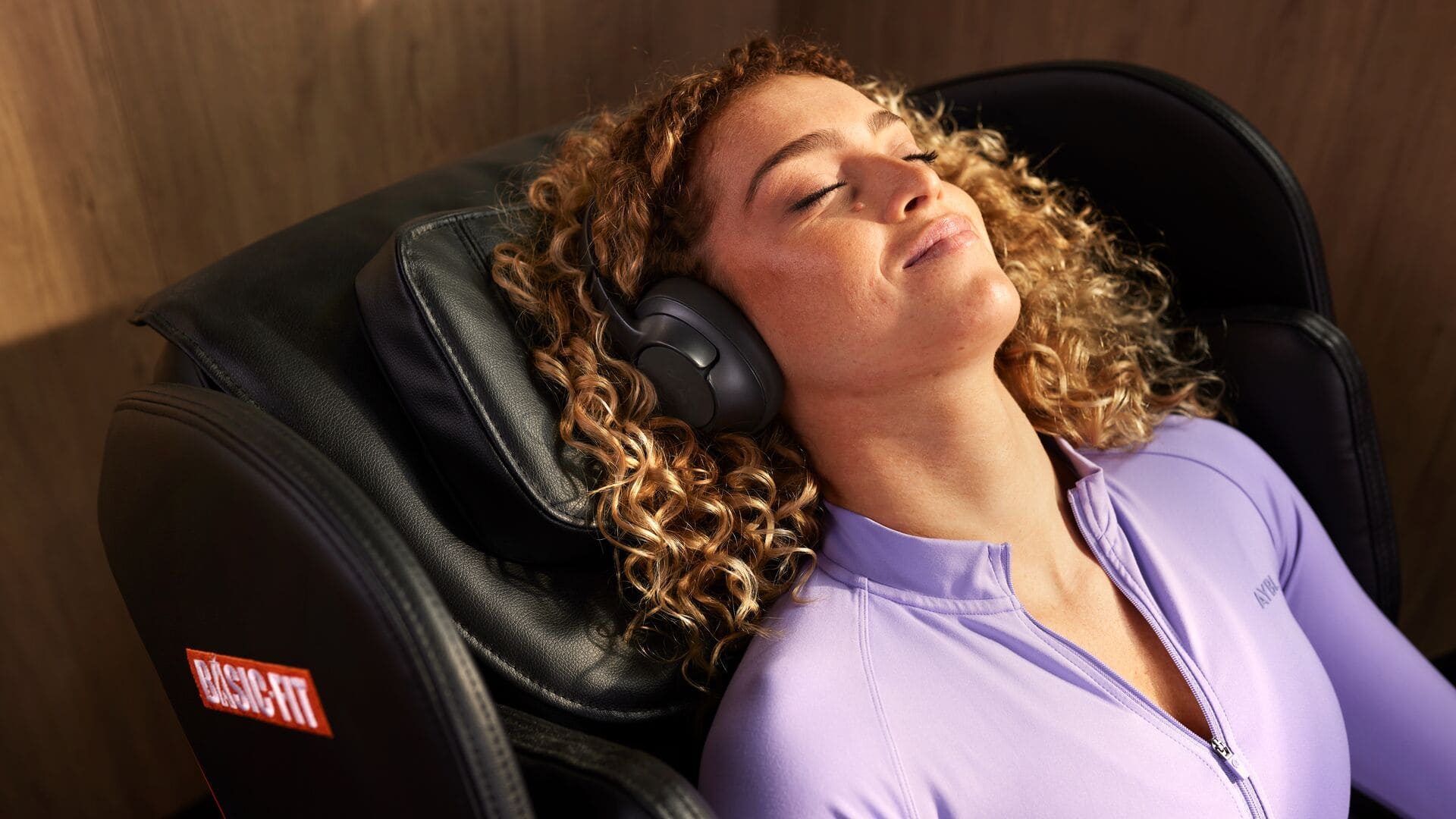
It could be closing your laptop and writing down what you need to remember tomorrow. Taking a shower. Dimming the lights. Stretching. Reading. Breathing for a few minutes. Or leaving your phone outside the bedroom. After your workout, you can also use the massage chairs at your club to slow down and recover.
And remember, recovery isn’t only about sleep. It also means making space for moments when you don’t have to be productive, respond to anyone, train harder or achieve anything.
Find your own way back to calm
Managing stress is about having different tools for different moments.
To build a calmer foundation, move regularly, practise mindfulness and protect your recovery.
When you notice stress starting to build, use your breathing, bring yourself back to the present or change what you’re doing for a few minutes.
You don’t need to start all six habits at once. Start with one you can stick with over time.
And if you’d like one place to practise several of these tools, during Mental Health Month you’ll find the Calm journey in the Basic-Fit app. It combines movement with practices designed to help you slow down and create moments of recovery, both at the club and at home.
Stress is part of life. However, if it feels intense or persistent, or is significantly interfering with your daily life, speak to a healthcare professional.
GO FOR IT!
Sources
- Morava, A., Dillon, K., Sui, W., Alushaj, E., & Prapavessis, H. (2024). The effects of acute exercise on stress reactivity assessed via a multidimensional approach: a systematic review. Journal of Behavioral Medicine, 47(4), 545–565.
- Goyal, M., Singh, S., Sibinga, E. M. S., et al. (2014). Meditation programs for psychological stress and well-being: a systematic review and meta-analysis. JAMA Internal Medicine, 174(3), 357–368.
- Rajan, A., Kumar, M., & Raj, P. R. (2026). Effects of mindfulness-based interventions on perceived stress among non-clinical adults: a systematic review and meta-analysis. npj Mental Health Research, 5(1), 9.
- Balban, M. Y., Neri, E., Kogon, M. M., et al. (2023). Brief structured respiration practices enhance mood and reduce physiological arousal. Cell Reports Medicine, 4(1), 100895.
- Schleinzer, A., Moosburner, A., Anheyer, D., Burgahn, L., & Cramer, H. (2024). Effects of yoga on stress in stressed adults: a systematic review and meta-analysis. Frontiers in Psychiatry, 15, 1437902.
- Palmer, C. A., et al. (2024). Sleep loss and emotion: a systematic review and meta-analysis of over 50 years of experimental research. Psychological Bulletin.
- Basic-Fit. (2025). 6 daily habits to help manage stress. Original article used as a reference for this update.
This article is for general information only. Individual needs can vary depending on health status, training experience and personal goals. If you have a medical condition or specific health concerns, consider seeking advice from a qualified healthcare professional.


