


Maybe you clicked on this article because your lower back often feels sore, tight or sensitive. It may get tired after work or training, or during simple movements such as picking something up or twisting too quickly. Or perhaps you want to feel stronger and more confident when you lift, carry or exercise.
A stronger lower back can help, but it is not only about doing more lower back exercises. Your lower back is part of a bigger support system: your hips, legs and upper body move the weight, while your core and back help keep your position strong.
This guide explains exercises that can help strengthen your lower back, how to train this area as a beginner and how to build strength with control.
What helps create a stronger lower back?
Your lower back helps keep your torso stable when you bend, lift, carry, twist or resist movement. It is active during many exercises, even when it isn’t specifically a lower back exercise.
Think of squats, deadlifts, rows, carries, lunges and even overhead presses. In all of these movements, your lower back helps hold your position while other parts of your body produce force.
The main muscles and areas that work together around your lower back include:
- lower back muscles
- deep core muscles
- glutes
- hamstrings
- hip muscles
- upper back muscles
This is important: your lower back should not have to do everything alone. A strong lower back usually comes from learning how to brace, hinge, control your hips and keep your spine stable while your arms and legs move.
Best exercises for a stronger lower back
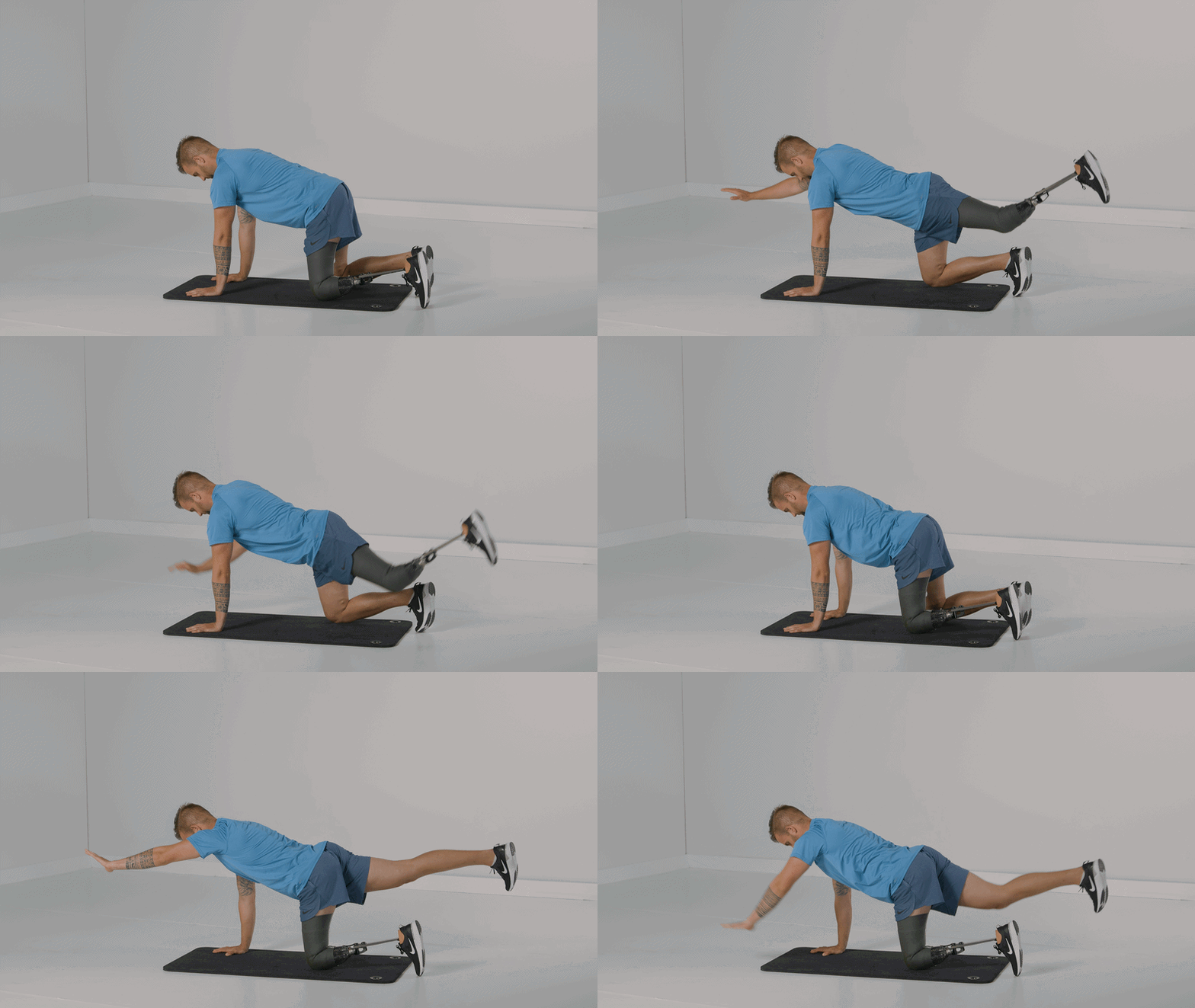
1. Bird dog
The bird dog teaches you to keep your torso stable while your arms and legs move. Start on hands and knees. Brace gently, reach one arm forward and the opposite leg back, and keep your hips level.
Good for: core stability and coordination.
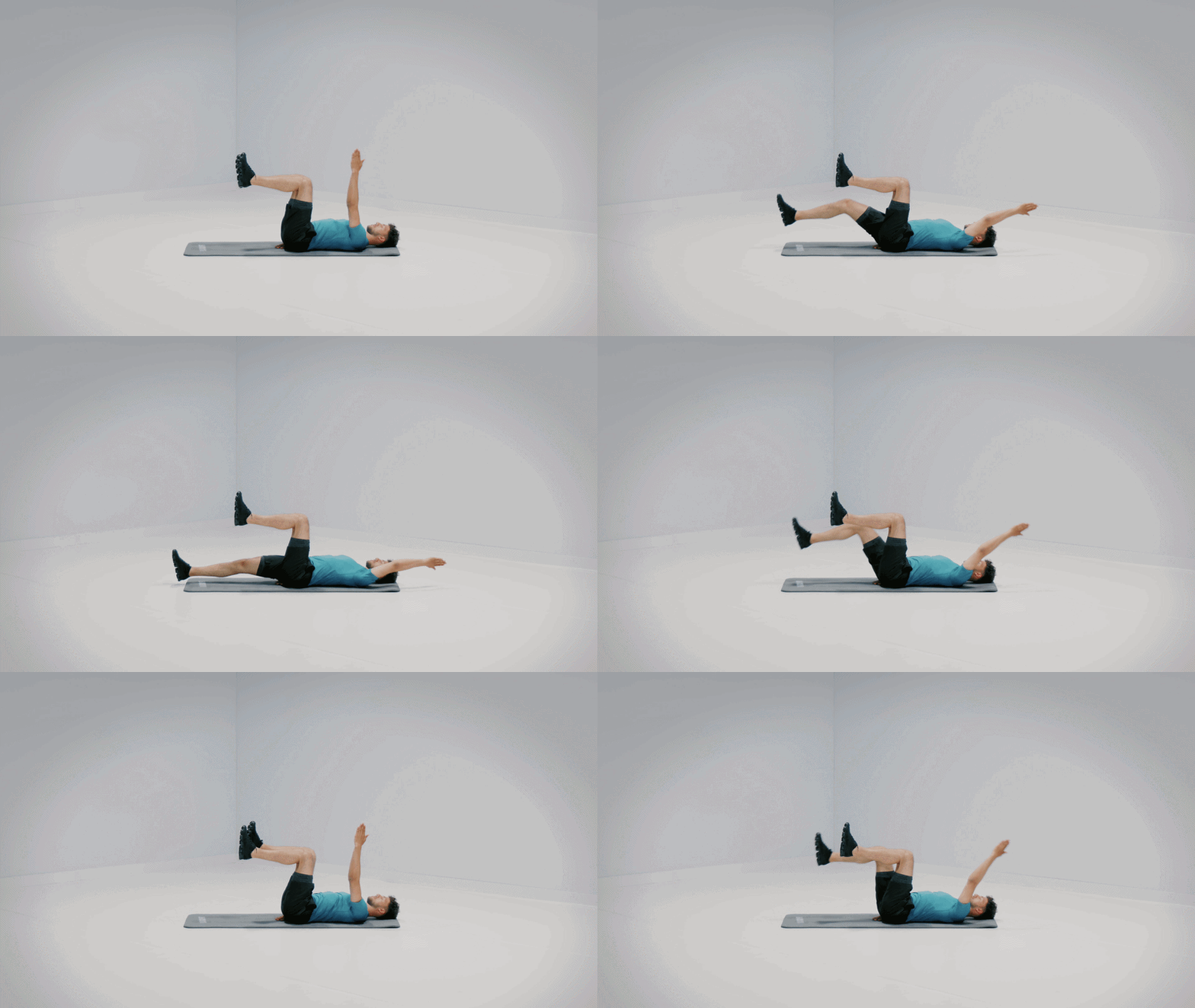
2. Dead bug
The dead bug helps you control your lower back while moving your arms and legs. Lie on your back, bring your knees up and keep your ribs down. Slowly lower one arm and the opposite leg only as far as you can without your lower back arching away from the floor.
Good for: bracing and control.
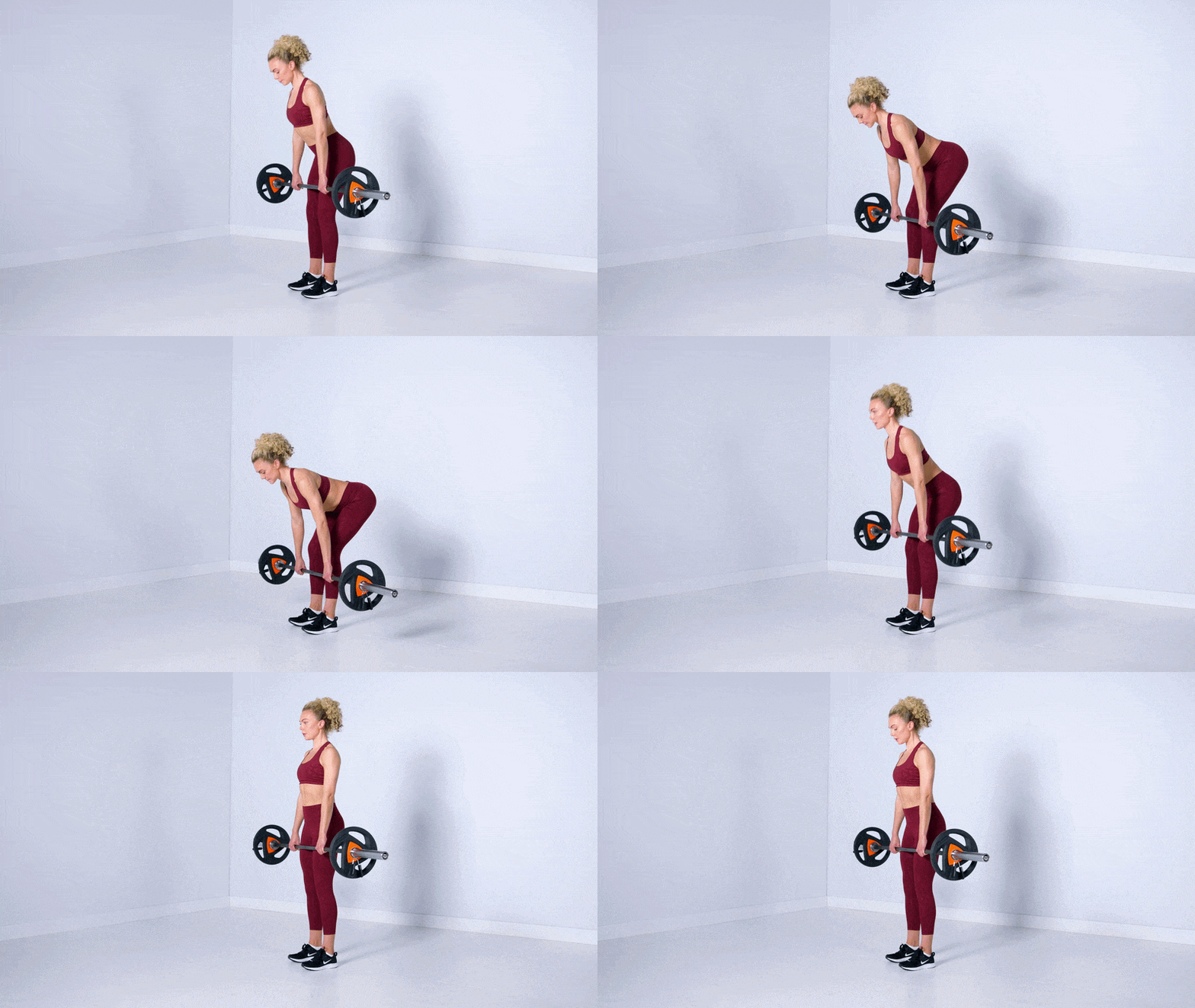
3. Romanian deadlift
The Romanian deadlift trains your hamstrings, glutes and lower back together. It teaches you to hinge from the hips while keeping your spine stable.
Start with dumbbells or a light barbell. Keep a soft bend in your knees, push your hips back and lower the weight only as far as you can control. You do not need to touch the floor.
Good for: hip hinge technique and controlled lower back strength.
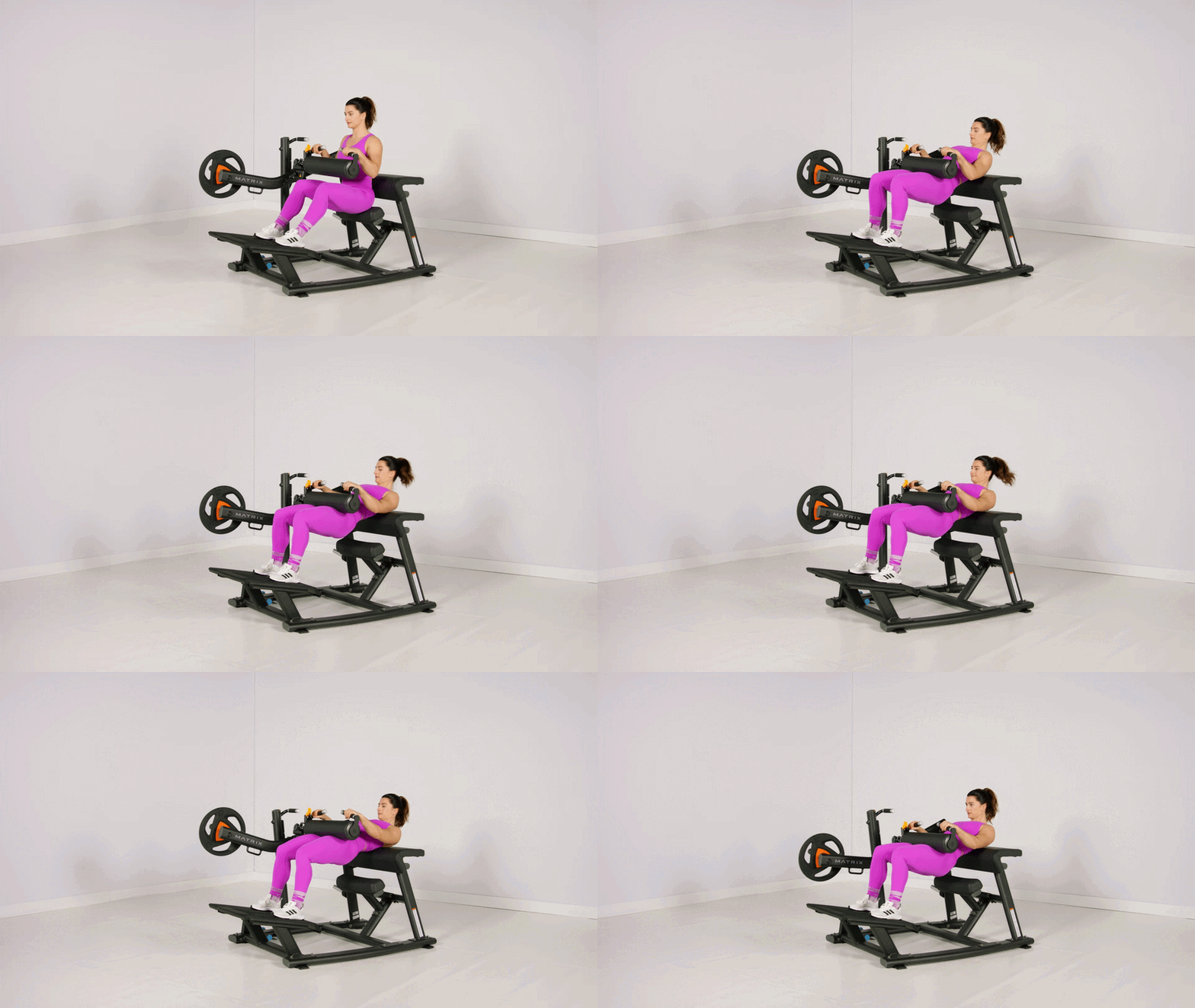
4. Glute bridge or hip thrust
Your glutes play an important role in supporting your lower back. If your glutes are not helping enough, your lower back may try to take over during hip movements.
A glute bridge or hip thrust teaches you to extend your hips with your glutes. Keep your ribs down, brace your core and avoid pushing your lower back into an exaggerated arch at the top.
Good for: glute strength, hip extension and reducing lower back overuse.
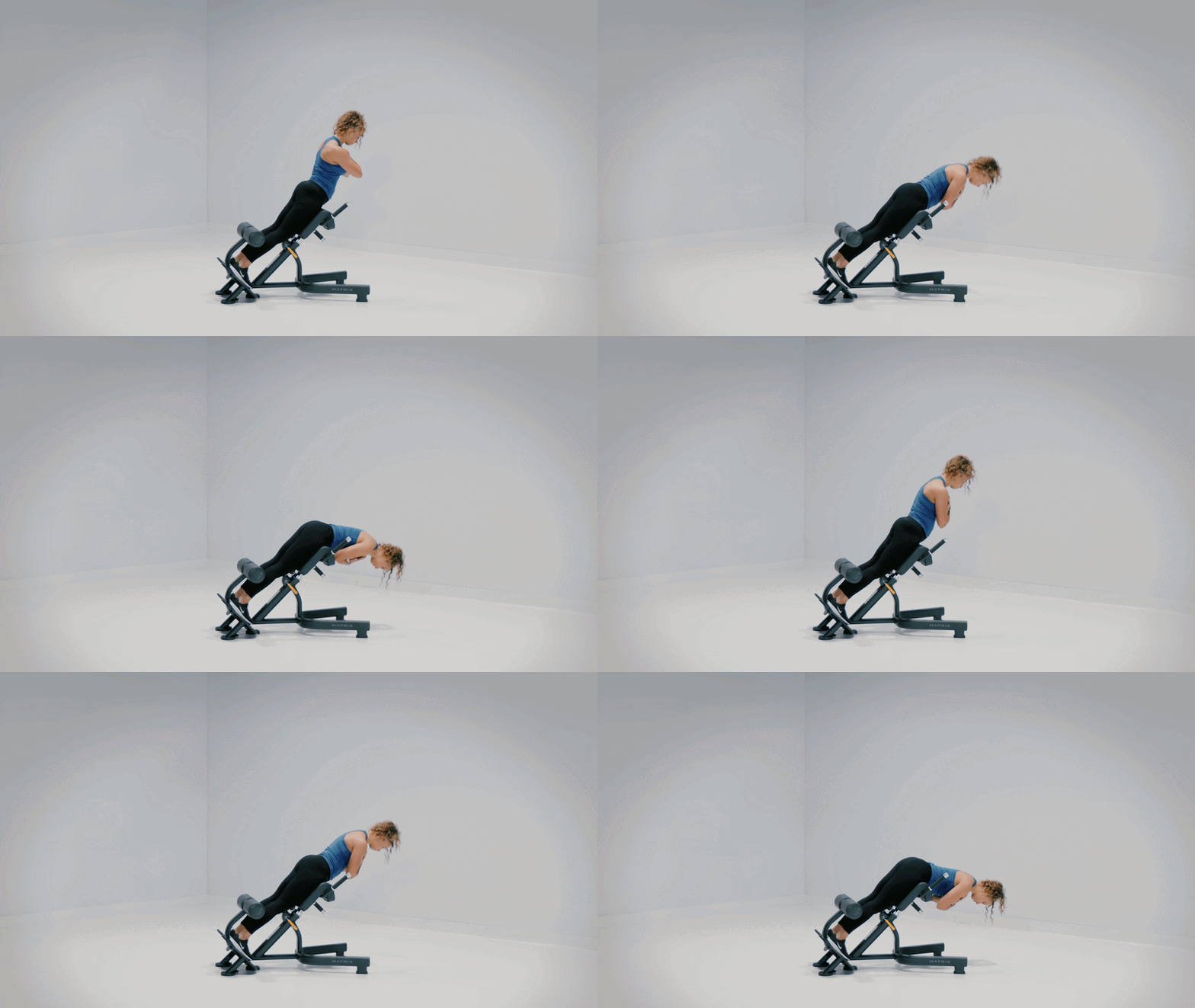
5. Back extension
A back extension can train the muscles along the back of your body, but it should be done with control. Set the pad around your hips, not your stomach. Lower slowly and come back up until your body is straight. You do not need to lean far back at the top.
Good for: lower back endurance, glutes, hamstrings and controlled extension.

6. Farmer carry
A farmer carry trains your grip, core and back stability. Hold weights by your side and walk while staying tall. Choose a weight you can carry without leaning, twisting or losing posture.
Good for: full-body stability and everyday strength.
Where can lower back discomfort come from?
Lower back discomfort can have many causes, and not every ache means something serious is wrong. But sometimes, discomfort can occur when the demand of a movement is higher than what your body can control at that moment.
That can happen when you lift more weight than you are ready for, move too quickly, lose tension, get tired during a set or combine bending and twisting while your body is not stable enough.
For example, your lower back may feel sensitive if you try to pick up something heavy while rounding, twisting and rushing at the same time. The movement itself is not always the problem. The issue is often the combination of weight, position, speed and control.
How to start training your lower back
Start with control before load. You do not need to do every lower back exercise in one workout. Choose two to four exercises that match your level and add them to your normal strength training.
A simple beginner session could look like this:
Start with a short warm-up and use light sets before heavier hinge or lower back exercises.
- Dead bug or bird dog: 2 sets of 6 to 8 reps per side
- Glute bridge: 2 to 3 sets of 10 to 12 reps
- Romanian deadlift: 2 to 3 sets of 8 to 10 reps
- Farmer carry: 2 to 3 short walks
Train your lower back or posterior chain 1 to 2 times per week at first. Add weight, reps or sets only when your technique feels stable and repeatable.
You are not trying to exhaust your lower back. You are trying to make it stronger and more reliable over time.
In the Basic-Fit app, you can find strength workouts, exercise tutorials and focused sessions for different muscle groups. You can train at home or in the club and choose a workout that fits your level and schedule.
If you are unsure about your technique or which exercises suit your level, a personal trainer can help you get started.
When should you be careful?
Lower back training is safe when you use the right exercises, keep the load manageable and build gradually. Mild muscle fatigue can be normal. A working feeling in the lower back can also be normal during some exercises.
But sharp pain, pain that travels down the leg, numbness, tingling, sudden weakness or symptoms that get worse are signs to stop and ask a qualified professional for advice. If you have had a herniated disc, a serious injury or ongoing back complaints, get guidance before training heavy.
You do not need to be afraid of movement, but you do need to respect your current level.
How should lower back training feel?
Good lower back training should feel controlled. You may feel your lower back working, but you should also feel your glutes, hamstrings and core helping.
If every exercise feels only like lower back strain, something may need adjusting. The weight may be too heavy, the range of motion too large, or your setup too rushed.
Ask yourself: did I stay in control, or did my lower back take over?
If your lower back took over, reduce the load, shorten the range of motion or choose an easier variation.
Common lower back training mistakes
1. Going too heavy too soon
A heavy exercise is not automatically a better exercise. If you cannot control your position, the weight is too heavy for now. Start lighter and build gradually.
2. Chasing lower back fatigue
Feeling your lower back burn does not always mean you are training it well. It may mean your hips, glutes or core are not helping enough. Focus on control, not just sensation.
3. Moving from the lower back instead of the hips
In hinge exercises, the movement should mainly come from your hips. Think “hips back” and keep the weight close to your body.
4. Using too much range of motion
More range is not better if you lose your position. Only move through the range you can control.
5. Forgetting to brace
Your core helps keep your position stable. Brace gently before each rep, as if preparing for someone to push against your stomach.
Your simple lower back strength checklist
Before each set, check:
- Am I using a weight I can control?
- Can I keep my spine stable?
- Is the movement coming from my hips when needed?
- Are my glutes, hamstrings and core helping?
- Can I breathe and brace without tensing my whole body?
- Am I avoiding sharp pain, increasing discomfort or symptoms down the leg?
- Does the exercise fit my current level?
- Can I repeat the same technique every rep?
Conclusion
A stronger lower back is built by learning how to move with control, brace well and let your hips, glutes, hamstrings, core and back work together.
Start with exercises that match your level, use a range of motion you can control and build gradually. Your lower back should help you move with strength and confidence, not fear.
Open the Basic-Fit app to find strength workouts and training plans you can follow at home or in the club. Choose one that fits your level and keep building from there.
This article is for general information only. Individual needs can vary depending on health status, training experience, and personal goals. If you have a medical condition or specific health concerns, consider seeking advice from a qualified healthcare professional


