


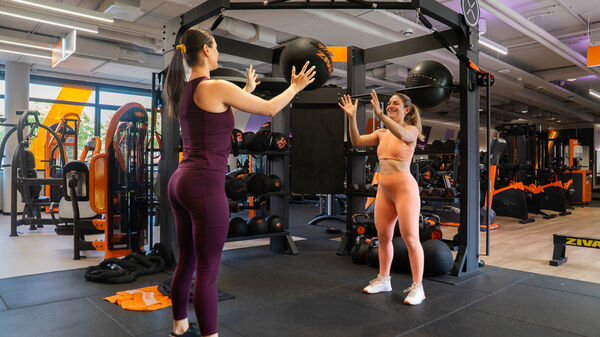
Training with your bestie can turn an ordinary gym session into something you both look forward to. You can encourage each other through the tougher reps, laugh when your timing goes wrong and finish the workout together.
This complete partner workout has six exercises for your legs, upper body and core. You will pass a ball, hold a plank and complete several strength exercises side by side. Some movements test your teamwork, while others challenge you to find the same rhythm.
You can each choose your own weights, so you do not need to have the same experience or strength level. Ready? Grab your bestie and get started.
What you need
- A wall ball or medicine ball
- A pair of dumbbells or kettlebells for each person
- An exercise mat
- Enough space to exercise safely
- Your favourite training partner
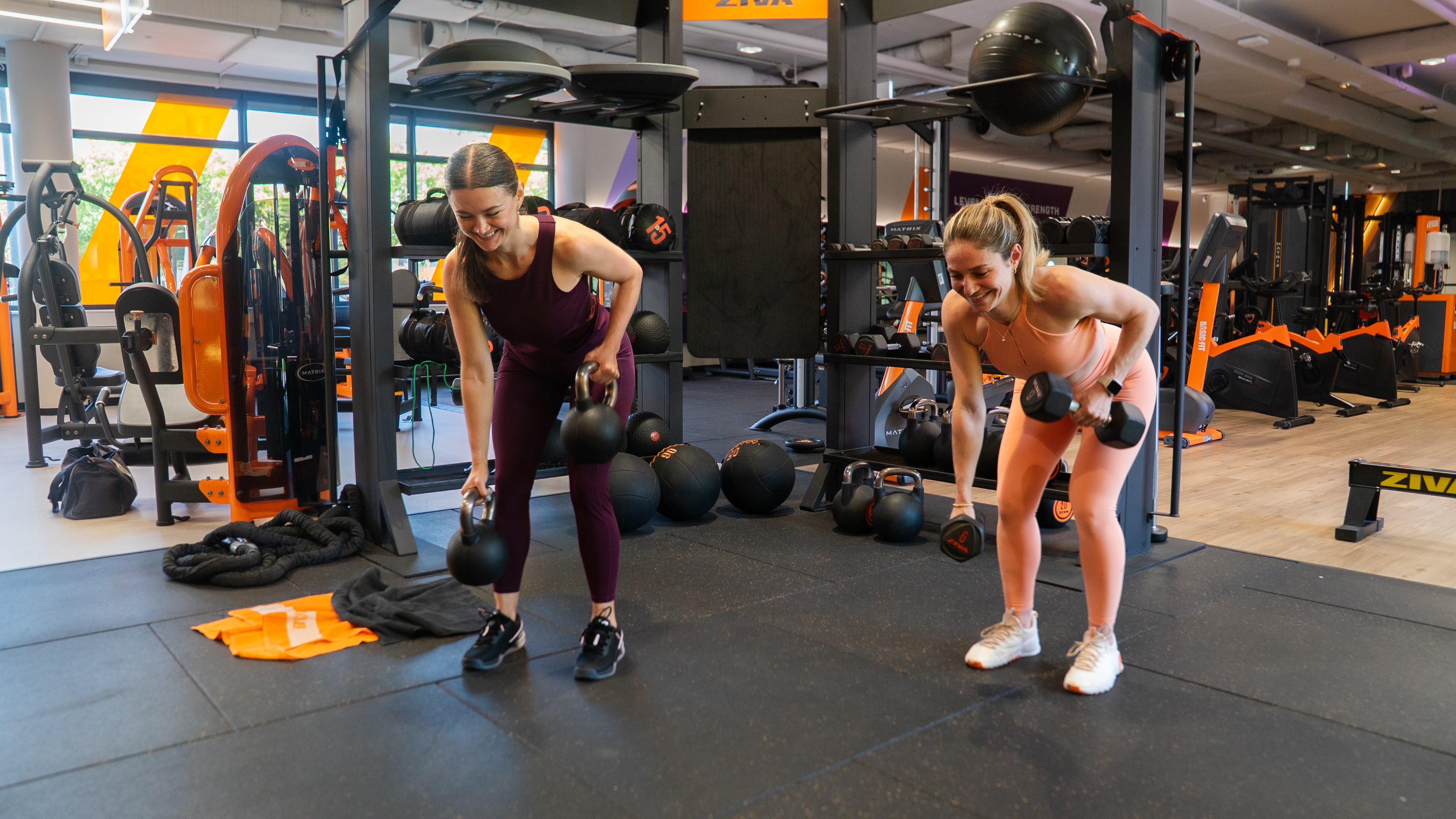
How the workout works
Complete all six exercises in order to finish one round. Rest for 30 to 60 seconds between exercises and one to two minutes between rounds. Complete two or three rounds.
Choose your own weights, then use a countdown to start each synchronised exercise together. One of you can count the reps while the other keeps an eye on your timing.
Full-body partner workout
1. Squat with wall-ball pass
Targets: Quads, glutes, chest, shoulders, triceps and core
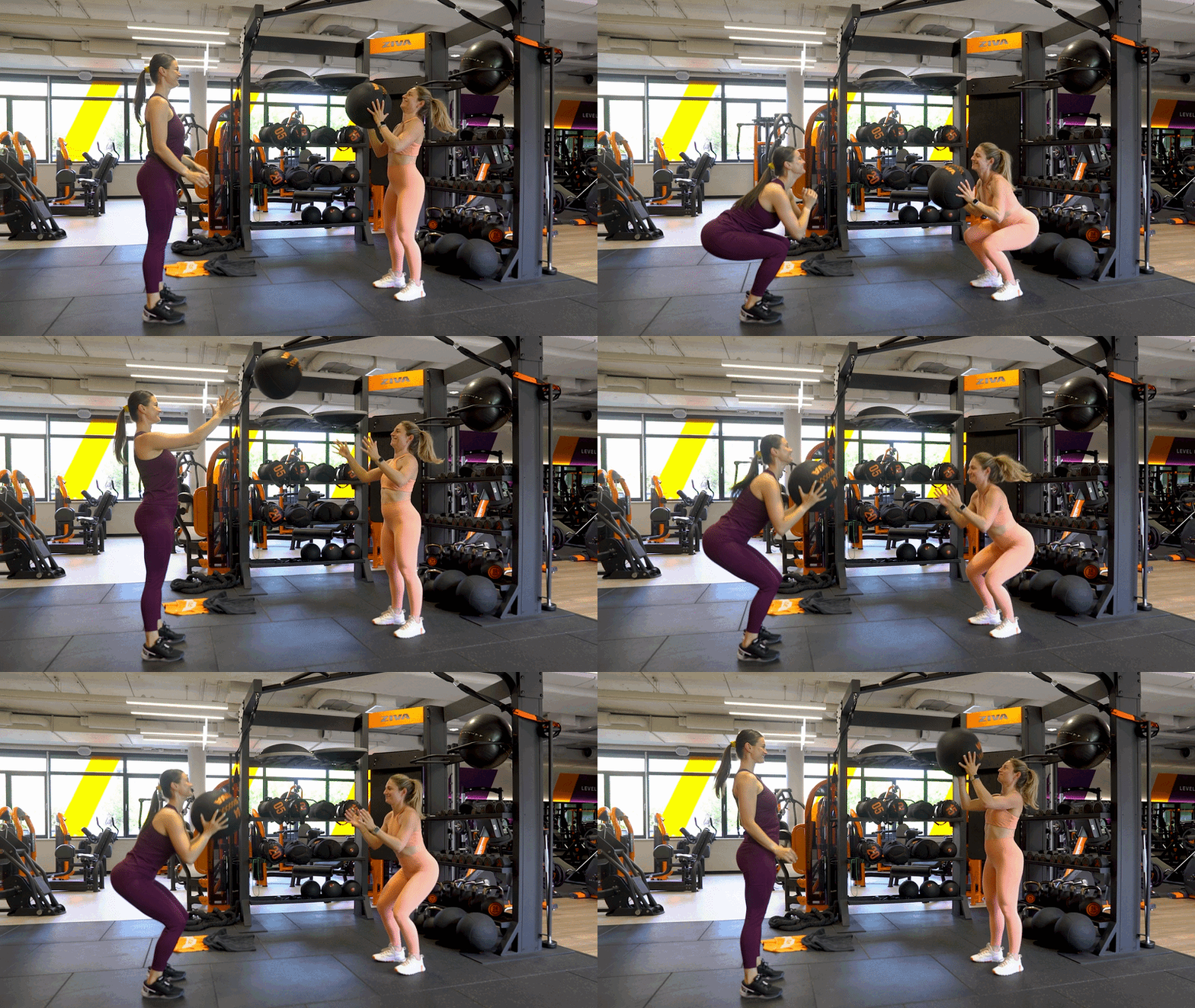
Stand facing your buddy, about two metres apart. Partner A holds a light wall ball at chest height.
Squat down together, keeping your chest lifted and your knees in line with your feet. As you stand, Partner A throws the ball towards Partner B with a chest pass.
Partner B catches the ball at chest height and keeps it close to the body. Squat down together again, then pass the ball back as you stand. Keep alternating while staying in sync.
10 to 12 passes each
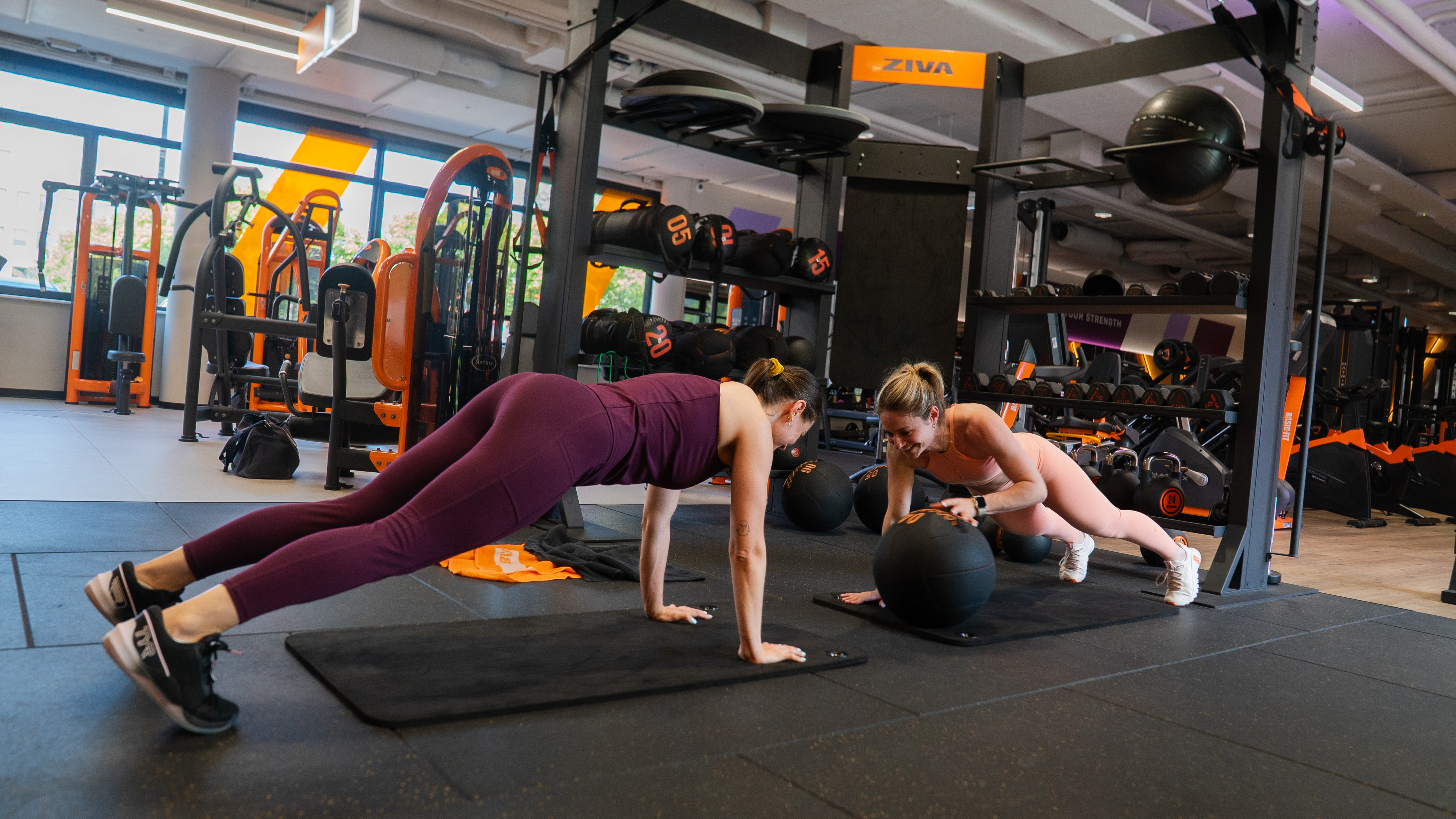
2. Plank ball roll
Targets: Core, shoulders, and chest
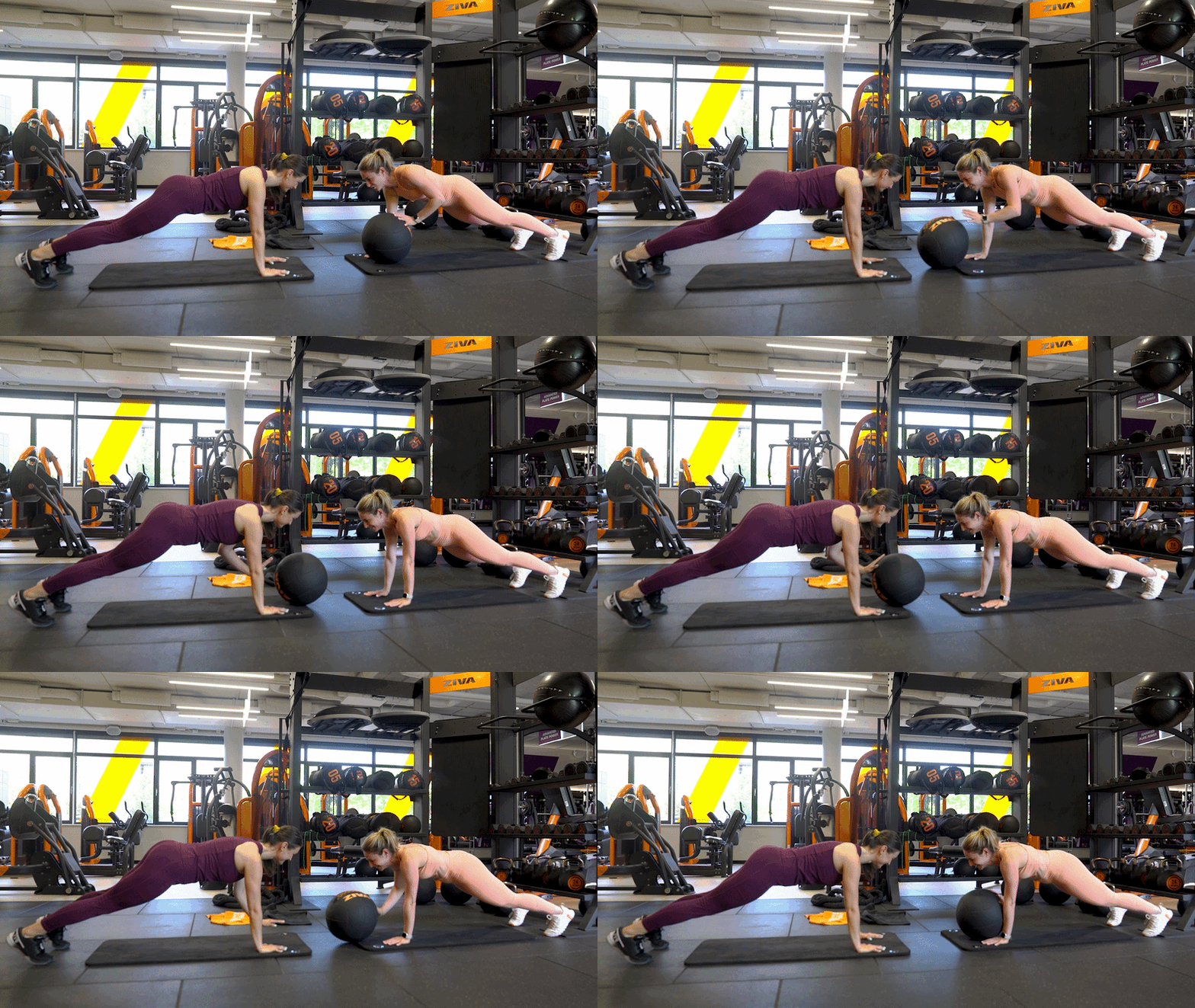
Start in a high plank facing your buddy, with your hands under your shoulders and your feet slightly wider for balance. Use a wall ball or medicine ball.
Keep your body in a straight line and brace your core. Lift one hand and roll the ball across the floor. Place your hand back down as your buddy stops the ball and rolls it back.
Alternate hands and keep your hips as still as possible throughout the exercise.
30 to 40 seconds
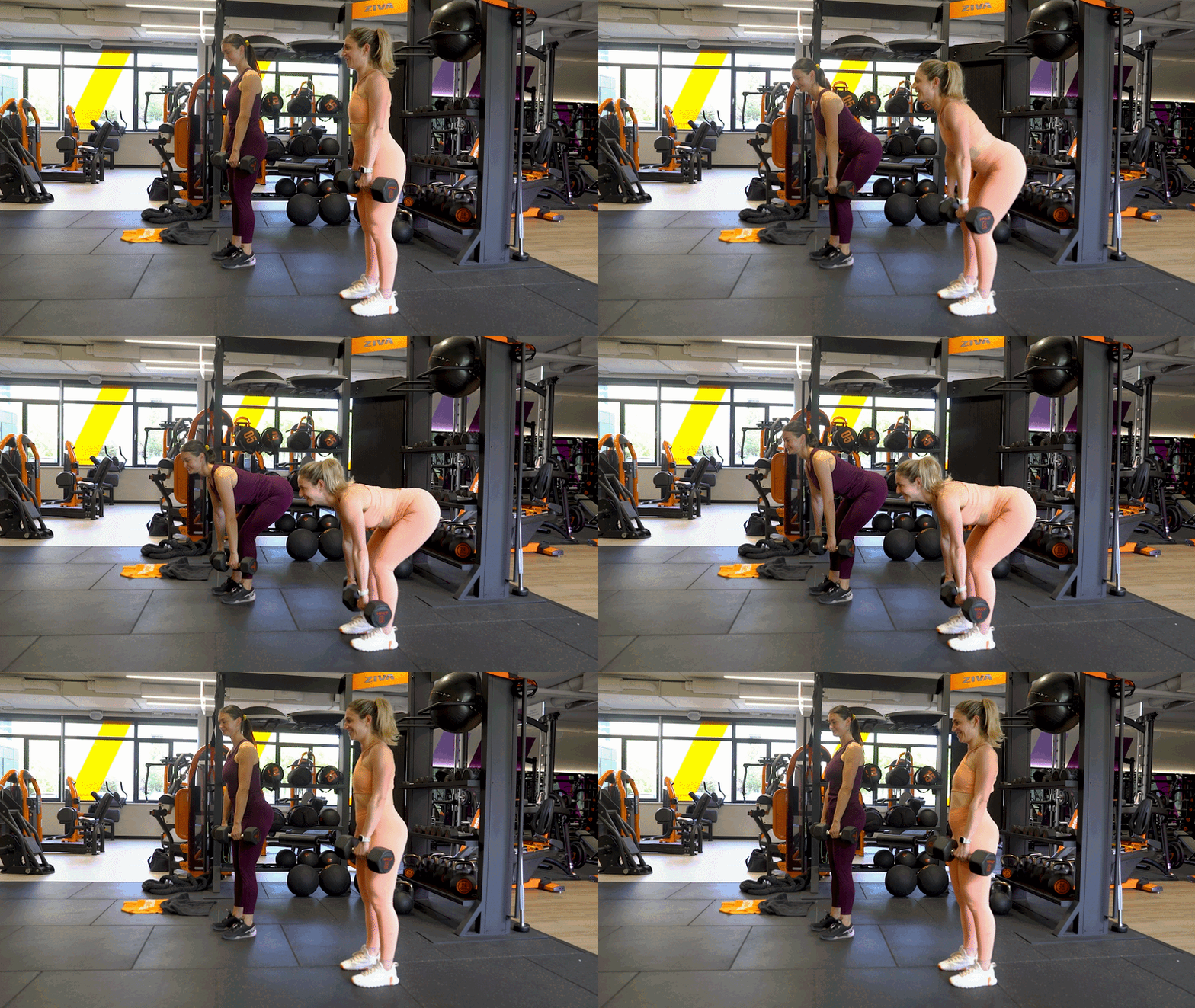
3. Synchronised dumbbell Romanian deadlifts
Targets: Glutes, hamstrings, lower back and core
Stand side by side with your feet hip-width apart and a dumbbell in each hand. Let the dumbbells hang in front of your thighs.
Slightly bend your knees, brace your core and push your hips backwards. Lower the dumbbells close to your legs while keeping your back neutral.
Stop when you feel tension in your hamstrings and can no longer push your hips back without rounding your back. Drive your hips forward and stand tall together.
10 to 12 reps
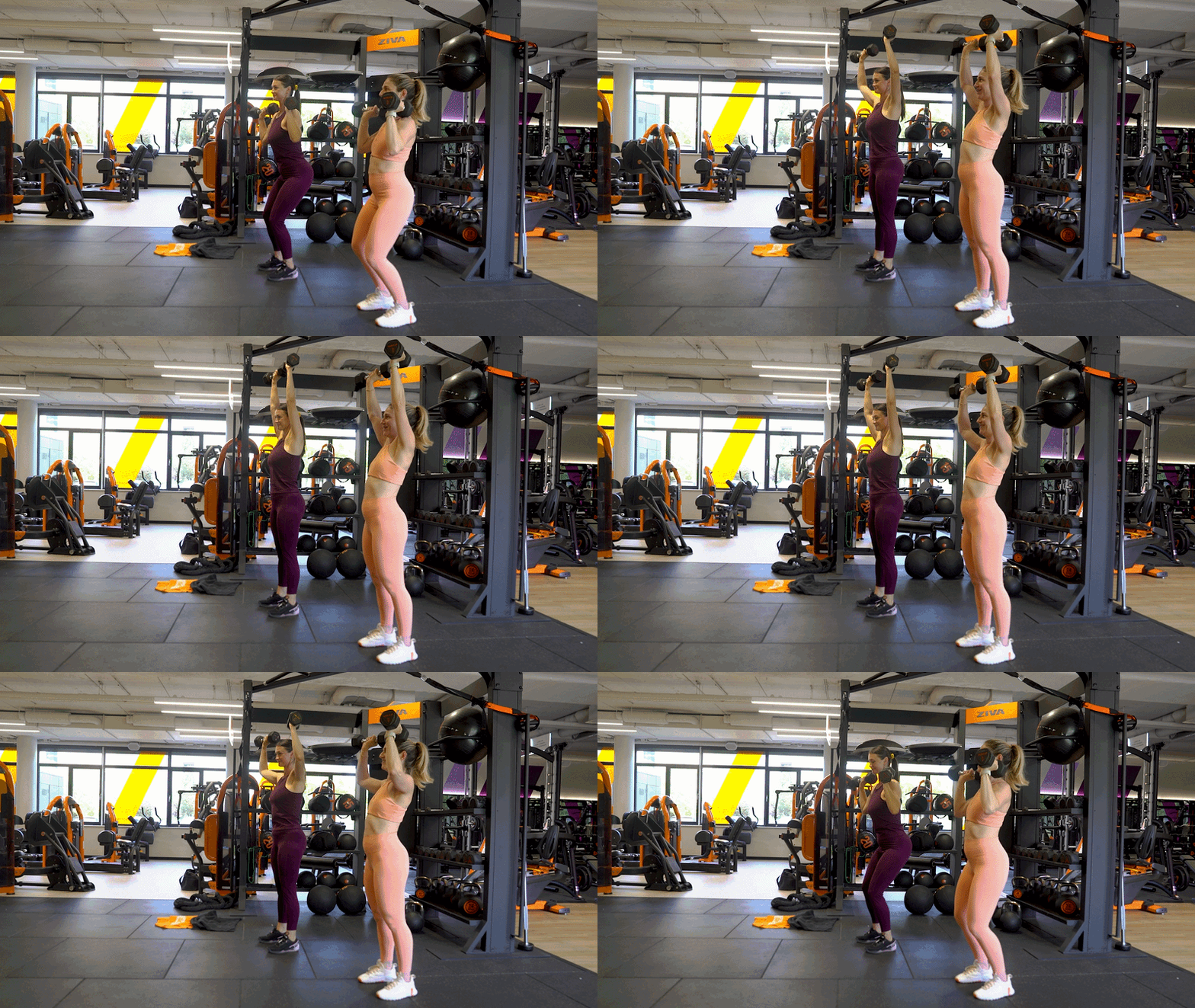
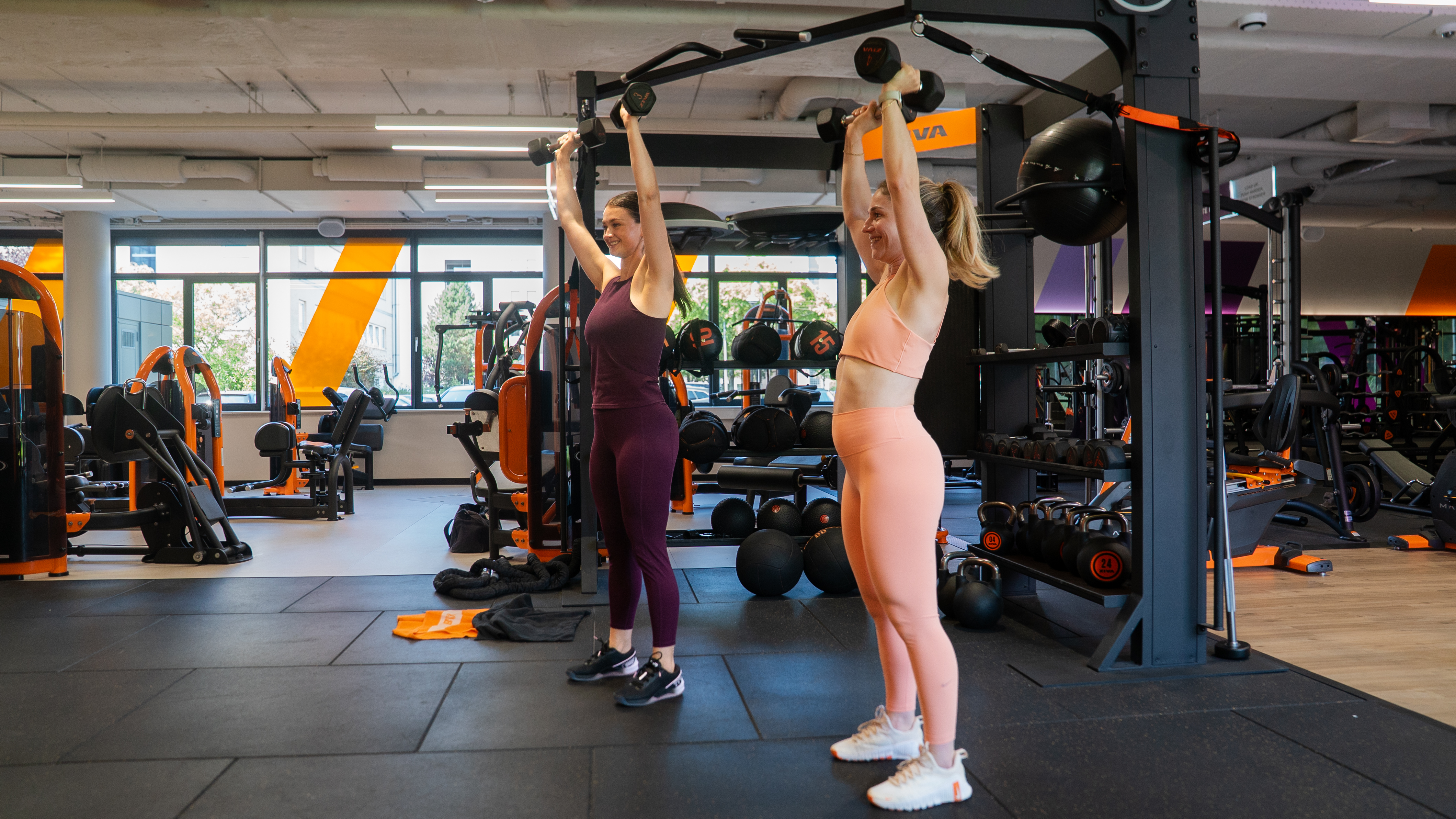
4. Synchronised dumbbell push press
Targets: Shoulders, triceps, and core
Stand side by side with your feet hip-width apart. Hold a dumbbell in each hand at shoulder height.
Brace your core and bend your knees slightly, keeping your chest lifted. Drive through your feet and straighten your legs as you press the dumbbells overhead.
Finish with your arms extended and your ribs down. Lower the dumbbells back to your shoulders under control and repeat while staying in sync.
10 to 12 reps
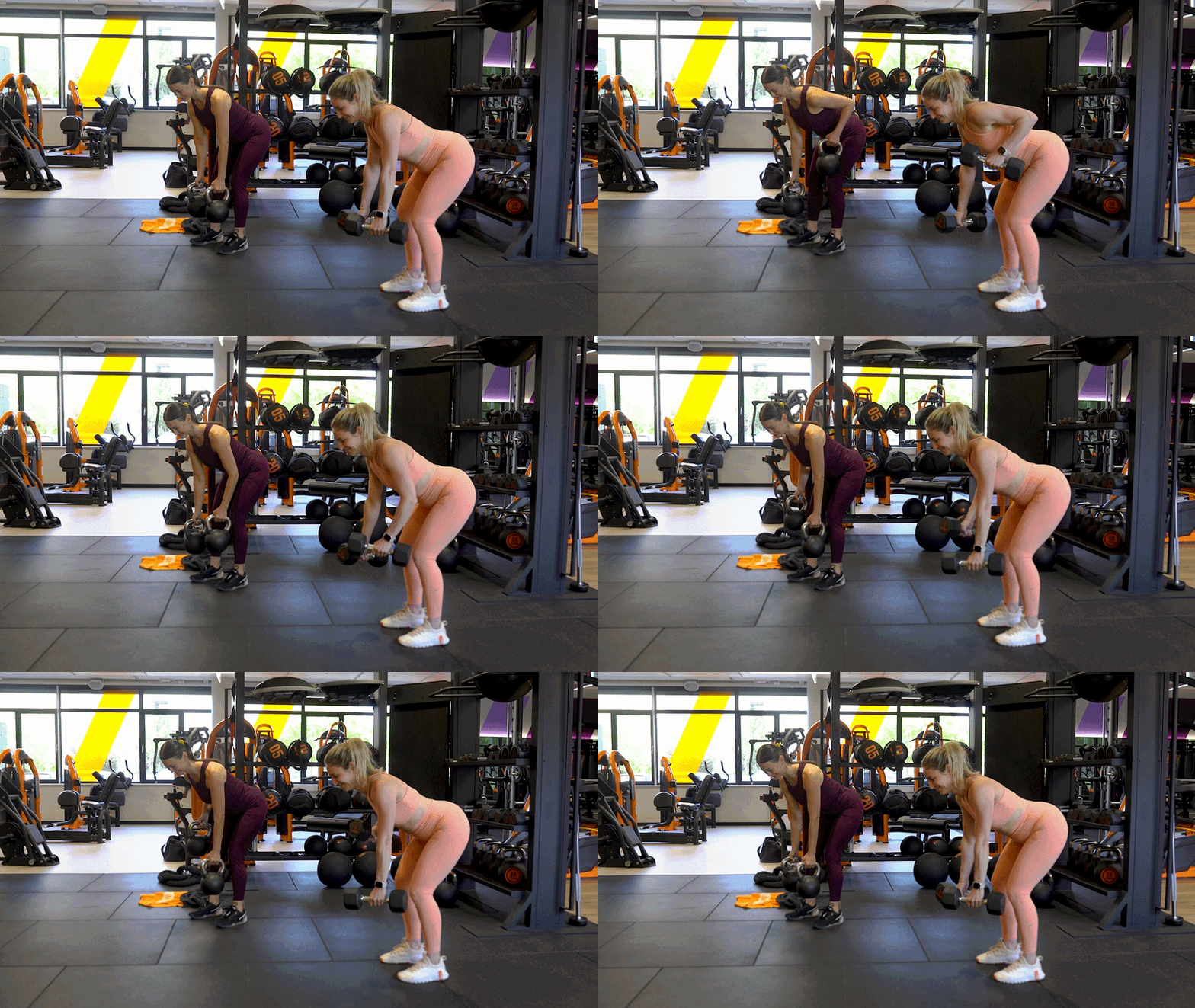
5. Synchronised alternating dumbbell or kettlebell rows
Targets: Lats, upper back, rear shoulders, biceps and core
Stand side by side with your feet hip-width apart. Hold a dumbbell or kettlebell in each hand.
Slightly bend your knees and push your hips backwards until your torso leans forward. Keep your back neutral and your core engaged.
Pull the weight in your right hand towards your ribs, keeping your elbow close to your body. Lower it under control, then row with your left arm.
Continue alternating arms while keeping your torso still and staying in sync with your buddy.
10 to 12 reps per arm
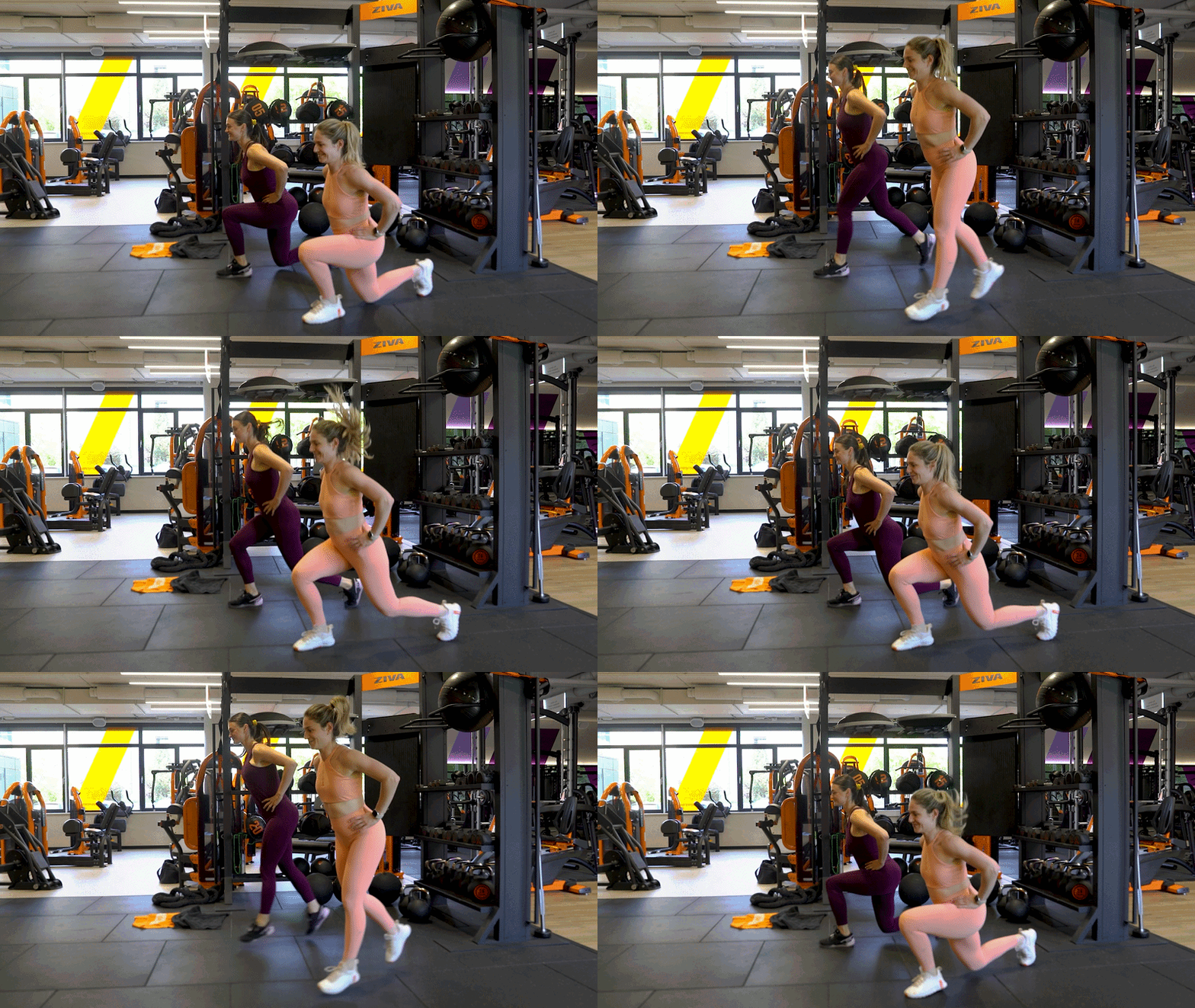
6. Synchronised jumping lunges
Targets: Quads, glutes, hamstrings, calves and core
Stand next to your buddy and step into a split stance. Lower into a lunge by bending both knees, keeping your chest lifted and your front knee in line with your foot.
Push through both feet and jump straight up. Switch legs in the air and land softly in a lunge with the opposite leg forward.
Continue alternating legs while staying in sync. Control each landing before starting the next jump.
10 to 12 reps per leg
Can you do this partner workout at different fitness levels?
Yes. Staying in sync does not mean using the same weights or completing every movement at exactly the same speed.
Each person can choose a suitable weight and exercise option. One of you might perform jumping lunges while the other chooses reverse lunges. You can still begin and finish each set together.
People who train with a friend also use different approaches. Some complete the same exercises with separate weights, while others share one part of the session before following their individual plans. The important part is choosing a setup that works for both of you.
Find more workout inspiration
Ready for your next session together? The Basic-Fit app gives members access to hundreds of workouts, training plans and exercise tutorials.
You can follow video workouts in the club, at home or outside, with options for strength, cardio, yoga and more. Build your own schedule or choose a complete training plan that suits your level and goals.
Bring your bestie to the gym
With an Ultimate membership, you can bring a friend with you whenever you train. So when this workout is calling for a round two, your bestie can join you again.
Invite them through the Basic-Fit app or My Basic-Fit. They will receive a personal QR code to enter the club and train with you.
Ready to train together?
Send this workout to your bestie, choose a day and give it a go. You do not need to lift the same weights or move in perfect sync. Start together, support each other and make it a workout you both want to do again.
GO FOR IT!
This article is for general information only. Individual needs can vary depending on health status, training experience, and personal goals. If you have a medical condition or specific health concerns, consider seeking advice from a qualified healthcare professional.


