


Balance is often something you only notice when it is missing. Maybe you feel unstable during lunges, wobble when standing on one leg or notice that you struggle to control your body during certain exercises.
You need balance when you stand still, walk, climb stairs, change direction, lift something from the floor, perform a lunge or catch yourself when you stumble.
Good balance depends on strength, coordination, body awareness and the ability to make small corrections when your position changes.
Strength training can help with that by making your body stronger and teaching you to control movement more effectively.
What is balance?
Balance is your ability to control your body position. This can happen while you are relatively still, but also while you are moving.
There are two forms of balance:
- Static balance means controlling your position while you remain relatively still, such as standing on one leg.
- Dynamic balance means maintaining control while moving, such as during a step-up, lunge, change of direction or recovery from an unexpected movement.
In daily life and during strength training, you often need both.
Balance does not come from strong muscles alone. Your brain constantly combines different information from:
- Your eyes
- Your inner ear, which contains your balance system
- “Sensors” in your muscles and joints
Together, these systems tell your brain where your body is and how it should react when your position changes. That is why balance is not one single skill. It is a combination of sensing, reacting and controlling movement.
How does strength training help balance?
When your muscles are stronger, your body has more capacity to control movement.
Stronger legs help you stand, step and change position. Stronger hip muscles help you control your pelvis and knees. A strong core helps you keep your torso stable while your arms and legs move. Strong calf and ankle muscles help you make small corrections when your weight shifts forward, backward or sideways.
A simple way to think about it is this: Strength gives your body the capacity to be stable. Balance practice teaches you to use that capacity at the right moment.
This also means strength training alone is not always enough to improve every form of balance. Someone can have strong legs and still struggle with single-leg control or unexpected changes in position.
A good approach is therefore to build enough strength first, learn to control movement and then gradually increase the balance challenge.
Best strength exercises for better balance
1. Squat or leg press
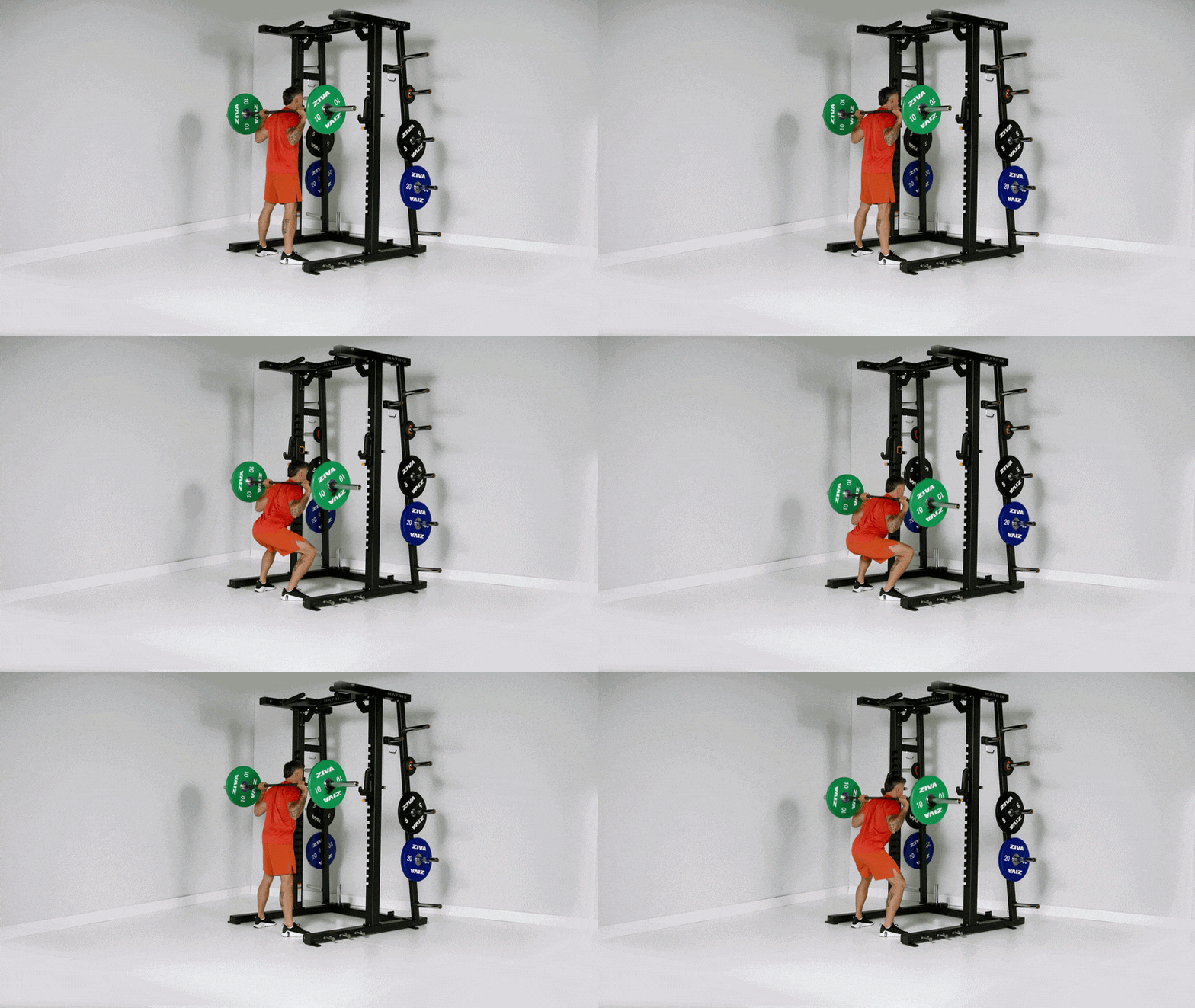
Squats and leg presses strengthen your legs and teach you to produce force through your feet. The leg press is more stable and can be a good starting point for beginners. A squat requires more control from your whole body and can be useful for progression later.
2. Split squat
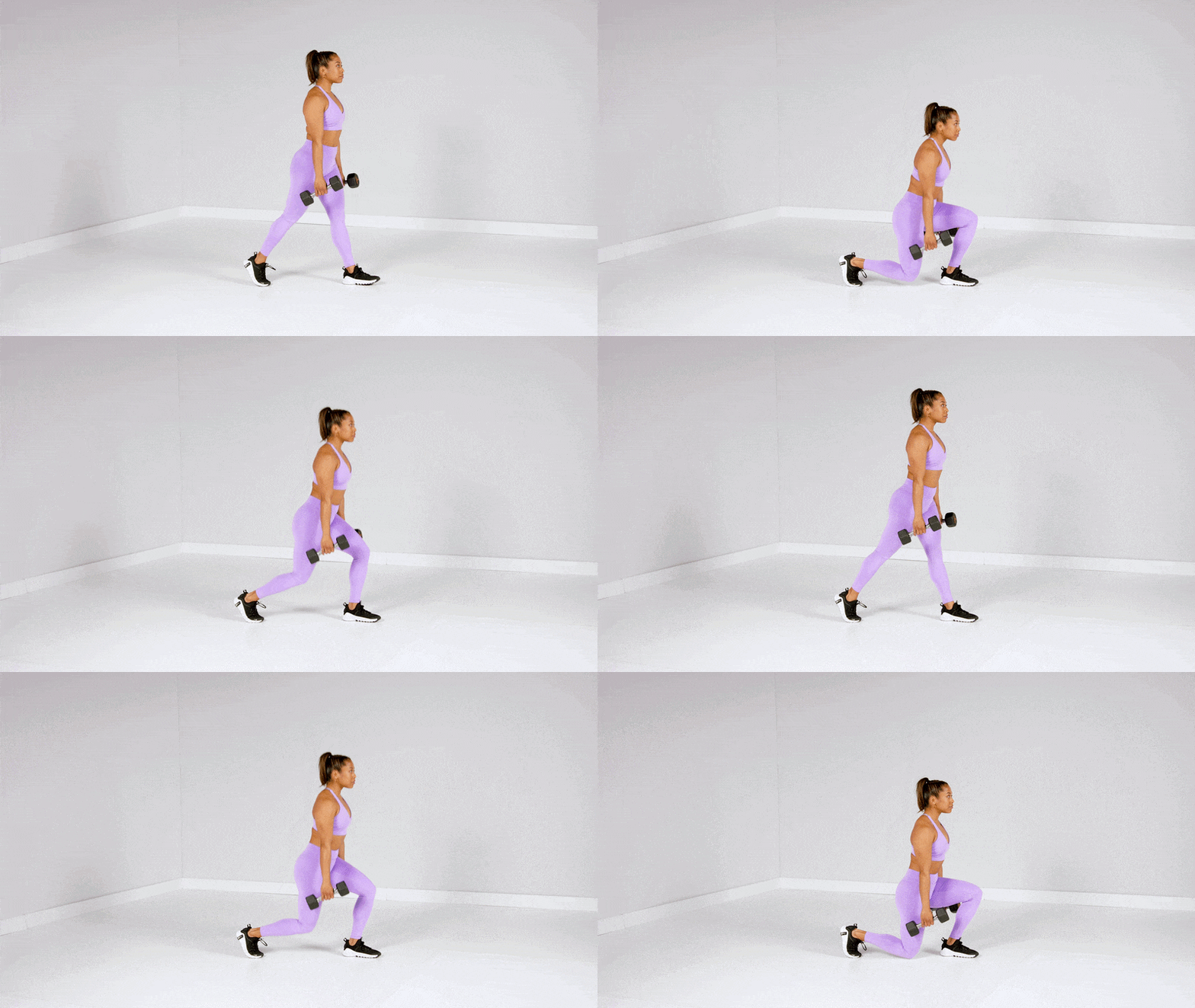
A split squat places your legs in a staggered position. This means you need more control between both your left and right sides. You can start by holding a rack, post or wall for support and gradually reduce that support as you become stronger and more stable.
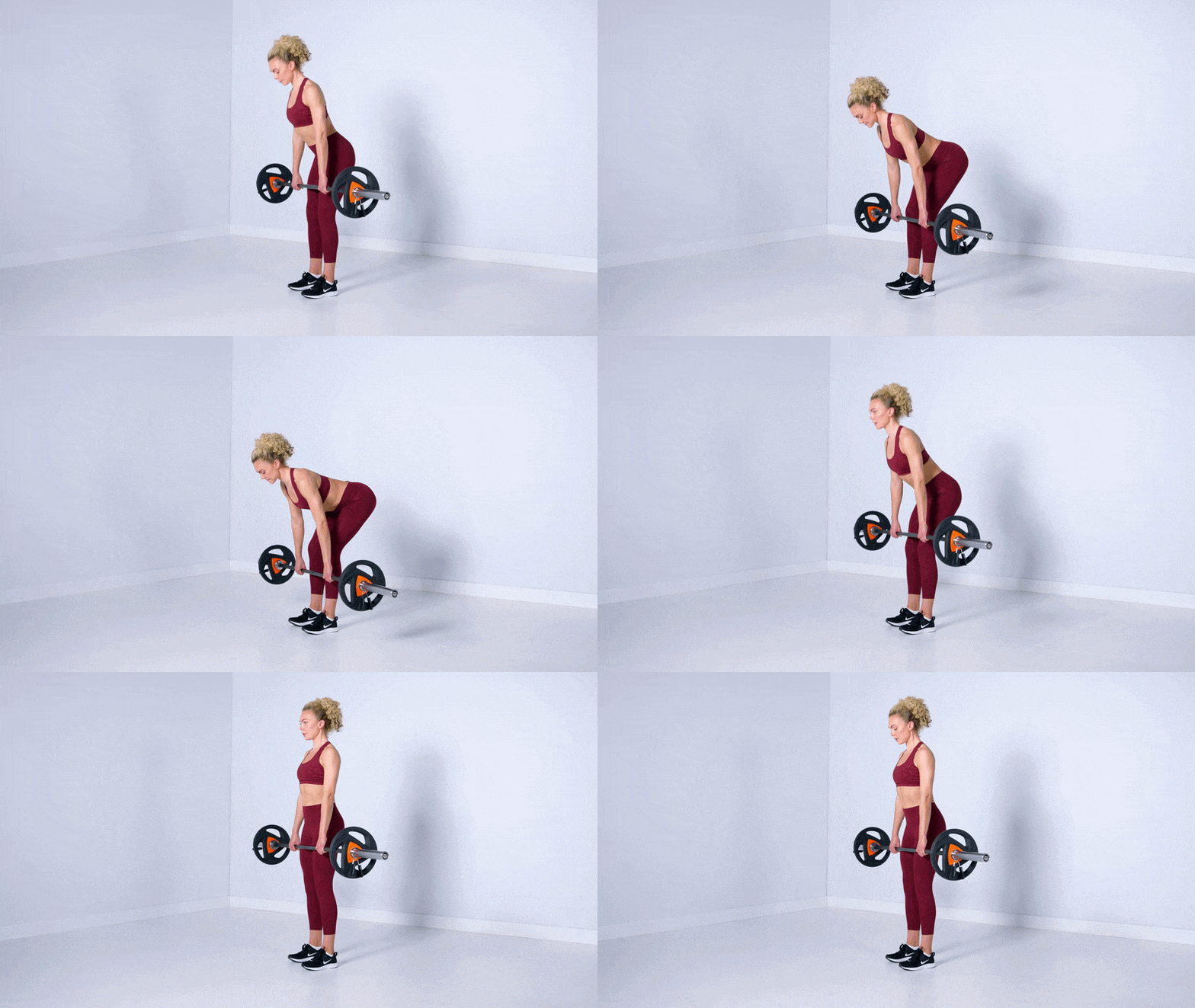
3. Romanian deadlift
The Romanian deadlift trains your hamstrings, glutes and trunk control. You learn to move your hips backward while keeping your upper body stable. A two-legged Romanian deadlift is often a better starting point than going straight to a single-leg RDL.
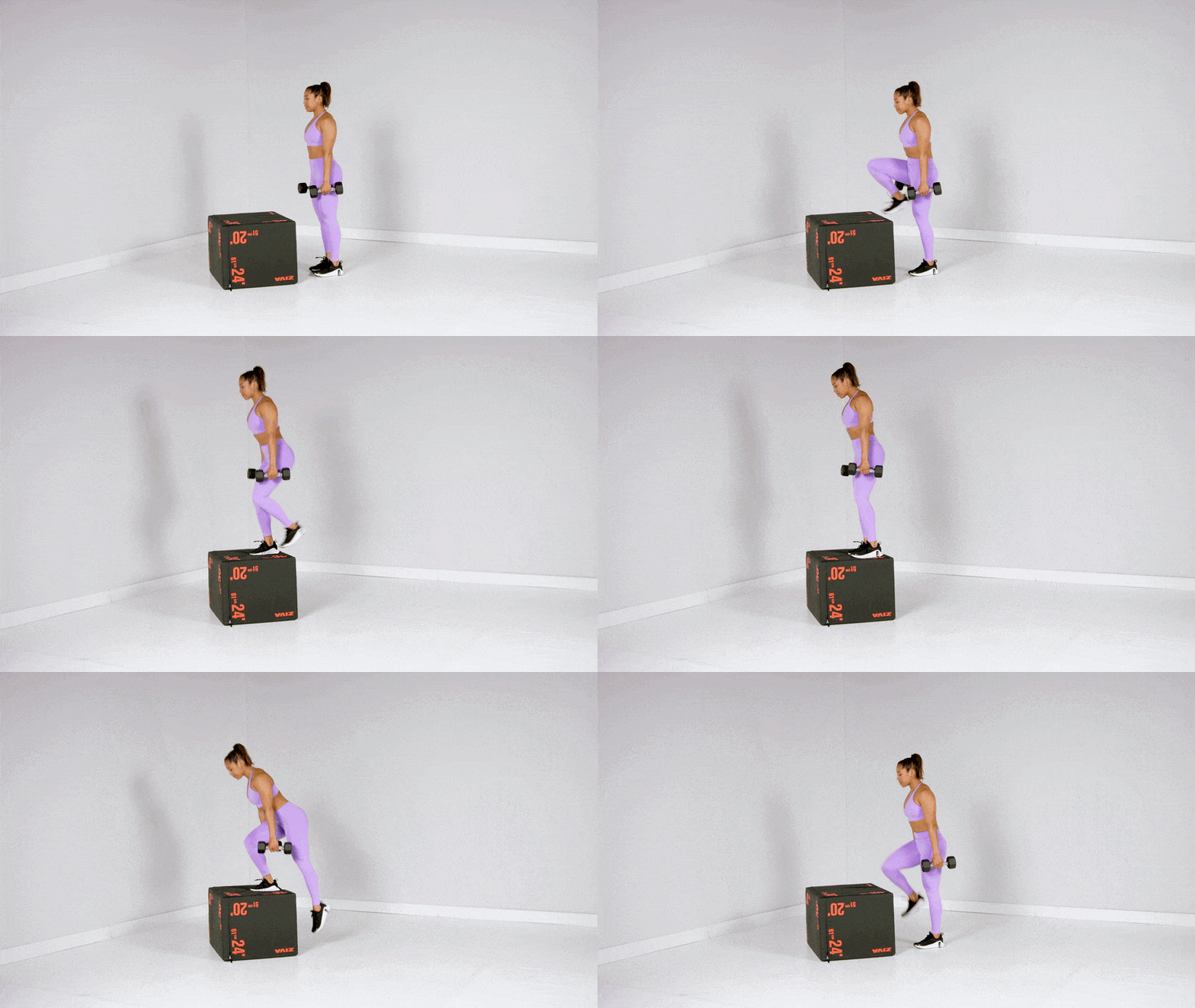
4. Step-up
A step-up resembles movements you use in daily life, such as climbing stairs. You need to produce force with one leg while controlling your body position. Start with a low step and use support when needed.

5. Loaded carry
In a loaded carry, you walk a short distance while holding a light weight, for example one or two dumbbells.
Loaded carries can challenge:
- Hip control
- Grip strength
- Posture
- Control while walking
A suitcase carry, where you hold a weight on one side, can add extra challenge because your body has to resist bending sideways.
6. Core exercises
A strong core does not simply mean being able to do many sit-ups. Your core helps keep your torso stable while your arms and legs move.
Good options to start with include:
- Dead bug
- Plank
- Pallof press
- Cable press
For more structure, the Basic-Fit app offers strength workouts and training plans you can follow at your own pace.
You can also work on balance, core control and stability in low-impact classes like Pilates, Yoga and Body Balance.
How to make balance training harder
Balance training does not need to become extreme all at once. A simple progression can look like this:
- Start stable: choose an exercise you can control well, such as a supported split squat.
- Improve the movement first: make sure you can perform the exercise slowly and with control.
- Add more resistance: when technique stays stable, gradually add weight.
- Gradually reduce support: use less help from a wall, rack or machine.
- Train one side at a time: for example, progress from a regular Romanian deadlift to a B-stance variation and later, if appropriate, to a single-leg version.
- Add more dynamic movement: think of walking lunges, higher step-ups or exercises where you change position.
The order does not have to be exactly the same for everyone.
The most important rule is simple: make an exercise harder only when you can control the current version well.
Do not forget your feet and ankles
Your feet are your contact point with the ground, yet they are often overlooked when people talk about balance.
While you stand, walk and move, your feet and ankles constantly make small corrections. Different muscles respond depending on whether your weight shifts forward, backward or sideways
Strong calves, stable ankles and good control through the foot can therefore contribute to better balance.
That does not mean you need complicated foot exercises. Regular strength training with controlled squats, step-ups, split squats, calf raises and other standing exercises can already contribute a lot.
Common mistakes and how to fix them
1. Making exercises unstable too quickly
If you wobble so much that you can barely produce force, the exercise is probably too difficult.
Fix: choose a more stable variation first and build control.
2. Only standing on one leg
Standing on one leg can be useful, but balance is much broader. In daily life, you also need to step, turn, land, slow down and change direction.
Fix: train balance through different movement patterns.
3. Ignoring strength
Balance becomes harder when the muscles around your hips, knees and ankles do not have enough strength to correct your position.
Fix: combine balance challenges with basic strength exercises.
4. Rushing repetitions
Moving quickly can hide a lack of control.
Fix: slow the movement down and control every phase.
How to train balance safely
When an exercise challenges your balance, make sure you have enough space around you.
Use support when needed. A wall, rack or machine can help you practise control without turning every repetition into a risk of falling. If you are unsure about your technique, a personal trainer can help you get started safely.
Mild uncertainty or wobbling can be normal when learning a new exercise. But sudden dizziness, unexpected loss of balance or unexplained changes in coordination are not normal training challenges. If this happens regularly, seek advice from a healthcare professional.
Example of a strength workout for balance
A simple strength workout with extra attention to balance could include:
- Leg press or squat: 2 to 3 sets of 8 to 12 reps
- Supported split squat: 2 sets per side
- Romanian deadlift: 2 to 3 sets of 8 to 10 reps
- Step-up: 2 sets per side
- Loaded carry: 2 to 3 short distances
- Dead bug or Pallof press: 2 to 3 sets
Two to three strength sessions per week can be a good starting point, with enough recovery between sessions.
Conclusion
Balance comes from a combination of strength, coordination, body awareness and the ability to make small corrections when your position changes.
Strength training can give your body more capacity to stay stable. But balance also improves by practising situations where you need to stabilise, correct and move.
Start with stable exercises you can control. Build strength. Gradually reduce support. Add single-leg or more dynamic movements when you are ready.
For your next workout, head to the Basic-Fit app for training plans, workouts and exercise tutorials to help you keep progressing at your own pace.
This article is for general information only. Individual needs can vary depending on health status, training experience, and personal goals. If you have a medical condition or specific health concerns, consider seeking advice from a qualified healthcare professional


