
It’s Monday morning. You’ve trained well during the week, you’ve kept a balanced diet, and yet when you step on the scale, the number is higher than it was on Friday. It’s normal to feel frustrated, but that number doesn’t tell the whole story.
Body weight is a number that’s constantly changing. It’s not a measure of your success or failure, but rather a snapshot of a specific moment, influenced by factors that have nothing to do with gaining fat.
In this article, you’ll understand why your weight fluctuates and how to better interpret what you see on the scale, so you can stay focused on your health and strength goals.

Carbohydrates and water retention
If you enjoyed a carbohydrate-rich dinner yesterday, like a good plate of pasta or rice, it’s very likely that you weigh a bit more today. But here’s what actually happened in your body:
When you eat carbohydrates, your body stores them in your muscles and liver as glycogen to use as energy. The key detail is that for every gram of glycogen you store, your body retains approximately 3 to 4 grams of water to store it properly*.
You’re unlikely to have gained fat overnight. What you see on the scale is, to a large extent, water and stored energy ready to be used in your next workout. It’s fuel for your muscles.
The menstrual cycle and weight fluctuations
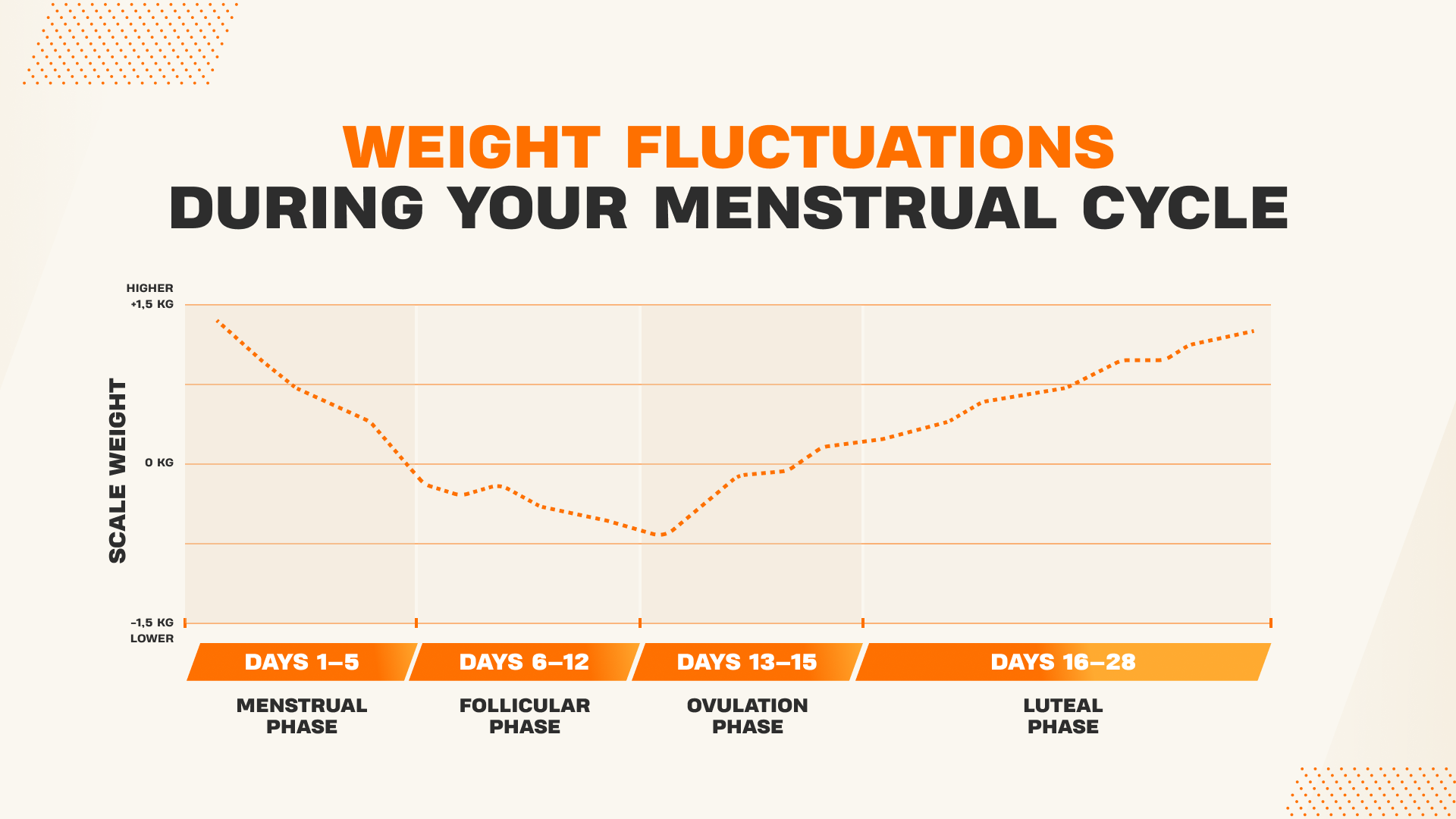
If you’re in the days leading up to your period (luteal phase), it’s completely normal for the scale to show between 1 and 3 kilos more. During this stage, changes in hormones like progesterone promote fluid retention and abdominal bloating*.
This weight gain is temporary and usually disappears shortly after your period starts*. If you notice that you feel heavier or have less energy during this phase, it can be a good time to adjust your workout intensity.
In the Basic-Fit app you can find mobility routines or lighter workouts that help you stay active without pushing for maximum performance when your body needs a break*.
Other reasons your weight might increase
There are other factors that often go unnoticed but can move the number on the scale:
Post-workout inflammation
After an intense session with weights or machines, your muscle fibers experience natural micro-tears. To repair them, your body creates a normal inflammatory response that involves water retention in the muscle tissue*.
This is simply a sign that your body is recovering and getting stronger*.
Cortisol and stress
If you haven’t slept well or you’re going through a stressful week, your cortisol levels rise. This hormone is closely linked to fluid retention and can cause your weight to fluctuate from one day to the next, even if your diet hasn’t changed*.
How to measure your progress beyond the scale
If weight fluctuates so much due to factors we can’t control, how do we measure real progress? The key is body composition. What really matters is not how much you weigh overall, but how much of that weight is muscle mass and how much is fat.
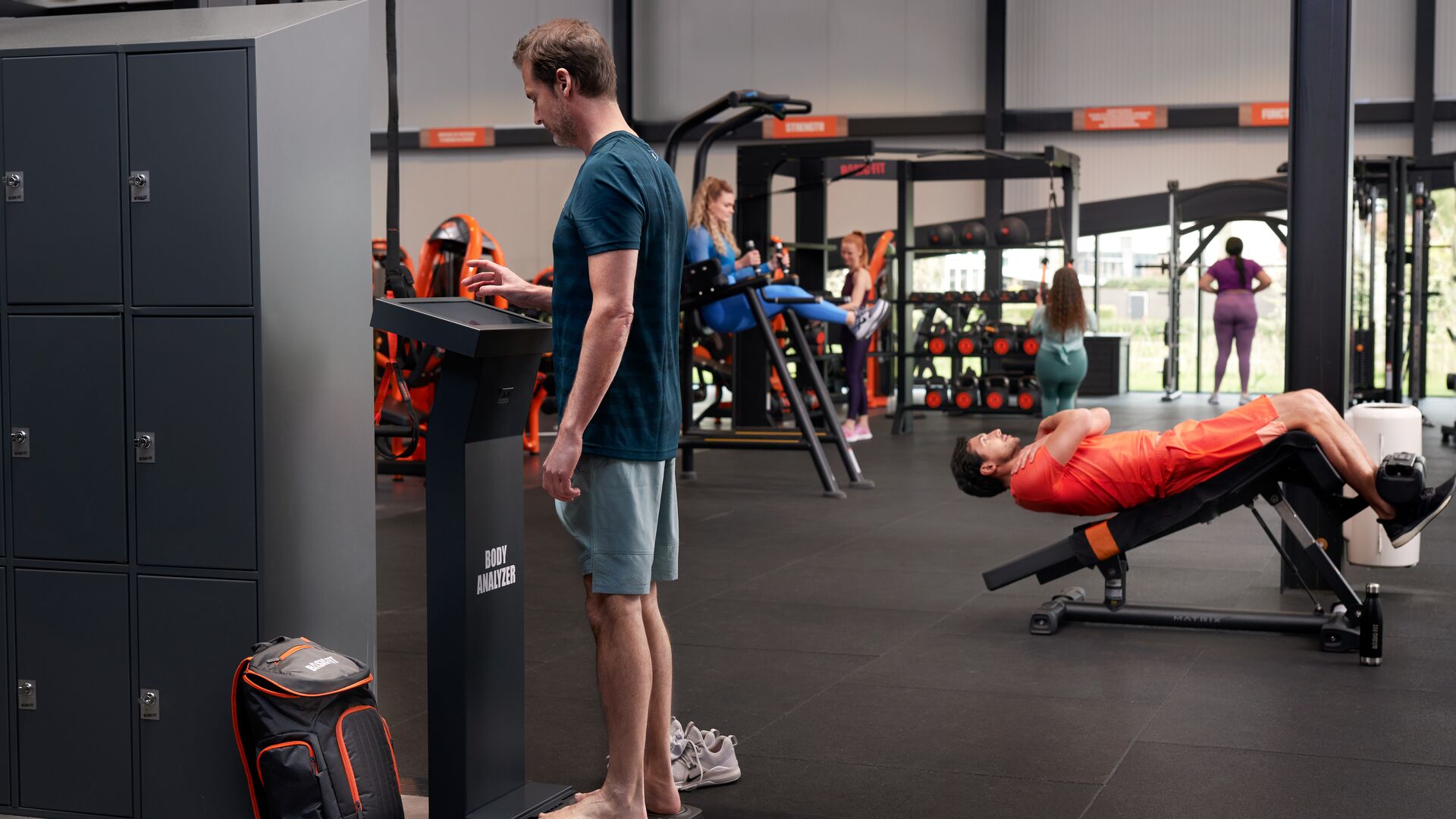
To get a much more accurate picture of your progress, it helps to measure these parameters regularly. A great option is to use the Body Analyzer you’ll find in your Basic-Fit club. This tool allows you to see your body fat percentage, muscle mass, and hydration levels much more precisely than a regular scale.
Trainer’s tip: By syncing these results with your Basic-Fit app, you can track your progress over time. Seeing your muscle mass increase while your body fat percentage decreases is the real sign that your training is working, regardless of what the scale says on any given Monday.

Shift your focus to enjoy the process
Your weight will always fluctuate. It’s part of being a biologically active human being*. If you want to measure your success in a healthier and more motivating way, try focusing on these signals:
- Your energy levels and mood throughout the day*
- How your clothes fit and how you look in the mirror
- Your strength progress: can you lift a bit more weight or do one extra rep with good technique?*
Trainer’s tip: Remember that becoming a better version of yourself is a long-term journey. Don’t let a temporary fluctuation caused by water retention overshadow all the effort you’re putting in at the gym. Listen to your body, understand its phases, and keep going.
This article is for general information only. Individual needs can vary depending on health status, training experience, and personal goals. If you have a medical condition or specific health concerns, consider seeking advice from a qualified healthcare professional.
Sources
- McNulty, K. L., Elliott-Sale, K. J., Dolan, E., et al. (2020). The effects of menstrual cycle phase on exercise performance in eumenorrheic women: a systematic review and meta-analysis. Sports Medicine.
- Cleveland Clinic (2023). Nutrition and Exercise Throughout Your Menstrual Cycle.
- Benito, P. J., Alfaro-Magallanes, V. M., Rael, B., et al. (2023). Effect of menstrual cycle phase on the recovery process of high-intensity interval exercise. International Journal of Environmental Research and Public Health.
- Coldewey, J., Kuranda, J., & Muehlbauer, T. (2024). The influence of menstrual cycle phases on maximal strength performance in healthy female adults: a systematic review with meta-analysis. Sports.
- Zinner, C., Aschendorf, P., Noel, B., et al. (2025). Perceived impact of the menstrual cycle on sports performance in adolescent and adult women. German Journal of Exercise and Sport Research.