


Do you often see people in the gym driving their hips up with a barbell on their lap and wonder if you should be doing it too?
Spoiler alert: the answer is probably yes.
The hip thrust is one of the most popular exercises for glute training. When performed with proper technique, it helps you build stronger glutes and improve lower-body strength.
If the setup or movement feels confusing, you’re not alone. Many gym-goers struggle to feel the exercise working in the right muscles.
In this article you’ll learn:
- What a hip thrust is and which muscles it trains
- How to set up the exercise correctly
- How to perform a hip thrust with proper technique
- Common mistakes and how to fix them
- Variations you can try depending on your level
What is a hip thrust and which muscles does it train?
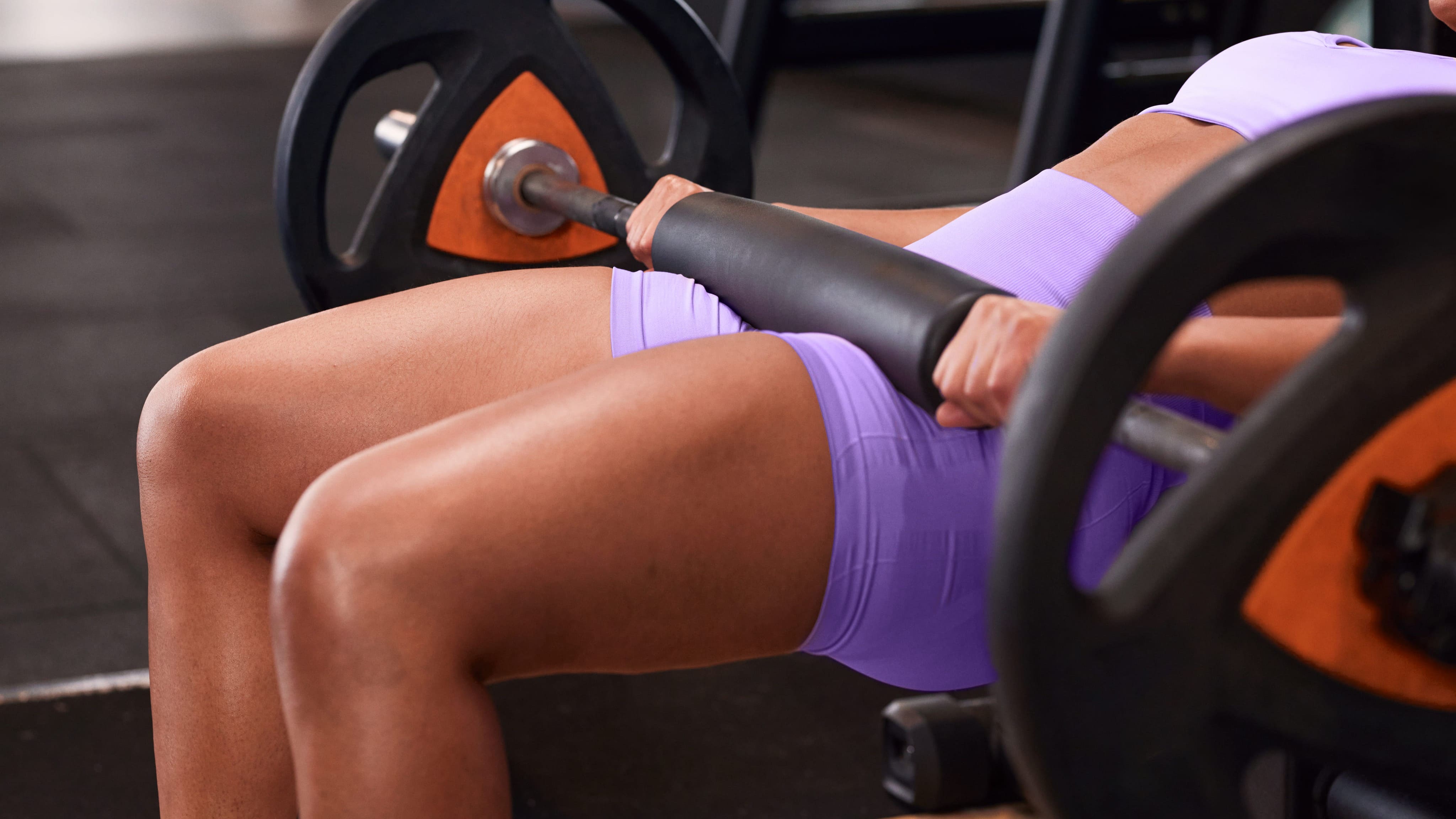
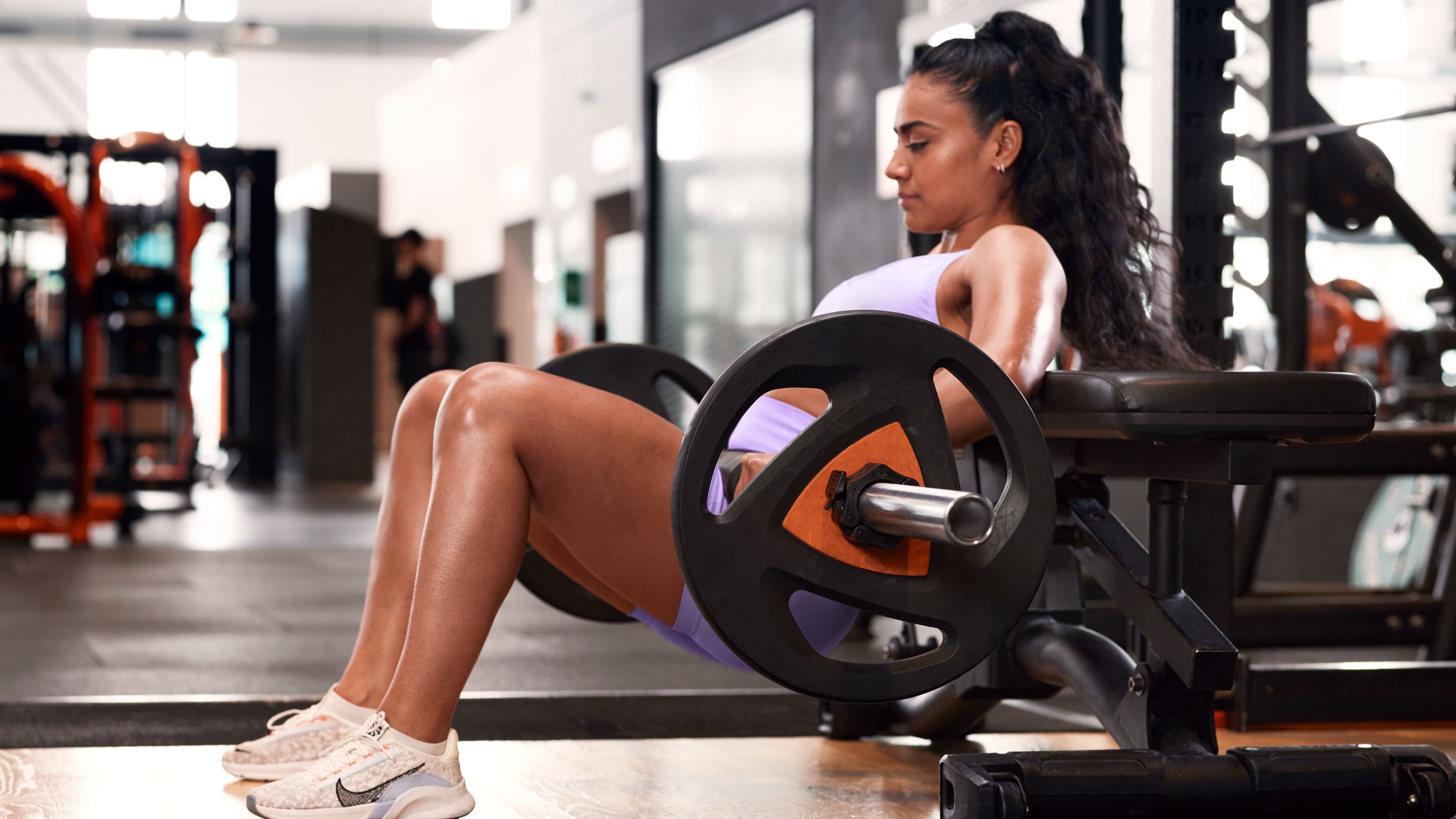
A hip thrust is a lower-body exercise where your upper back rests on a bench while you drive your hips upward against resistance.
You can perform it with different types of equipment, such as:
- A barbell
- A dumbbell
- A hip thrust machine
- Or just your body weight
The movement is based on hip extension, which means extending your hips to lift the weight.
The main muscle involved is the gluteus maximus, the largest muscle in your glutes and a key driver of powerful movements such as:
- Walking
- Running
- Jumping
- Squatting
- Climbing stairs
Strong glutes improve performance and help reduce strain on your lower back. With consistent training, you’ll likely notice them becoming more rounded over time.
How to perform a barbell hip thrust correctly
Setup
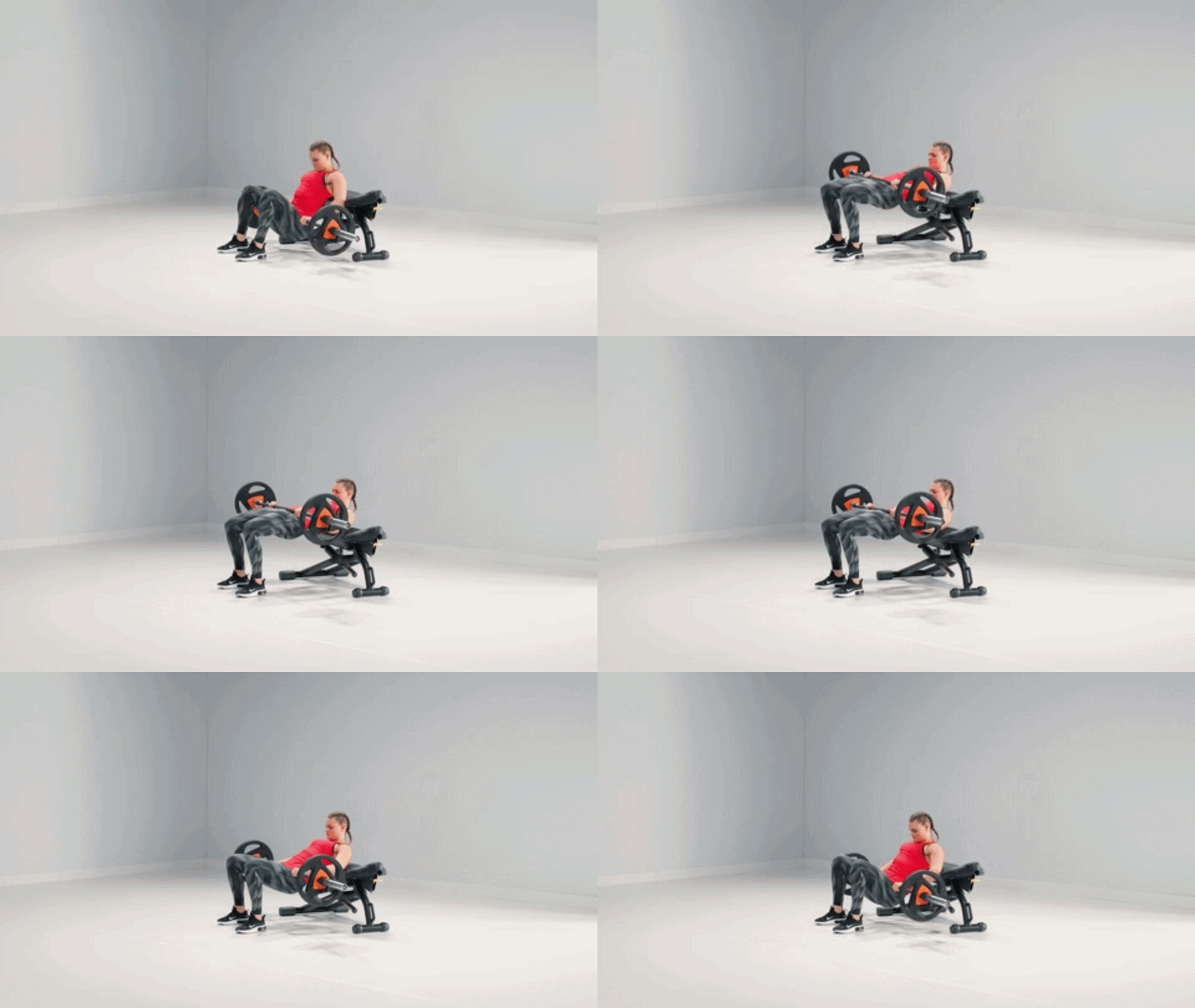
- Place a bench behind you
- Position your upper back against the edge of the bench
- Roll the barbell over your hips (use a pad or towel)
- Place your feet hip-width apart
- At the top position, your knees should be roughly above your ankles
Execution
- Press your feet firmly into the floor
- Drive your hips upward by contracting your glutes
- Move from your hips, not your lower back
- At the top, your body forms a straight line from knees to shoulders
- Lower the weight under control
Pay attention to
- You should feel tension in your glutes, not your lower back
- Keep your knees slightly pushed outward
- Push through your whole foot, not just your toes
- Keep your neck in a neutral position
- Let your knees move slightly outward during the lift
Coach’s tip: Not sure about your form? Try filming yourself from the side. You’ll often notice things you don’t feel during the movement. You can also use the Basic-Fit app to find guided workouts and exercise tips that help you improve your technique.
Why is the hip thrust so effective?
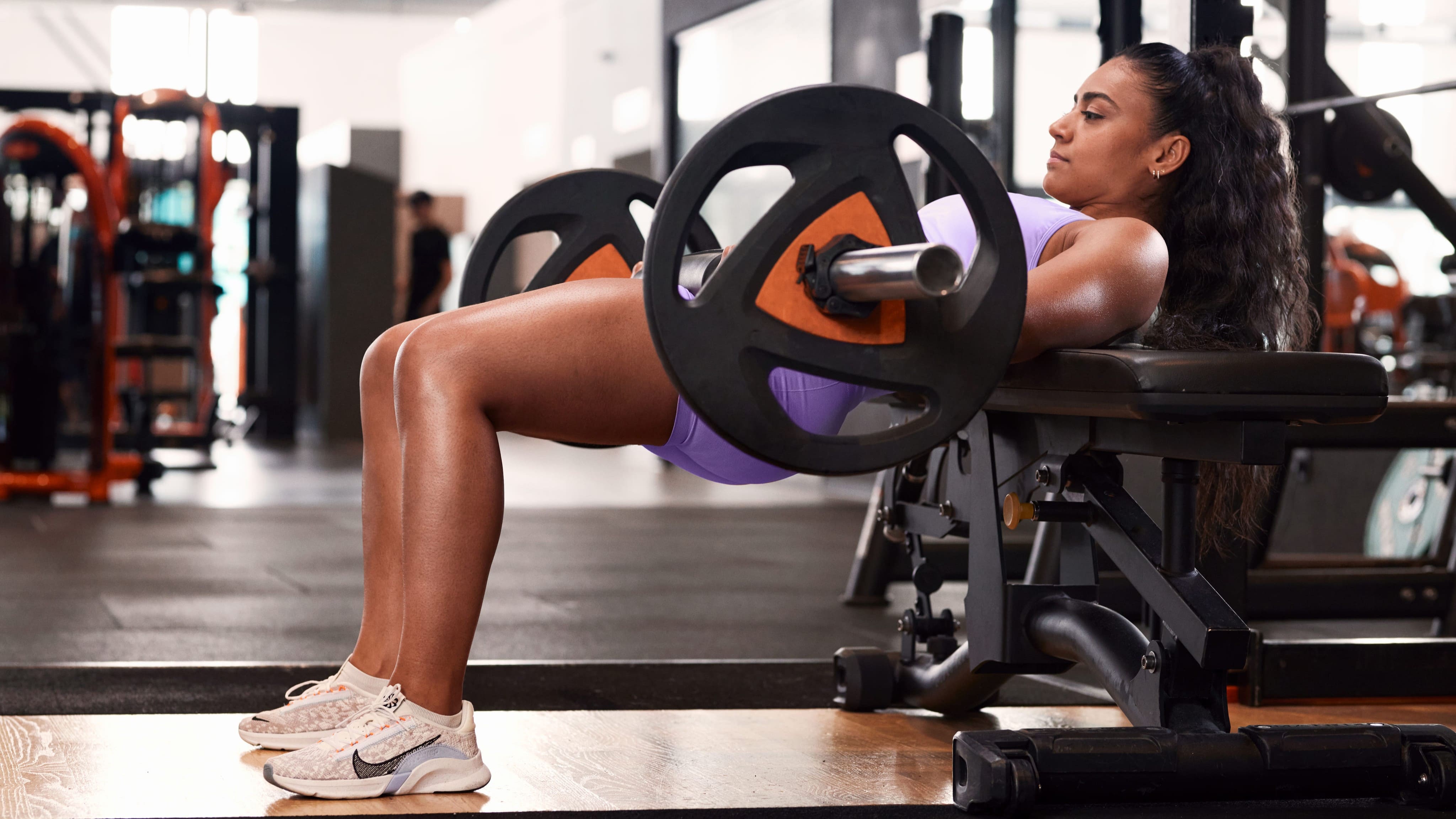
With the hip thrust, the load is highest in the top position, when your hips are fully extended. That’s exactly where the gluteus maximus produces a lot of force.
Because the highest tension occurs in the shortened position, the exercise generally causes less muscle damage than stretch-dominant exercises like the Romanian deadlift. This means you can often train the movement more frequently during the week.
Hip thrust vs. Romanian deadlift (RDL)
Both exercises train your glutes, but they do so in different ways.
Hip thrust
- Hardest point: at the top
- Focus: shortened position
Romanian deadlift
- Hardest point: at the bottom
- Focus: maximum stretch
- More emphasis on the hamstrings and the muscles that support your lower back
If you want to fully develop your lower body, these exercises complement each other well.
Common hip thrust mistakes and how to fix them
Even small mistakes can reduce how effective the exercise feels. These are the most common ones:
Overextending at the top
If you feel tension mainly in your lower back at the top of the movement, you may be pushing your hips too far.
Fix: Stop when your hips are fully extended and your body forms a straight line.
Incorrect foot position
If your feet are too far forward, your hamstrings may take over the movement.
If they are too close to your body, the glutes may not work as effectively.
Fix: Use your warm-up sets to find the foot position that allows you to feel your glutes working most.
Moving too quickly
Fast repetitions can reduce tension on the muscles you want to train.
Fix: Focus on controlled repetitions and pause briefly at the top.
Training too light
If the weight is too light, the exercise may not create enough challenge for your glutes.
Fix: Choose a weight that makes the last few repetitions feel challenging while maintaining good technique.
Hip thrust variations you can use
Once you feel comfortable with the movement, you can try different variations depending on your level or available equipment.
Common options include:
- Bodyweight hip thrust – a beginner-friendly starting point
- Dumbbell hip thrust – easy to set up and control
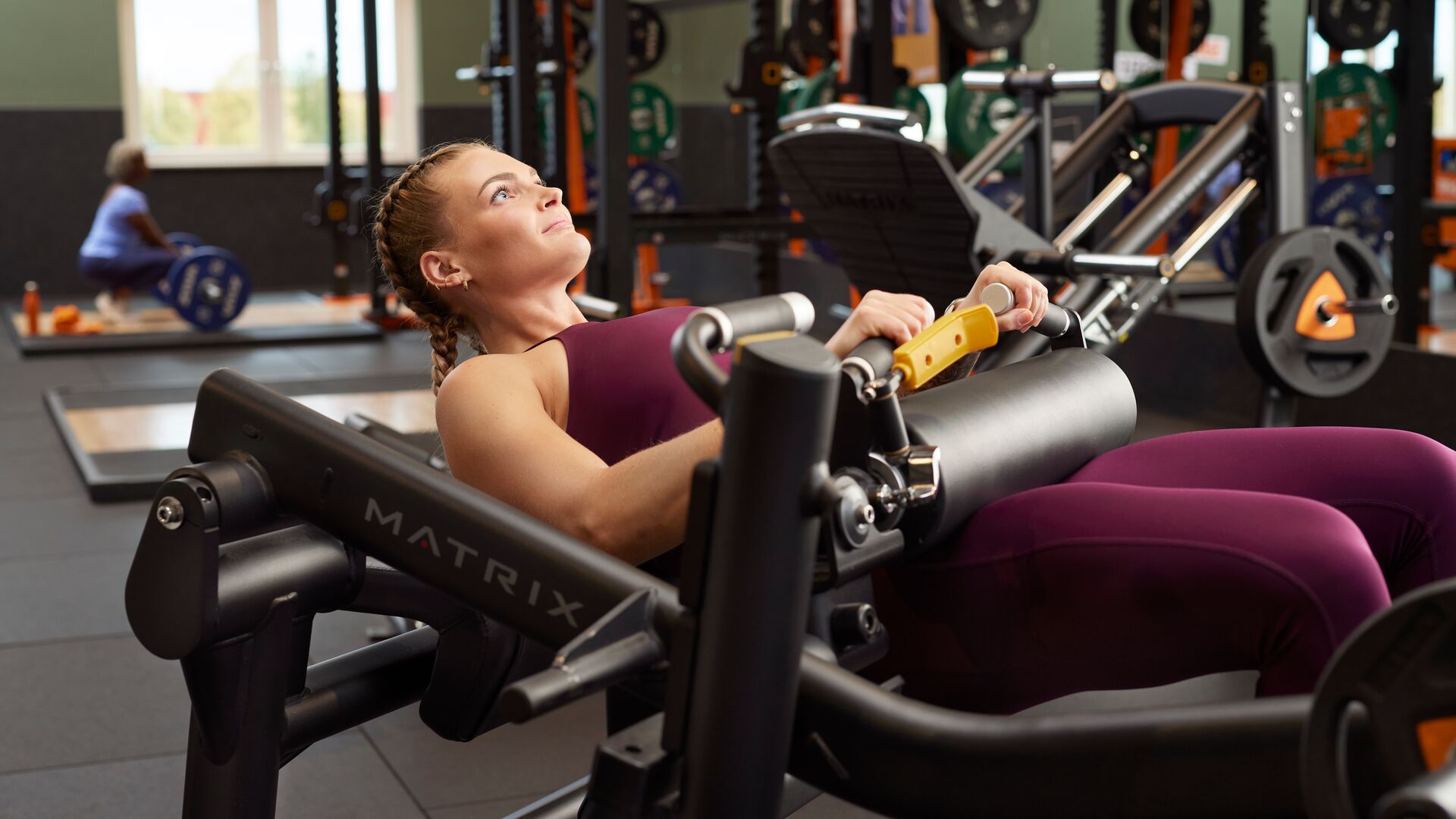
- Machine hip thrust – provides stability and consistent resistance
- Single-leg hip thrust – increases the challenge and improves balance
These variations allow you to adjust the exercise to your experience level and training goals.
How hip thrusts fit into a leg or glute workout
Hip thrusts can be part of a balanced glute or leg workout.
A typical approach could look like this:
- 1–2 warm-up sets
- 2–3 working sets
- 6–12 repetitions per set
- 90–180 seconds of rest between sets
You can combine hip thrusts with other lower-body exercises such as:
- Romanian deadlifts
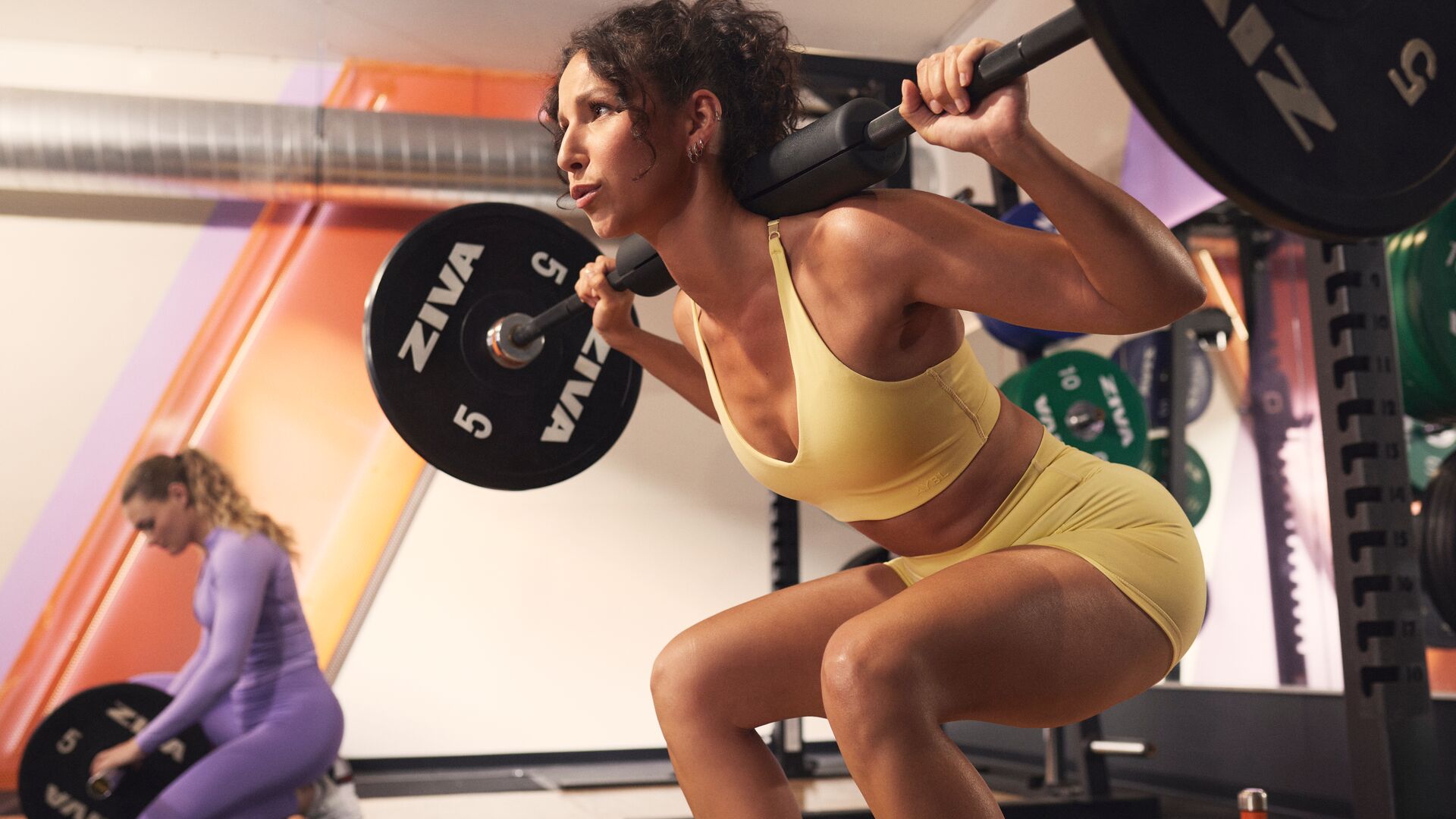
- Squats
- Split squats
- Leg curls
These exercises train your muscles in different ways and complement each other well.
The Basic-Fit app also offers guided workouts and exercise ideas, helping you structure your lower-body training and discover new ways to challenge your glutes.
Conclusion
Hip thrusts can feel unfamiliar at first, but with the right setup and technique they quickly become one of the most effective exercises for glute training.
Focus on controlled repetitions, good positioning and consistent practice.
If you’re unsure about your setup or technique, a personal trainer can help you refine your form and get more out of the exercise.
Over time you’ll become more confident with the movement and better able to feel your glutes doing the work.
This article is for general information only. Individual needs can vary depending on health status, training experience, and personal goals. If you have a medical condition or specific health concerns, consider seeking advice from a qualified healthcare professional.


