

Building stronger arms, especially my biceps, was a challenge for me from the very beginning. The biceps are one of the most noticeable muscle groups in the upper body and play an important role in arm strength, proportion, and symmetry.
I know many people train their biceps weekly using what feels like the right weight. Still, progress often stalls and frustration creeps in when you see others making progress faster. This usually comes down to three things: training frequency, load selection, and exercise choice.
In this article, I’ll break down what often goes wrong in biceps training and what you can change to start seeing the results you expect.
Your biceps muscles explained
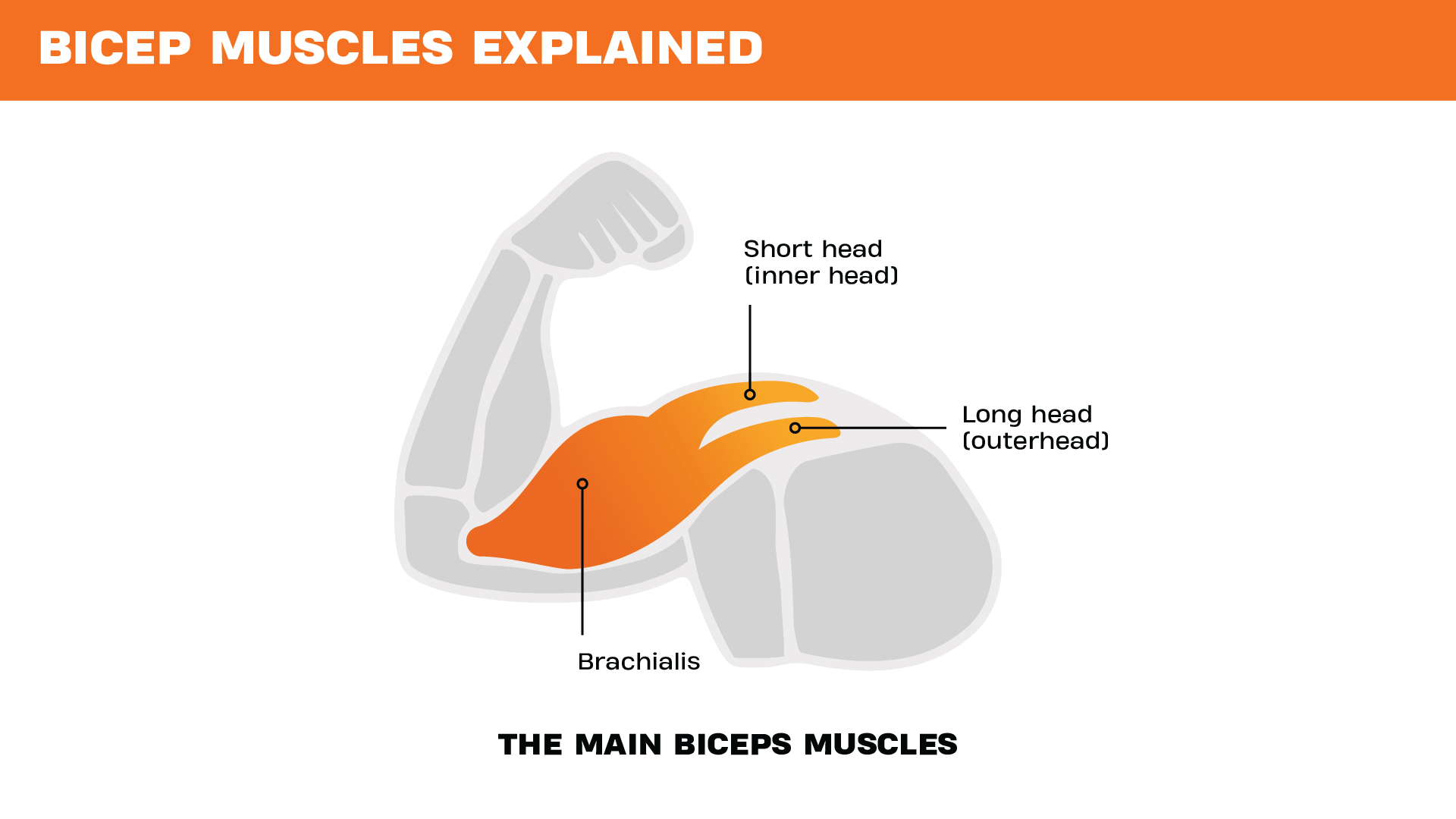
The full scientific name of the biceps is biceps brachii, with “bi” referring to its two heads. Although it looks like one muscle on the front of the arm, it consists of two heads that start near the shoulder and connect to a single tendon below the elbow.
Understanding this helps you choose exercises that develop the entire arm evenly.
The short head (inner head)
The short head sits on the inner side of the arm, closer to the chest. It contributes most to arm thickness when viewed from the front. When this head is well developed, the arm looks fuller and more solid.
The long head (outer head)
The long head runs along the outer side of the arm and is responsible for the height of the biceps when you flex. It crosses the shoulder joint, which is why arm position has such a big influence on how strongly it works during exercises.
The brachialis
The brachialis is not part of the biceps itself. It sits underneath the biceps on the upper arm bone and plays an important role in arm strength.
As it develops, it pushes the biceps upward and outward, increasing overall arm size. Because it’s a strong muscle, it also contributes to functional pulling strength.
Training techniques for biceps
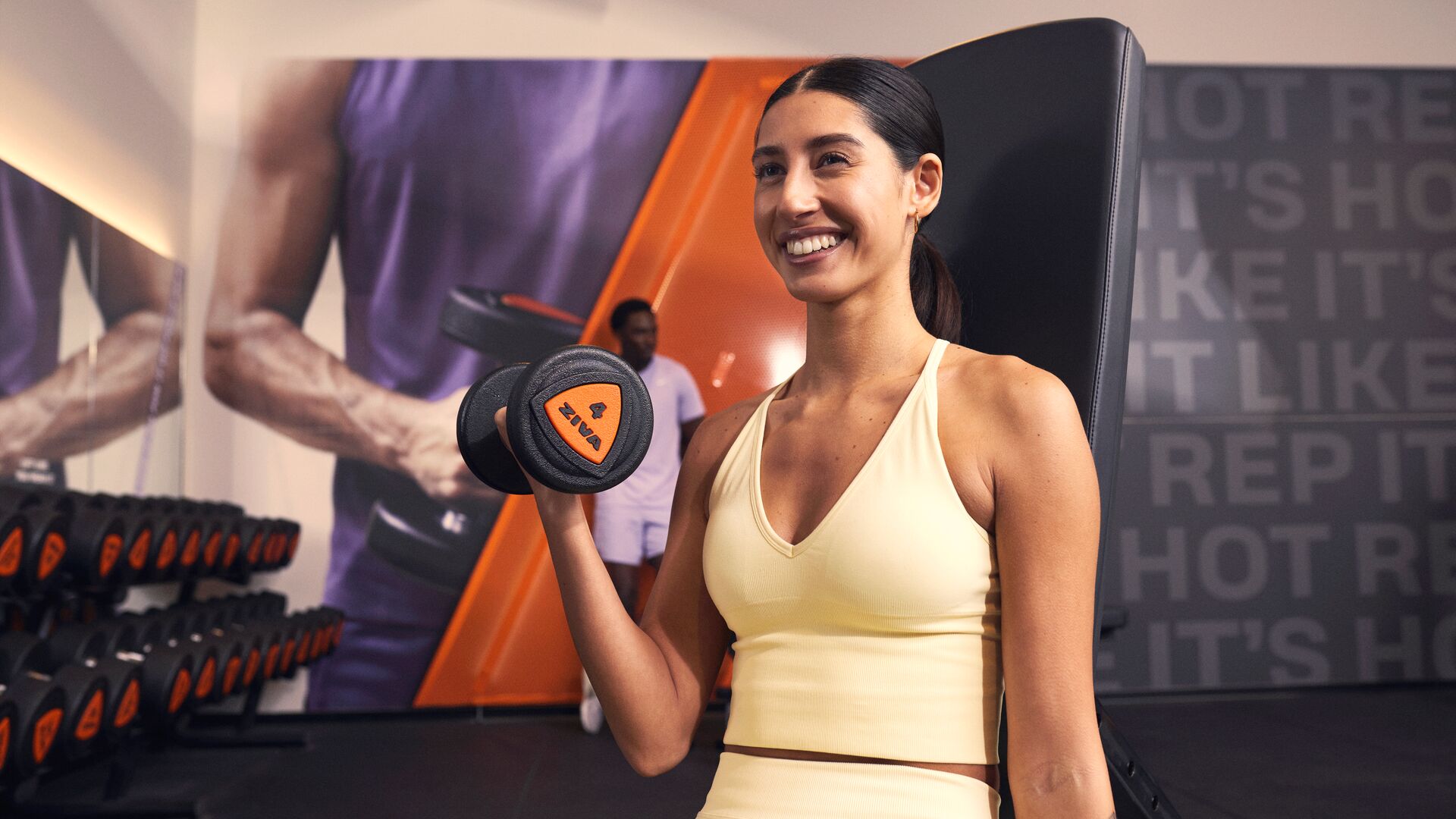
With more than 25 years of training experience and learning from top-level coaches, one thing has become very clear to me: there is no perfect workout that works for everyone. Training is personal, and the right method depends on your unique muscle structure and lifestyle.
Let's look at a few different methods. I encourage you to experiment with them, see which ones give you the best muscle-mind connection, and build your own formula for growth.
Training the biceps twice a week
This classic approach focuses on balancing training and recovery. The first session is often combined with triceps for a full arm workout. The second session can be paired with a stronger muscle group, such as chest or back.
Because the biceps are a smaller muscle group, they typically recover within 48 to 72 hours. Make sure the second session is scheduled outside that recovery window.
The 8-week focus method
This method is less common among recreational gym-goers but is often used by experienced lifters. You still train your biceps twice a week, but the second session is dedicated entirely to biceps, without training another major muscle group.
If chest is your strongest muscle, for example, you temporarily stop training it during that second session and focus fully on your arms. Many people worry about losing strength elsewhere, but in most cases muscle size and strength are maintained. After eight weeks, you return to your normal split and can repeat the cycle if it works well for you.
Alternating biceps and triceps exercises
Instead of completing all biceps exercises first and then moving to triceps, this method alternates between the two muscle groups.
You perform one biceps exercise with full focus and intensity, followed by one triceps exercise. While you train triceps, your biceps recover just enough to allow strong performance on the next set. With this method, you will be able to lift 10-15% more weight than you are used to lifting.
You’ll also find similar arm-focused combinations in the Basic-Fit app if you prefer following a ready-made structure.
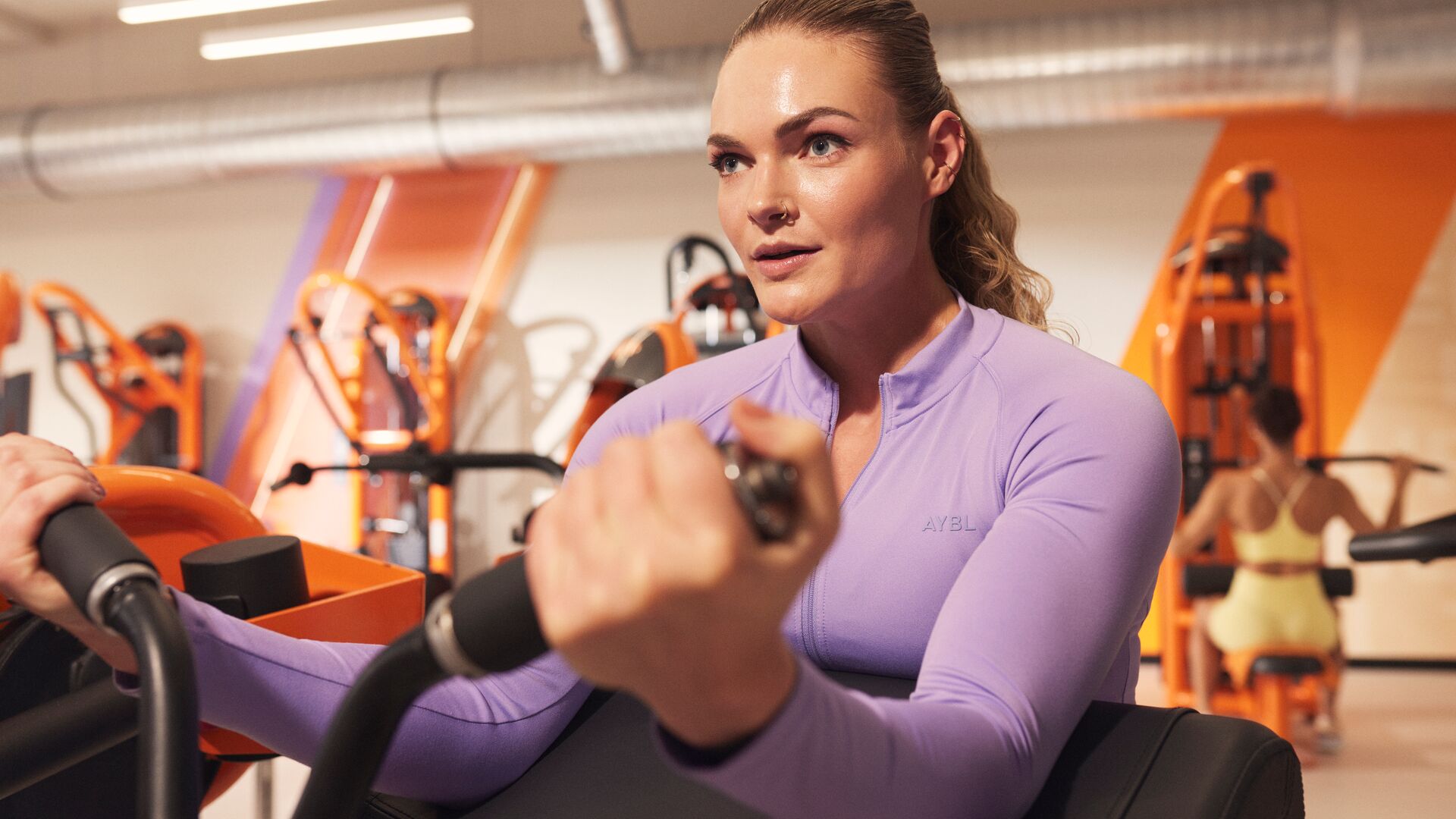
Using tempo and full range of motion
The 1–0–5 tempo
The 1–0–5 technique focuses on controlling how long the muscle stays under tension.
- 1 second up: Lift the weight in a strong, controlled motion.
- 0 seconds at the top: No pause or resting at the top of the movement.
- 5 seconds down: Lower the weight slowly and with control.
The lowering phase, also known as the eccentric phase, plays a major role in muscle development. If the weight drops too quickly, you lose much of this benefit. If control is difficult, reduce the load and focus on execution.
A full range of motion is equally important. Moving the joint through its complete range ensures that the muscle works from stretch to contraction, which supports balanced strength development.

Intensity techniques: drop sets, supersets, and giant sets
Muscles store glycogen, a form of sugar used as fuel during training. When glycogen is heavily depleted, the body responds by storing two to three times more during recovery, a process known as supercompensation.
This principle can be used to support muscle growth by deliberately depleting glycogen in the biceps through high-intensity training. Common intensity techniques include:
- Drop sets: reducing the weight and continuing for three to four consecutive sets without rest
- Supersets: combining two to three exercises without rest
- Giant sets: combining seven to ten exercises without rest
The best biceps exercises
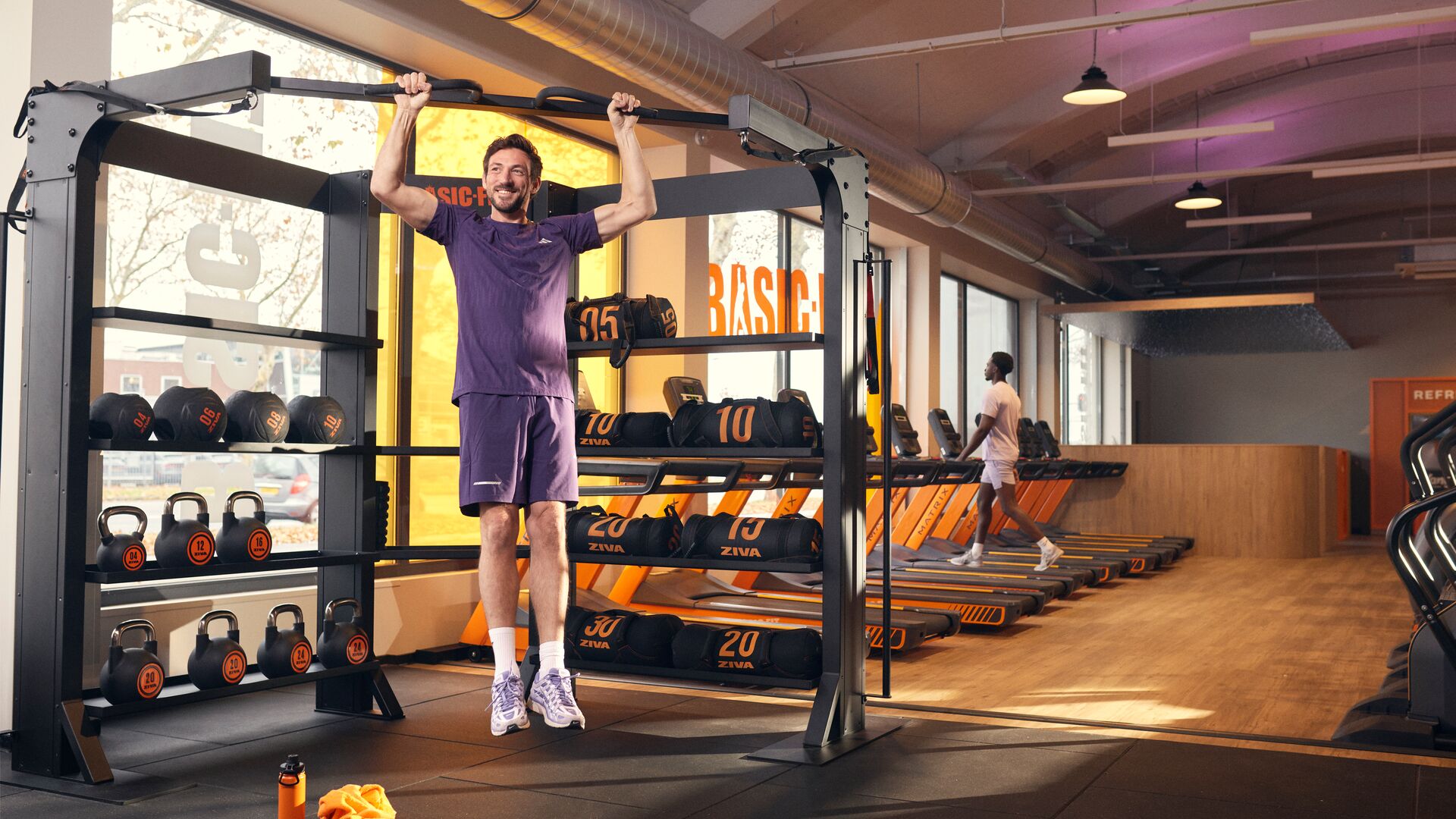
Pull-ups
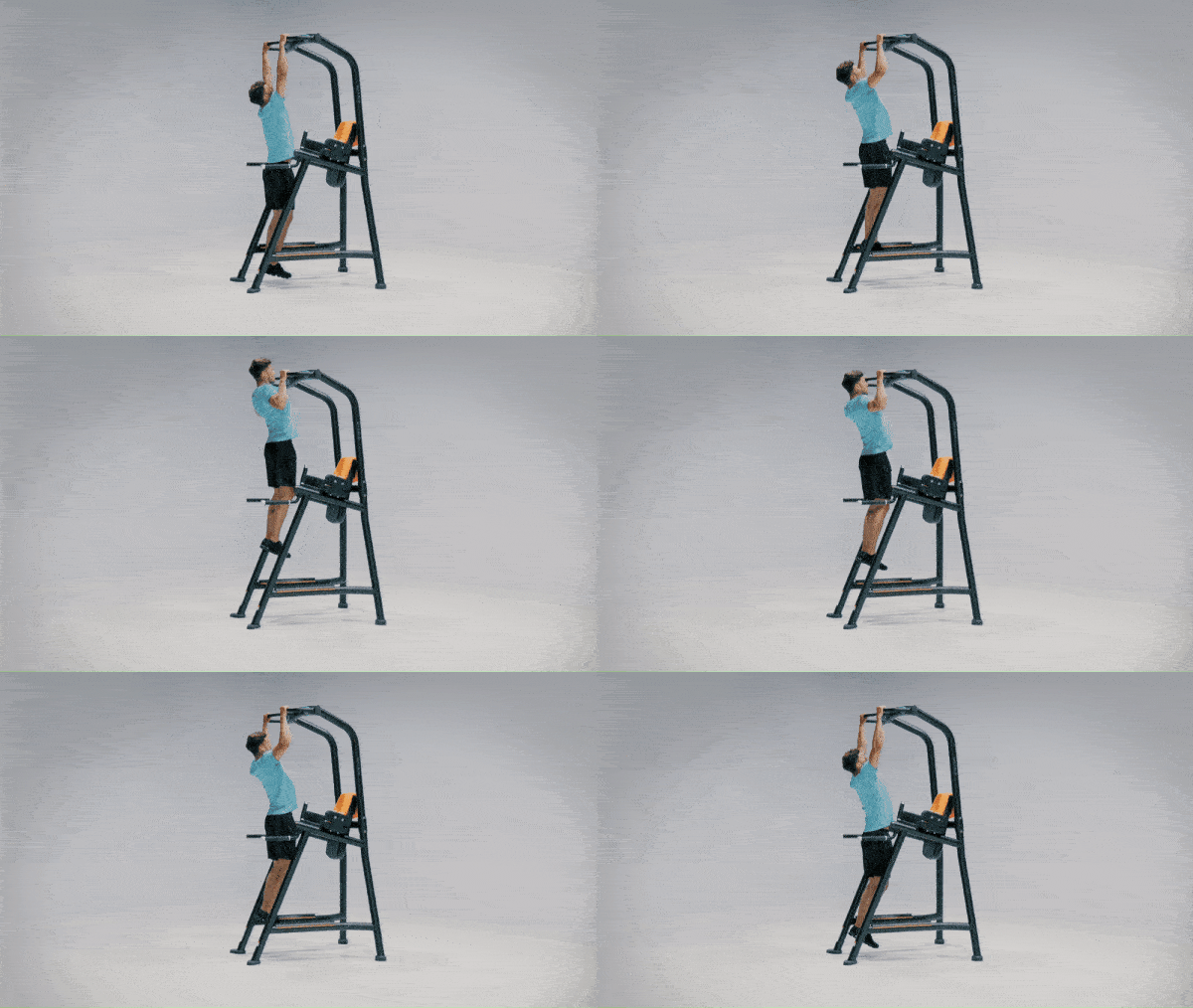
I can already see the reaction when I list this exercise first, so let me explain.
A friend of mine who is a gymnast once shared his arm training routine with me. Despite having very strong arms, he didn’t train his biceps directly at all. His main exercise was pull-ups.
I decided to apply this to my own training and saw how effective it was. Use a grip that’s neither too wide nor too narrow, and focus on pulling your chin as close to the bar as possible.
If you’re new to pull-ups, this may feel challenging at first. Resistance bands can help you build strength until you’re confident performing them without assistance.
Straight bar curls
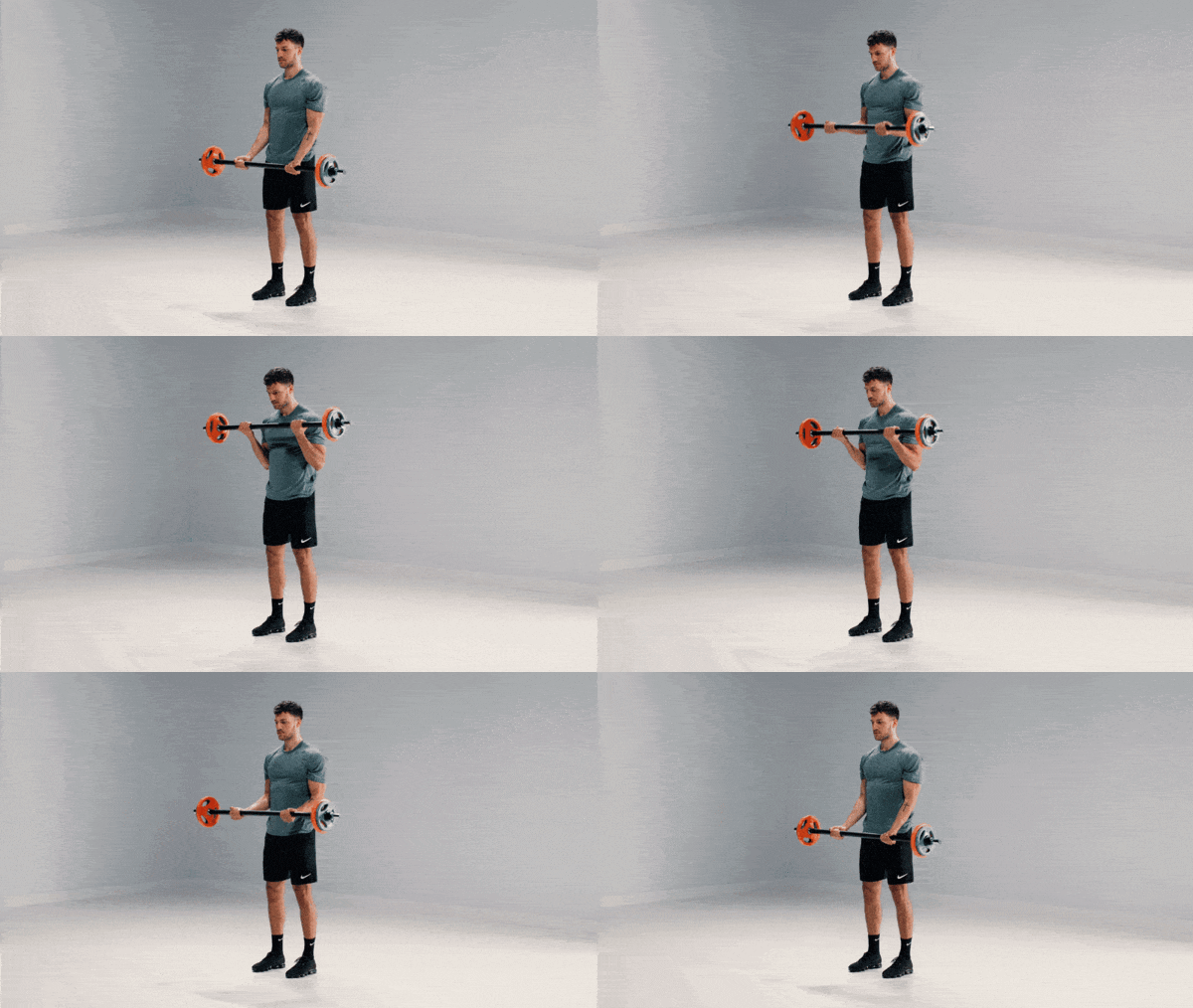
The Straight Bar Curl is the perfect exercise to directly hit the inner (short) biceps head and minimize activation of the brachialis (unlike with the Z bar). This is key for building significant volume and size. Applying the 105 tempo to this movement will boost your results to the maximum.
I recommend using cable exercises for individuals who naturally have longer muscle fibers, while those with shorter muscle fibers will benefit more from performing this exercise with free weights.
Dumbbell curls
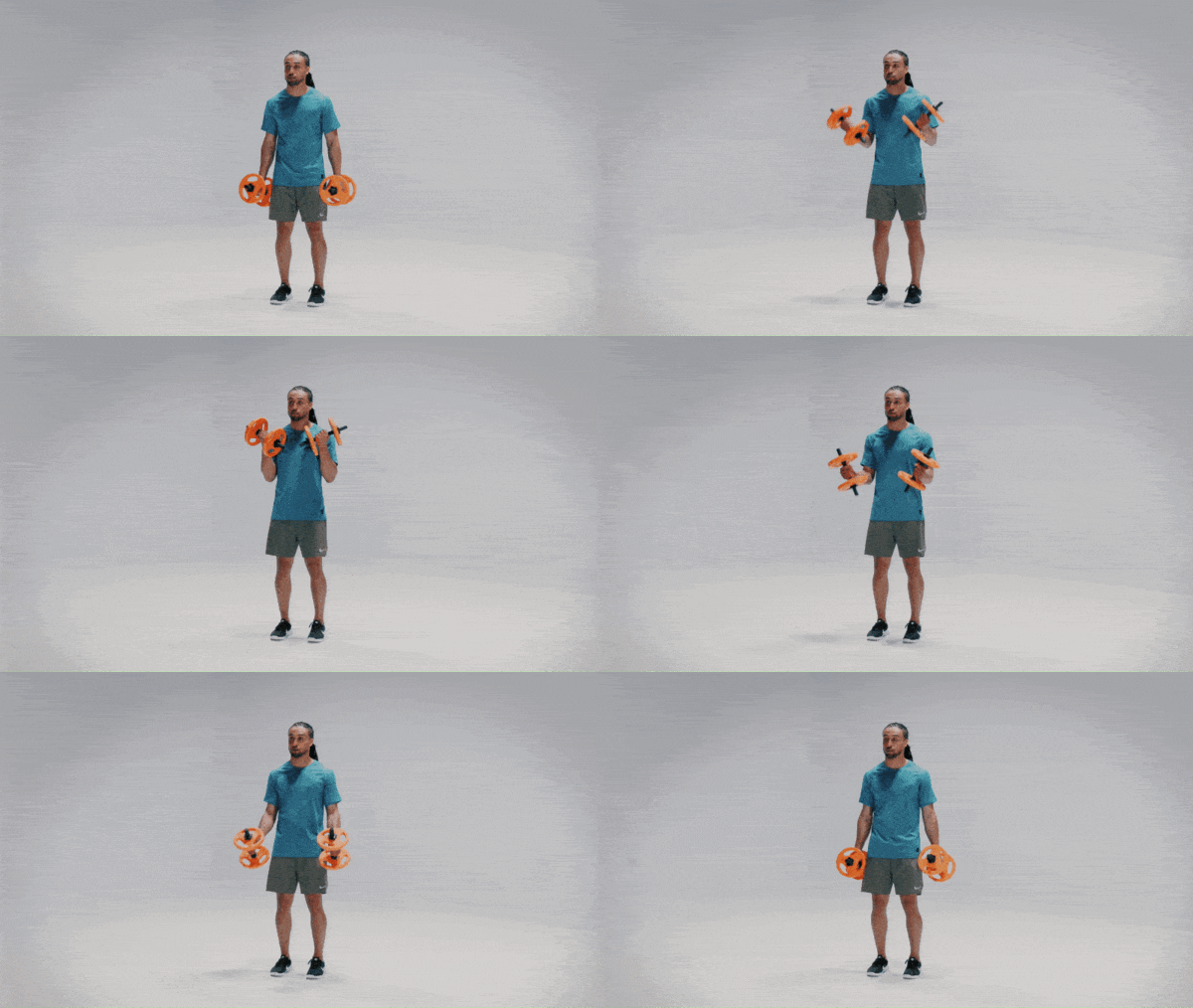
Dumbbell curls are one of the most common biceps exercises. Most people perform them with both arms at the same time. While this can work, the short rest while the other arm is lifting often allows the muscle to recover too much. Even a two to three second pause can reduce tension on the biceps.
Instead, perform 10–12 repetitions with one arm (starting with the weaker side), then immediately do 10–12 repetitions with the other arm. This limits rest, increases tension, and makes the exercise more effective.
Concentration curls
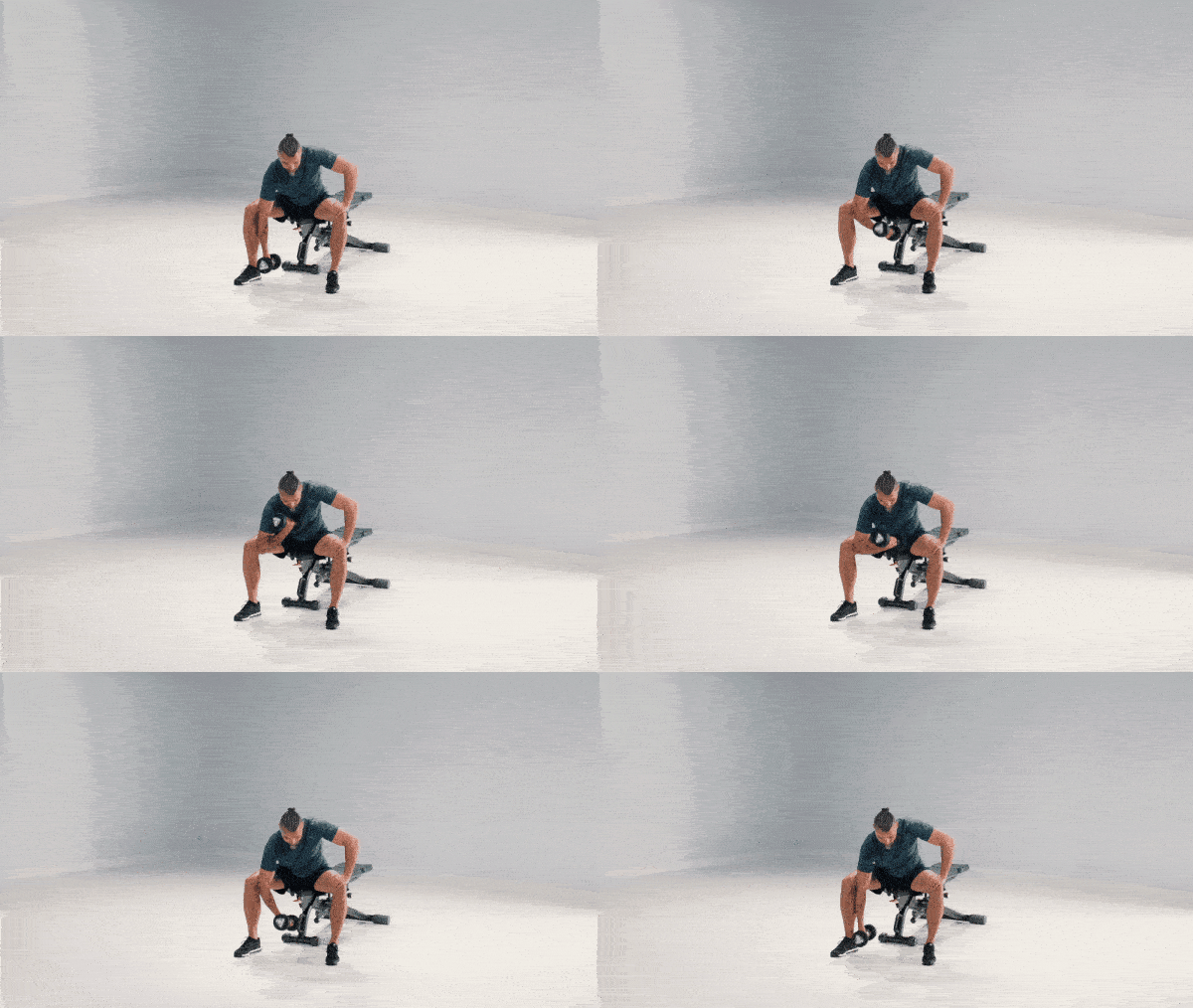
Concentration curls are a highly isolated exercise. By resting your elbow on your knee, you eliminate all swinging momentum, and by twisting your pinky finger away from your body and squeezing the muscle at the top of the movement for a second or two, you will create maximum muscle fiber activation that will build the peak you want.
Drag curls
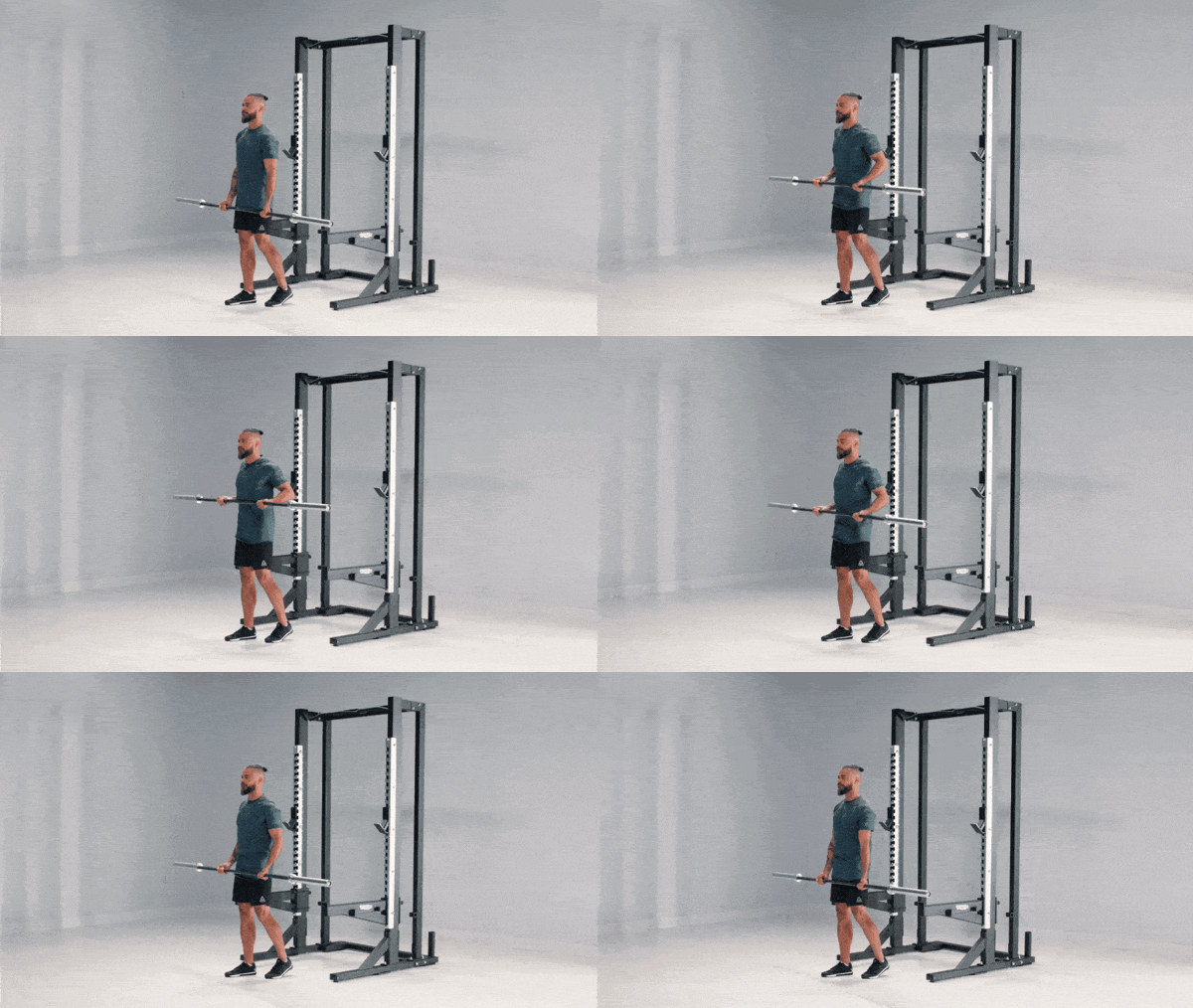
This is an old-school bodybuilding move that, honestly, too many modern lifters are sleeping on.
Instead of letting the bar swing in a wide arc like a regular curl, you consciously drag it up your torso by driving your elbows straight back. When I first did it, the shift in focus was incredible and it hit the long head, that bicep “peak” muscle, almost exclusively.
The range of motion is short and can feel awkward at first, but the tension on the outer bicep is intense.
One tip that really helped me is using a slightly narrower-than-shoulder-width grip on a barbell or EZ-bar. That small adjustment increases the focus on the outer head and makes a real difference.

Common reasons progress stalls
Even with good exercise selection and technique, results can slow down.Here are the most common reasons:
- High stress levels: Chronic stress increases cortisol, which interferes with muscle recovery.
- Lack of sleep: Sleep is essential for tissue repair and hormone regulation.
- Not eating enough: Muscle growth requires enough quality calories and won’t happen in a constant deficit.
- No progressive overload: Training with the same weights and exercises for too long leads to metabolic adaptation, where the body gets used to the stimulus and muscle growth slows. To avoid this, apply progressive overload by adding weight or changing exercises to keep training challenging.
- Training without breaks: Long periods of maximal effort without lighter weeks can lead to plateaus.
- Genetics: Genetics influence muscle shape and maximum potential.
Final thoughts
Building stronger biceps takes time and patience. You will occasionally train too hard, skip recovery, or miss a meal. That’s part of the process.
Progress comes from learning, adjusting, and staying consistent over time. Focus on good execution, enough recovery, and training methods that suit you.
If you want extra structure, the Basic-Fit app offers training plans and workouts to help you apply these principles in the gym.
And if you prefer hands-on guidance, working with a personal trainer can help you fine-tune your technique and stay on track.
GO FOR IT!
This article is for general information only. Individual needs can vary depending on health status, training experience, and personal goals. If you have a medical condition or specific health concerns, consider seeking advice from a qualified healthcare professional.


